





For many cultures, hair offers a connection to deep, long-standing traditions.
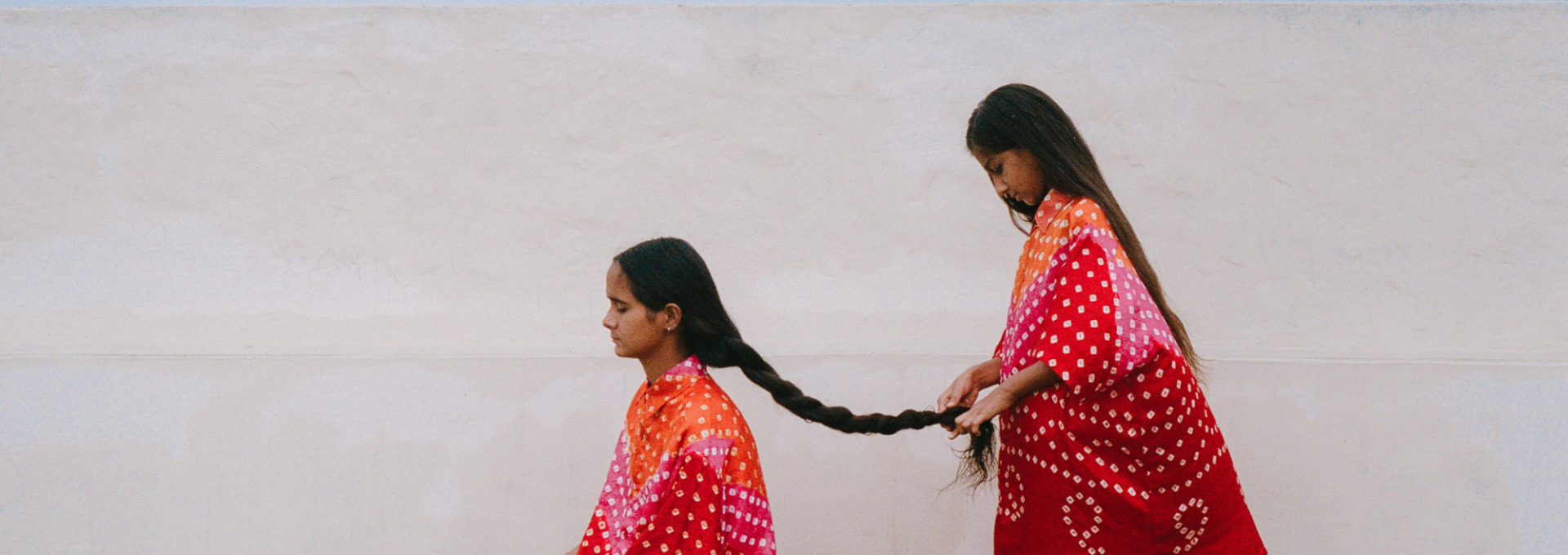
With un/tangling, un/covering, un/doing on now at the Surrey Art Gallery, ten artists from across Canada explore that concept and offer their own stories for how different hair stylings can act as personal expression, a tether to family and ancestors, or in some cases, a form of resistance.
Whether it’s in loosely coiled curls or a tight braid, throughout history, hair has been a BIPOC symbol of pride against assimilation and colonialization. This exhibition celebrates how the ritual of hair care speaks as a challenge to oppressors. For example, how women in Iran cut off strands of their hair in protest of their hostile treatment throughout history, or how the wearing of hijabs and turbans has been banned in some countries, forcing cultural assimilation
Hair has become a fitting symbol for these types of stories. While a single hair on its own can break or be pulled out, joined together as a braid, they becomes something stronger, withstanding the firmest pulls from an outside force.
un/tangling, un/covering, un/doing runs from January 20 – March 17, 2024
You can learn more about the show here.
Gallery events related to un/tangling, un/covering, un/doing :
Feb 9 – Winter Opening and Panel Discussion: A panel discussion with exhibiting artists Becky Bair, Baljit Singh, and Clare Yow, with assistant curator Suvi Bains, and a poetry performance by Natasha Kianipour.
Feb 21 – A film screening with community partner The Black Arts Centre
Mar 2 – Conversations and Film Screening: Roots of Love

Surrey Art Gallery: From King George Skytrain Station, take the R1 Newton Exchange bus to 88th Ave. It’s about a 5-minute walk from there!
To easily plan the route for your next artistic outing, you can use the TransLink Trip Planner.






This exhibit is a continuation of the journey of reclamation and rebuilding bonds of cultural knowledge. An original reboot of the Tāpis exhibit, it adds three new makers now holding the knowledge of tāpis/tuppies (dog blankets).
When Adele ᒪᐢᑿᓱᐤᐃᐢᑵᐤ asked to be taught this knowledge from her mentor, it was with the intent of restoring important cultural knowledge taken from so many Northern Nations. For this cohort, Adele ᒪᐢᑿᓱᐤᐃᐢᑵᐤ chose makers who exhibited personal and cultural ethics close to her own, along with levels of skill necessary to undertake such a large project. “Each of these blankets takes a minimum of 200 hours (or more) to be brought to completion. It is with great pride to be able to showcase this exhibit. It has been created to show the beauty and celebration of dog regalia as completed by Michif, Dene, and other Nations to celebrate our valued dog kin.”
Originating from the Métis, Northern Cree, and Dene communities, ‘li tāpis’ (small carpet), named by the French Michif and known as ‘tuppies’ by the English and Scottish Michif, are dog blanket regalia created to celebrate dogs. Tāpis are made from wool and embellished with intricate beadwork, silk embroidery, moose or caribou hair tufting, fringed with ribbon or yarn and adorned with bells. Showing respect for sled dogs, tāpis were draped over the backs of dogs.