Feature Image: Debra Sparrow and Gabriel Hall, Blanketing the City Pt. II | Photo Credit: @canadaplace
Metro Vancouver is blessed with many public works by Indigenous artists. As the weather warms, it’s well worth a stroll out through these communities to take in the beauty, sophistication and learning these pieces provide.
Jody Broomfield, Salmon Fountain, 2010 – Burnaby
2133 Douglas Rd #705, Burnaby, BC
Structured into a multi-level fountain, this stainless steel sculpture by Sḵwx̱wú7mesh (Squamish), Coast Salish artist Jody Broomfield depicts the many obstacles a salmon faces as it returns to its birthing place to spawn life all over again. Set against the backdrop of rushing water at the base of Burnaby’s Perspectives Building, the piece comes alive in a dance between nature and the city.
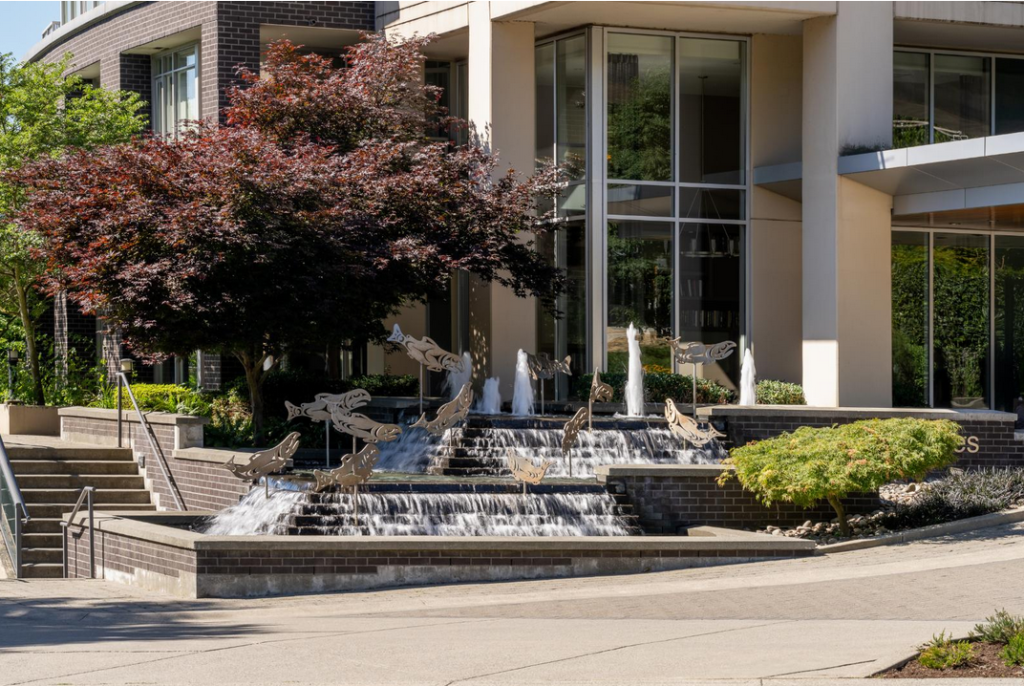 Photo Credit: collections.burnabyartgallery.ca
James Hart, Frog Constellation – Burnaby
Saywell Hall, 8888 University Dr W, Burnaby, BC
Inside the Academic Quadrangle, in the First Nations Atrium at Simon Fraser University, sits this cedar carving of a man and a woman on the back of a giant frog, a powerful Haida symbol, known as a creature that moves between worlds. It was carved by Haida artist James Hart in 1995 when he was inspired by a smaller shamanic object from the 19th century. Originally destined for an office building in California, in which it was never installed, it was rescued from obscurity by the Bill Reid Foundation in 2005.
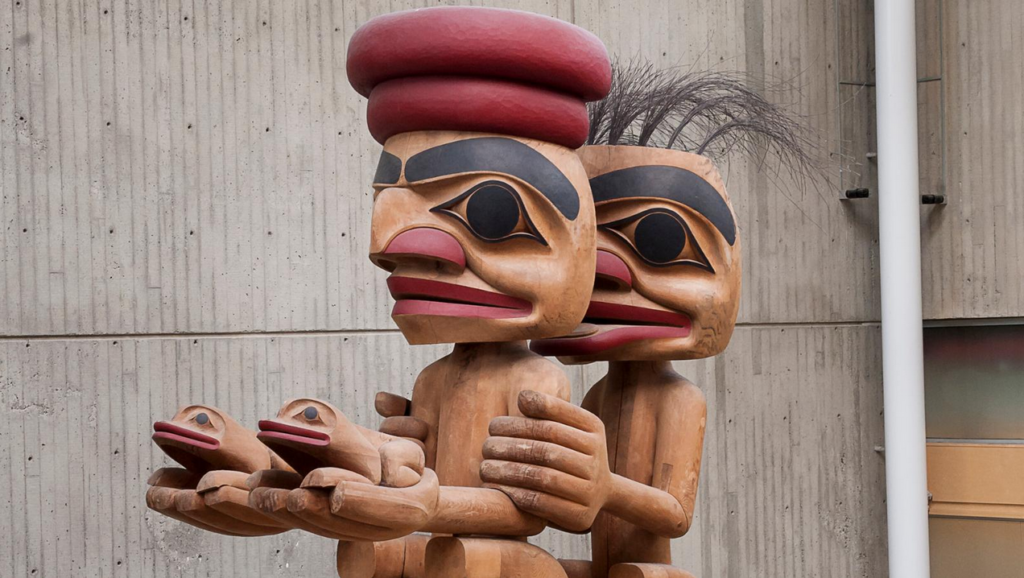 Photo Credit: sfu.ca
Ocean Hyland, The winds and the waters will always call us home – Vancouver
999 Canada Pl, Vancouver, BC
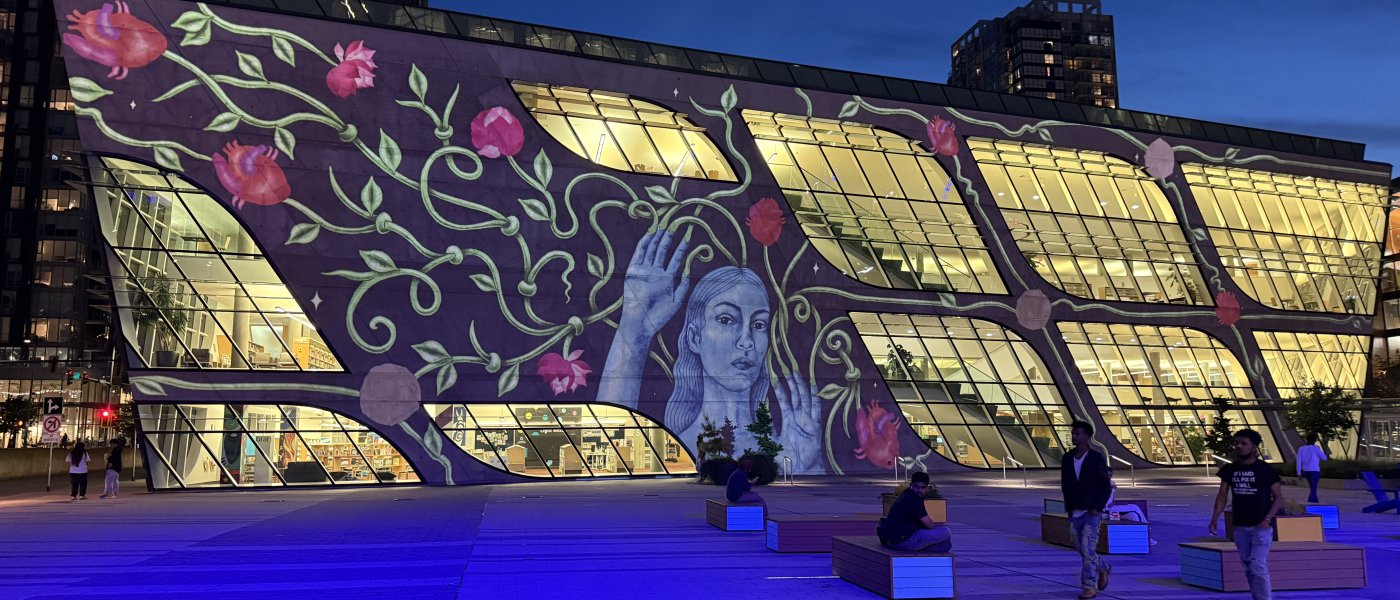
This impressive mural adorns the west promenade of Canada Place and depicts the watchful eyes of both the moon and the sun, reminding us that all life is connected, and in that connection is a promise for the well-being of all. Tsleil-Waututh (səlilwətaɬ) artist Ocean Hyland was inspired by her work in stewarding and restoring the health of our territory on the West Coast, to pay tribute to the species her community has helped to revive.
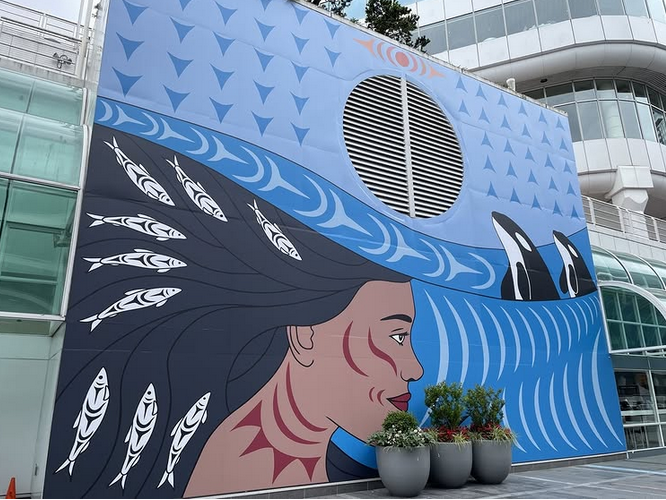 Photo Credit: @canadaplace
Debra Sparrow and Gabriel Hall, Blanketing the City Pt. II – Vancouver
2755 Prince Edward St, Vancouver, BC
The powerful series Blanketing the City is a Vancouver Mural Festival initiative that began in 2018. This towering mural in Mount Pleasant by acclaimed xʷməθkʷəy̓əm (Musqueam) Weaver and Designer, Debra Sparrow contains over 100 unique colours sampled from images taken above and below the Salish Sea’s surface, reflecting the powerful connection of local Indigenous communities to the spirit of the ocean.
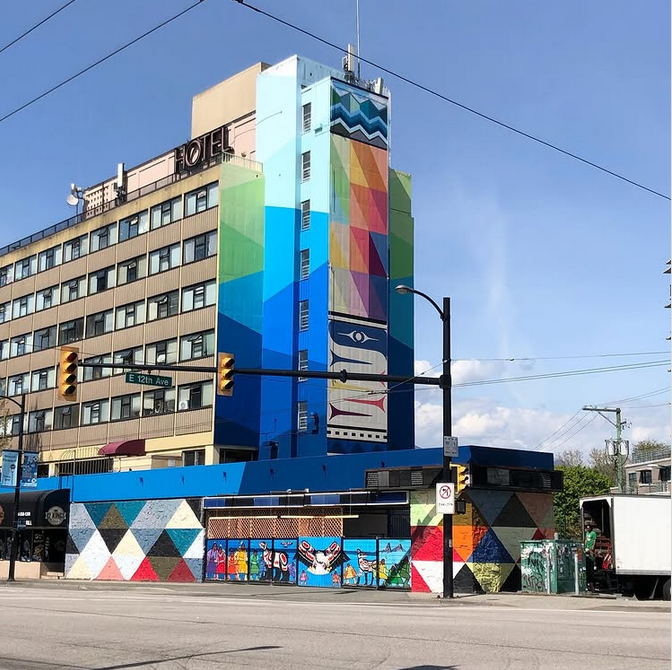 Photo Credit: @vanmuralfest
Caleb Ellison-Dysart, Turtle Island – Vancouver
1295 Frances St, Vancouver, BC
Titled after the name that various Indigenous nations have always given to “North America,” this mural off Hastings and Clark in East Vancouver tells the story of a turtle who holds the world on its back and reminds us to not forget the responsibility to all life around us. Vancouver artist Caleb Ellsion-Dysart drew from the oral histories and creation stories from his upbringing in the O-Pipon-Na-Piwin Cree Nation & Nisichawayasihk Cree Nation in Northern Manitoba, as well as his spin on traditional Northern Cree art for this piece for the Vancouver Mural Festival.
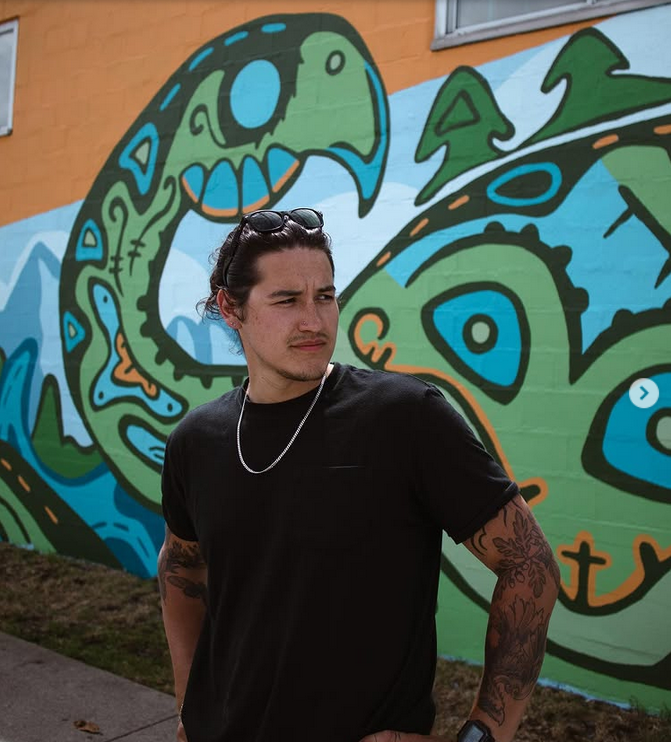
Photo Credit: @tallestcree
Drew Atkins, Phyllis Atkins, Aaron Jordan, The Rivers that Connect Us – Surrey
Museum of Surrey (17710 56A Avenue, Surrey, BC)
This monumental sculpture outside the Museum of Surrey consists of 5 metre paddles raised to the sky in a traditional Coast Salish gesture of peace and respect to a canoe traveller approaching a village. Designed by qw̓ɑ:nƛ̓ə̓n̓ (Kwantlen) First Nation artists Drew Atkins and Phyllis Atkins, with Vancouver artist Aaron Jordan, each paddle is adorned with programmable LED lighting—a true marriage of past and present.
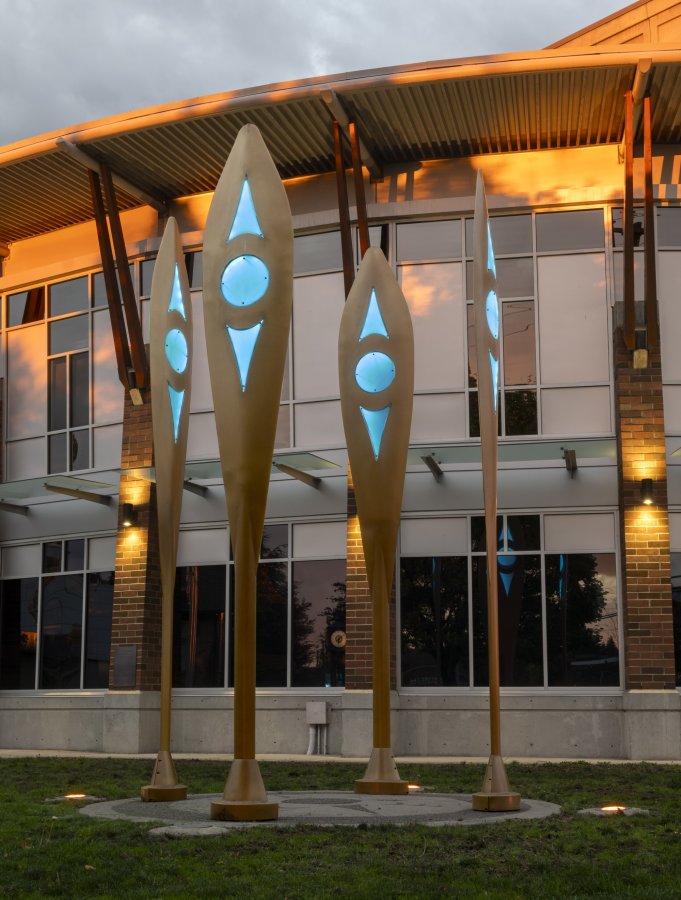 Photo Credit: surrey.ca
Susan Point, Water Guardians – Surrey
Hazelgrove Park (7080 190 Street, Surrey, BC)
An expansive red “umbrella” sits high above Haxelgrove Park in east Clayton and features a vibrant red lily pad on which sit four stylized frogs, symbolizing the continuance of life and transformation from small beginnings. Musqueam (xʷməθkʷəy̓əm) artist Susan Point has been honoured with the Queen Elizabeth II Diamond Jubilee Medal for her contributions to art in Canada and her work can be found in collections in over twenty countries.
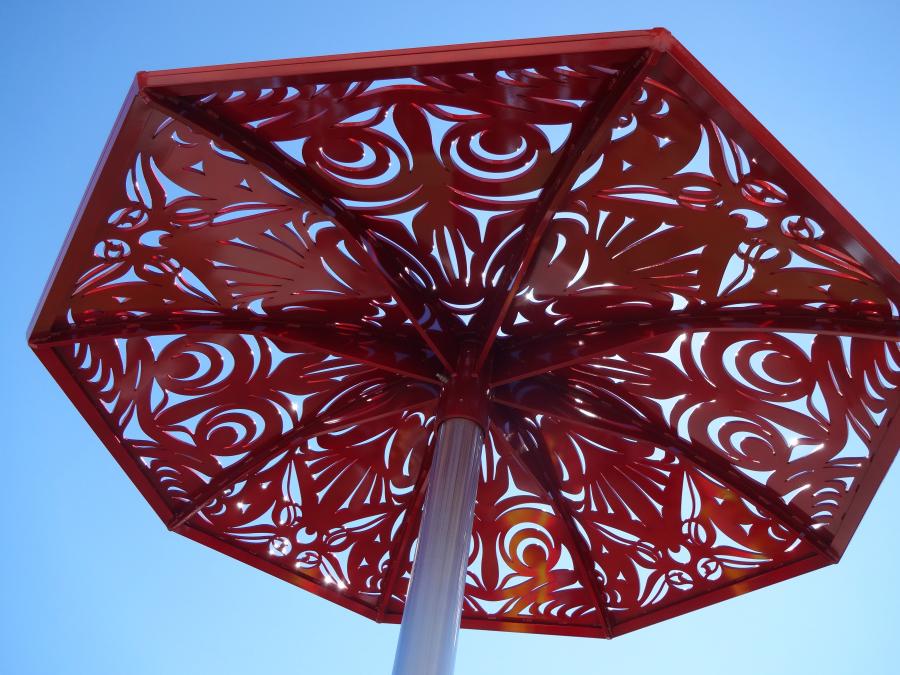 Photo Credit: surrey.ca
Wade Baker, Ancient Sun – North Vancouver
141 West 14th Street, North Vancouver
Rising gently over the City of North Vancouver Municipal Hall, this 8-foot Coast Salish cedar carving depicts the all-knowing sun offering its healing energy and ancient wisdom to all who pass by. North West Coast artist Wade Baker is descended from chiefs of both the Kwakiutl Nation and Coast Salish, Squamish Nation and taught himself to carve as a child watching his relatives, also master carvers themselves.
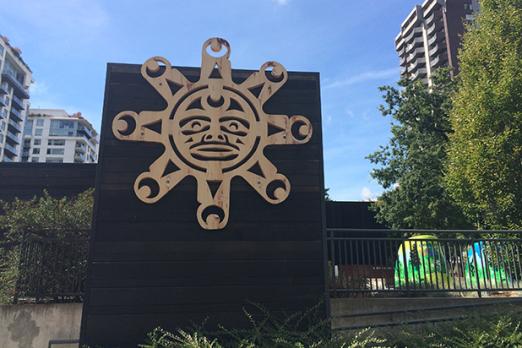
Photo Credit: nvrc.ca
Moses Peech, Inukshuk (Inunngnaq) – Whistler
Entrance, Whistler Village
Several Inukshuks were created in communities along the Sea to Sky corridor for the 2010 Olympic Games. This particular sculpture, by Squamish-based artist Moses Peech stands tall at the entrance to Whistler Village and fulfills its traditional role as an icon of the Inuit people to symbolize openness, welcoming and strength. An LED lighting feature casts the stones in different colour throughout the night.
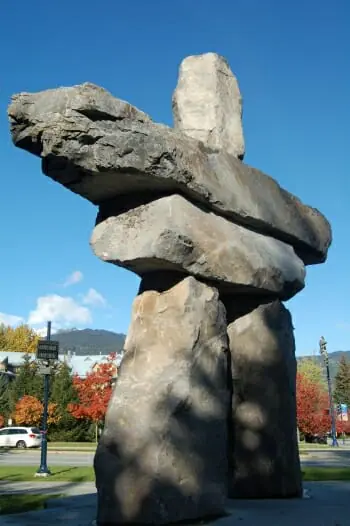
Photo Credit: whistler.ca