


Scottish-born painter Jeff Wilson started his career as a structural geologist.
While it may seem like a dramatic shift to go from studying the long-term deformation of landscapes through stress, to full-time artist, the more I looked at his pieces in Street Dreams, the more I noticed potential similarities between the show and his former field.
Each of Wilson’s paintings depict weathered corners of urban scenery: back alleys scrawled with vibrant tags, faded neon hotel signs flickering in the night. It’s as if these totems of urban landscape serve to show the stress that passing bodies have on a city, and the beauty that can come with it.
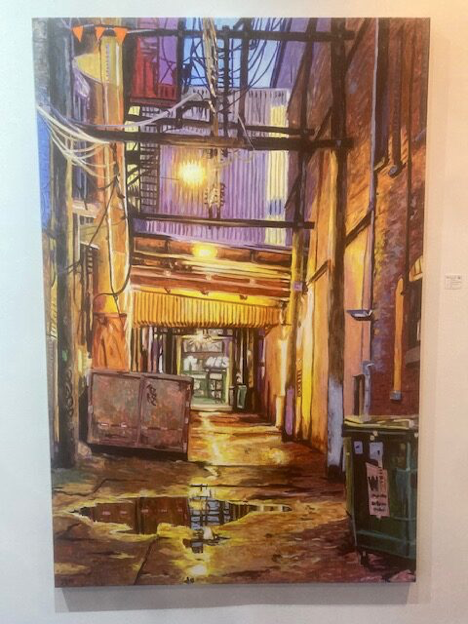
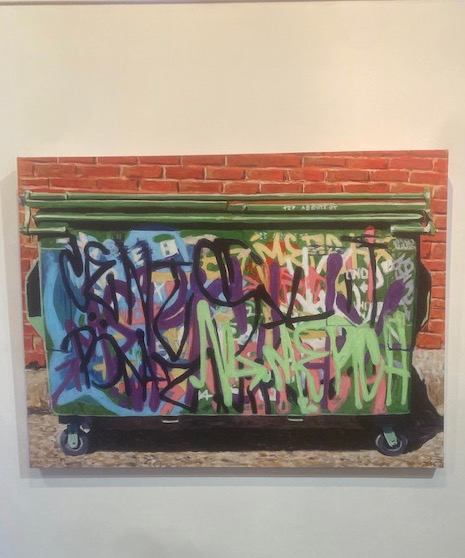
Talking to Beaumont curator Kirsten Larsen though, she shared a level of that theme that I hadn’t considered. That the graffiti pieces in each painting represent the shared storytelling of a city, and how these public artists pass along their experiences by saying that they were once standing in the spot where the viewer might be at that moment. Then Wilson echoes that presence with his own realization of the moment. It definitely gives an added level of intimacy that I hadn’t realized at first.
Each painting portrays a setting throughout Vancouver’s Downtown Eastside, and with these hidden places tucked away down side streets, Wilson shows just how many of these community stories are waiting to be discovered. It’s a nice reminder that while these places may only seem transient to many of us, there are people there, living, making art and passing on their experience.
Street Dreams is on until Sept 25, 2021
At B1 Gallery in Beaumont Studios
@b1gallery
thebeaumontstudios.com/gallery