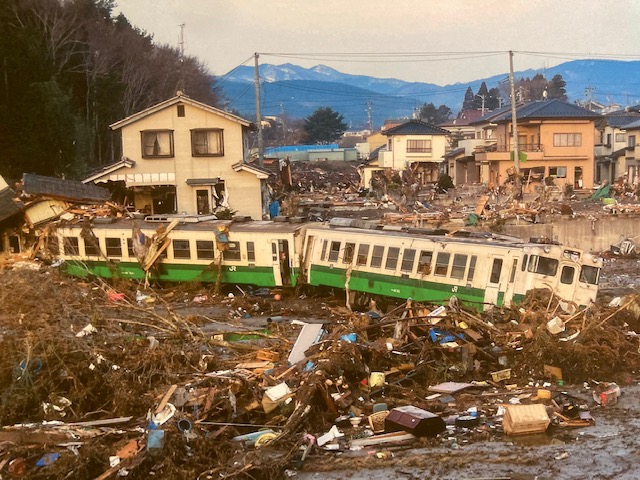

It’s now been ten years since the earthquake and ensuing tsunami in Japan. As someone who was on the other side of the globe when this happened, I distinctly remember the images of homes swept to sea as if they were made of paper. While the news reports have since faded in my mind as time has passed, the current Museum of Anthropology exhibit, A Future for Memory, shows that those old images are still as fresh as ever for people living in the wake of the tsunami and Fukushima power plant failure.
While it’s a heavy subject, and hearing the stories of how the country is still rebuilding are harrowing, the show outlines a sense of hope that can sprout from a tragedy like this.
Featuring works from a handful of Japanese artists, the exhibition uses different mediums, be they video, photography or miniature models, to communicate the sense of scale of the event. Everyone was affected, whether through losing a loved one, a home, or a means of livelihood.
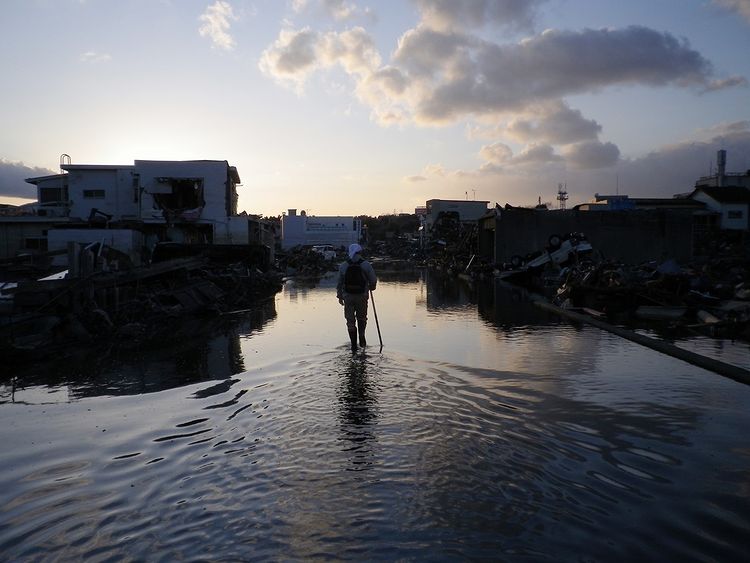
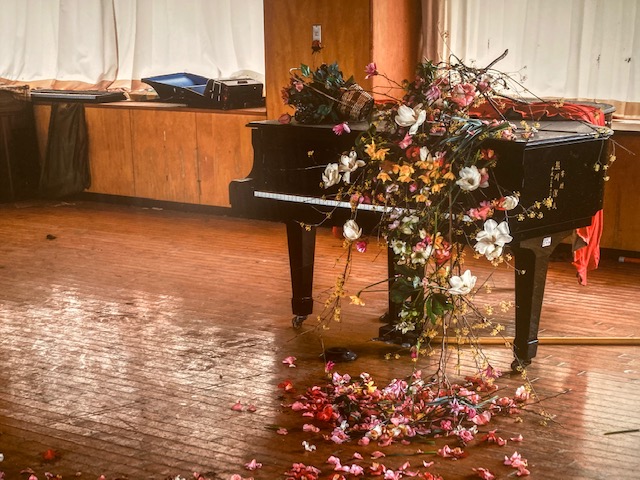
In the opening section by photographer Atsunobu Katagiri, he’s created floral arrangements in the husks of wreckage strewn about the countryside. As he lived in Haramachi, the closest livable town to where the powerplant was, his photos capture a sprawling emptiness that the landscape has become while simultaneously allowing nature to grow and start over. Seeing wildflowers thrive through the rusted hood of an abandoned car brings to mind the resilience of the Japanese population, through tragedy. It’s a theme that occurs throughout the show, whether it’s in a wall of salvaged photographs and how an astounding effort was put together to reconnect these wilted memories with their original owners, or in a documentation of all the felled irradiated trees captured with countless charcoal rubbings.
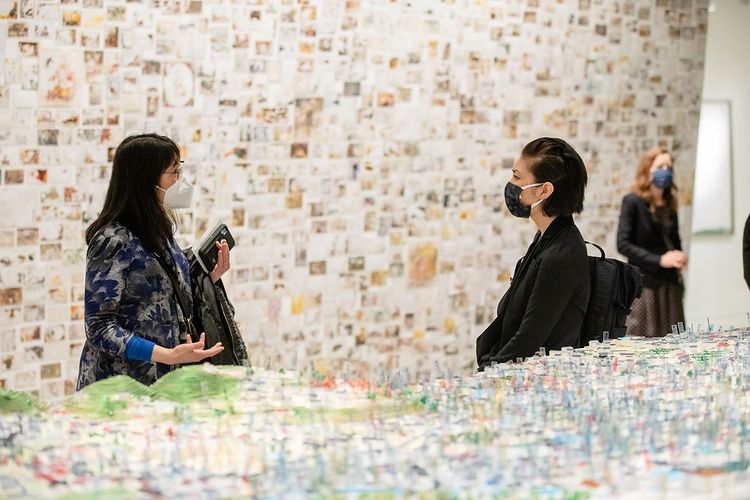
While each section adds a layer to how the event affected different groups of people, for me the staggering sense of scale was driven home with the “Lost Homes” Scale Model Restoration Project. At 1:500 scale, the piece shows a miniature landscape of the villages most affected by the disaster and how they once looked. As you tower over each dice-sized home, small flags painted by student volunteers mark memories of each space, showing just how many lives were upended, and lost. Created with paper and paint, the diorama gives a haunting reminder of how vulnerable the area was to the devastation that was to come.
A Future for Memory has a beauty to it that’s hard to express as an outsider. When we’re not directly affected by something with the magnitude of a 9.0 earthquake, it’s easy to detach yourself from the reality of what’s going on somewhere else. But seeing the first-hand, intimate accounts of the destruction done even ten years after it’s happened, it’s hard not to look back on what might’ve seemed like just another weekly news item. What’s more, is the inspiration found through addressing the hurt that still beats on. While you might not have been there, it’s a message that can be universal.
A Future for Memory is on now until Sept 5, 2021
For more info, visit:
@moa_ubc
moa.ubc.ca