







So you’re new to the Metro Vancouver art scene? Not sure where to begin when visiting art galleries? Unsure of all the sacred, unspoken rules of this impenetrable society?
Well, to start, there’s really no need to overthink things! Contrary to the stereotype, artists, curators, and galleries in general are all pretty friendly. You don’t have to be a big-name art dealer or have a degree in art history to be allowed past the velvet rope. In fact, there isn’t even a velvet rope! Go at your own pace, have an open mind and you’ll be just fine. But if you’re still feeling uneasy about attending a gallery, here are a few things to consider.
Do I have to pay to enter or book an appointment?
You’ll hardly ever have to reserve a spot at a gallery unless it’s for a formal ticketed event or opening. You’re free to show up any time, but be sure to double-check the days that a gallery is open, as sometimes they can keep hours different from a typical business. In terms of payment, larger art locales like Vancouver Art Gallery or Audain Art Museum in Whistler have admission, but usually, this isn’t the case, especially at smaller galleries. Some galleries, like The Polygon in North Vancouver, have admission by donation, but this is entirely at your discretion, and you should only donate what you can afford.

Should I research a show before attending?
Nope, come as you are! Most gallery exhibitions will have an artist’s statement on display that will give context about their career and work, so you can always go in fresh. As mentioned, the gallery staff will be happy to have you there! People taking the time to explore art is always appreciated, especially newcomers.
What is the etiquette in an art gallery? Is it rude to talk inside?
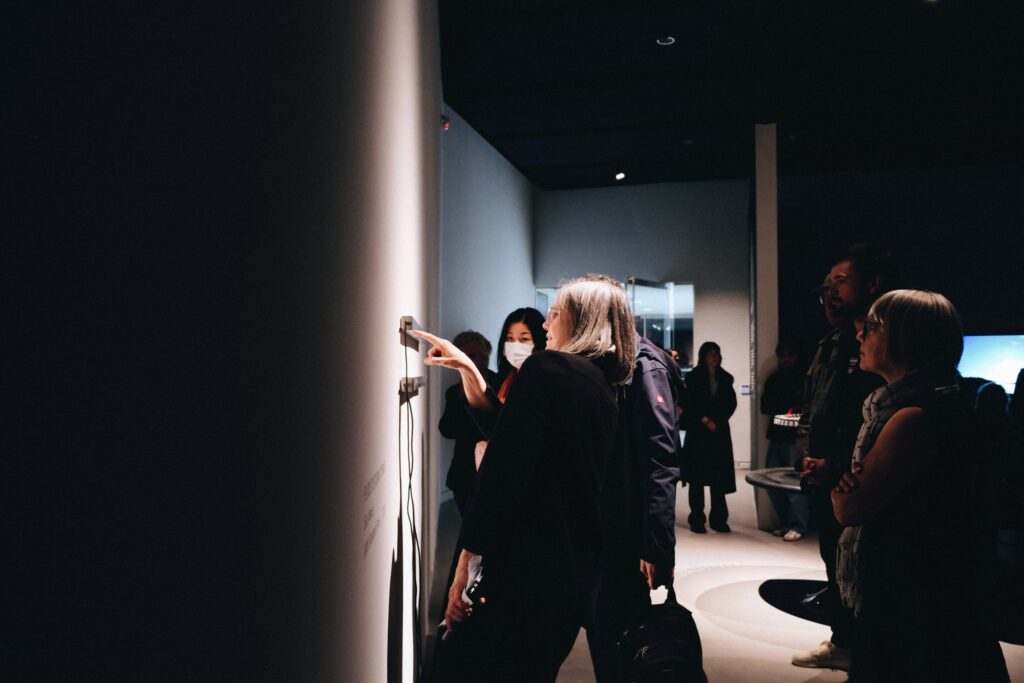
There are no hard and fast rules for how to behave in an art gallery, just be respectful and use your good judgment. Obviously, don’t touch the pieces of art unless there are signs specifically saying that it’s okay to do so—New Media Gallery in New Westminster is an excellent example of one that often promotes a hands-on experience. In terms of talking, keeping your voice at a reasonable level is always a good choice. You’re welcome to voice your perspective about the show to others, like the curator or the gallery staff; just try not to be outright negative about the work on display, even if you really dislike it (especially if the artist is present!).
How long should I stay?
Unless you’ve signed up for a guided tour, you can go at your own pace! Nobody is expecting you to spend countless hours standing in front of each piece. Spend as much or as little time as you’d like. If you’re alone in a gallery, you might feel pressure to act like you’re getting the absolute most out of the work, not to offend anyone. But most gallery staff understand that not everyone will be engaged by every exhibition they mount, so don’t feel guilty if you leave a little early!
There really are no hard and fast rules for visiting art galleries, but hopefully, these tips have given you a little insight into what you can expect. Again, keep an open mind and have fun; nobody will judge how you experience art!

There’s lots of ways to start visiting art galleries in Metro Vancouver via transit, visit TransLink’s Trip Planner to find your way.