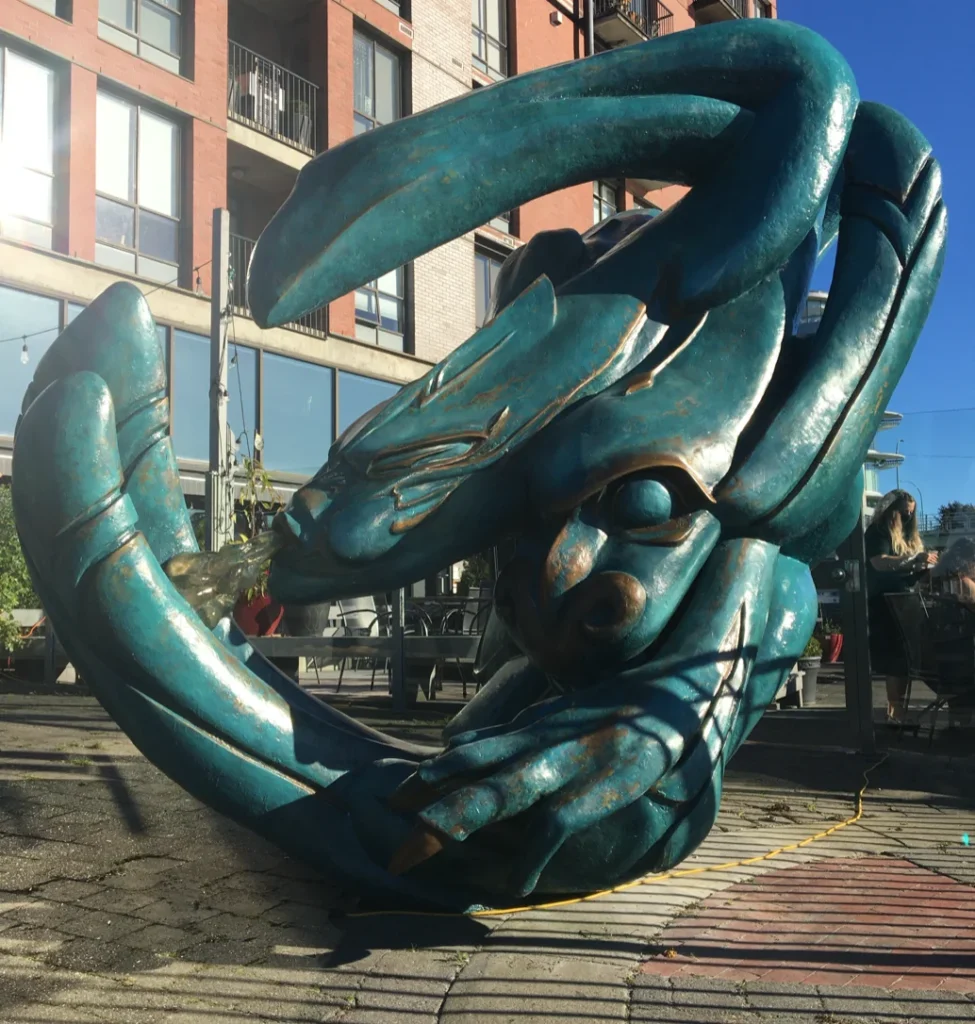


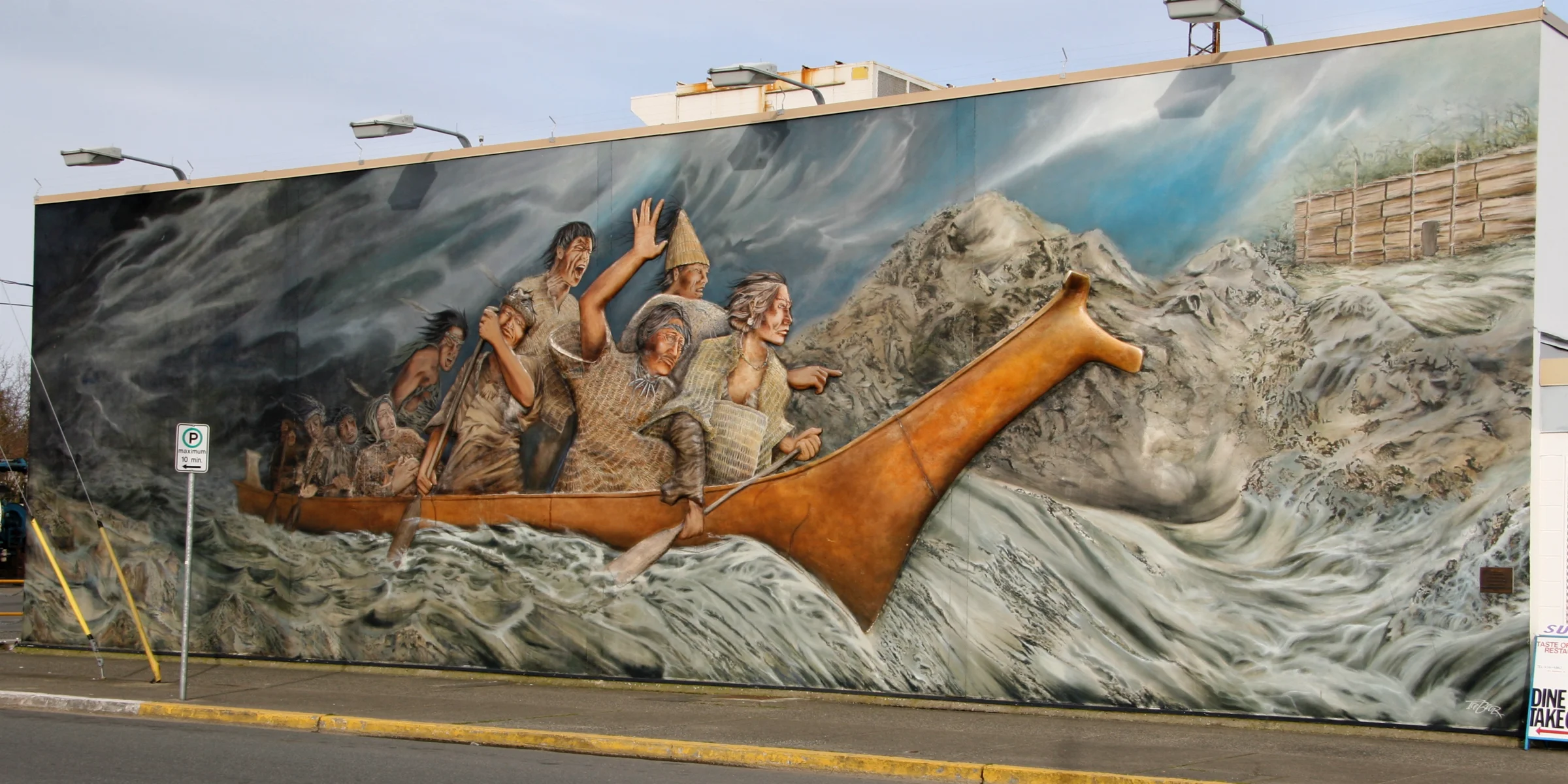
IceBear, also known as Chris Johnston, is a First Nations artist from Chippewas of Nawash (Cape Croker) in Ontario. IceBear embraces constant “exploration and experimentation,” viewing his art as a lifelong adventure. Over his career, his work has evolved from a graphic, contemporary abstract style that combines forms and shapes of traditional Ojibway art, to a wilder, flowing impressionist style that plays with rich tones and depth (some of his paintings have around 20 layers!)
Art has always been IceBear’s salvation. He was born in 1953 and was taken from his family at 4 to be raised by the state. He spoke only his native Ojibway as a child, so he used drawings as a way to communicate. His journey to becoming an internationally recognized artist (with shows in New York, Dallas, Florence, Vienna and Beijing to name a few) is testament then to both his resilience and his talent. He found support at his day school where a nun recognized this talent and set him up with formal art training that led to his first commission at age 10. During difficult teenage years, a high school art teacher became a positive influence on his life and artistic trajectory, and he went on to study art in Toronto.
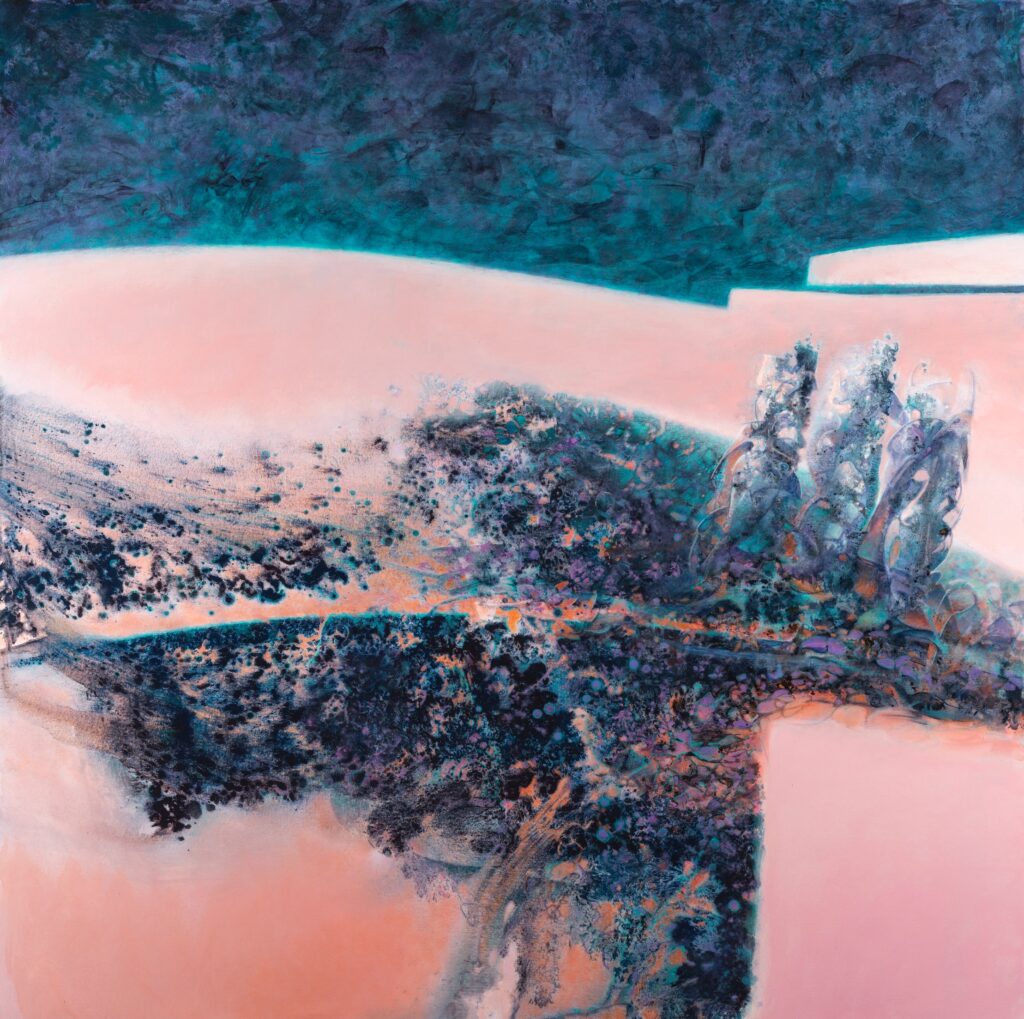
He spent many years working for advertising agencies before becoming the director of his own design boutique. He moved to the West Coast in the early 80s, settling first in Vancouver and then on Vancouver Island. His move away from commercial work came with another change, the adoption of his totem name, ‘IceBear’.
IceBear’s deep connection to spirituality is evident in his work; he believes he never really had a choice to become an artist and to him, “to paint or sculpt is as natural as breathing.” The Elders of his community described him as a ‘Dreamer’ since he was little, and he regards it as his responsibility to transform his visions from the Creator and Spirits into reality. This responsibility is the reason why he doesn’t use his given name: he doesn’t regard his work to be his own personal creations. Nor does he suffer from ‘painter’s block’ due to the number of visions he has to make into reality when he feels the time is right.
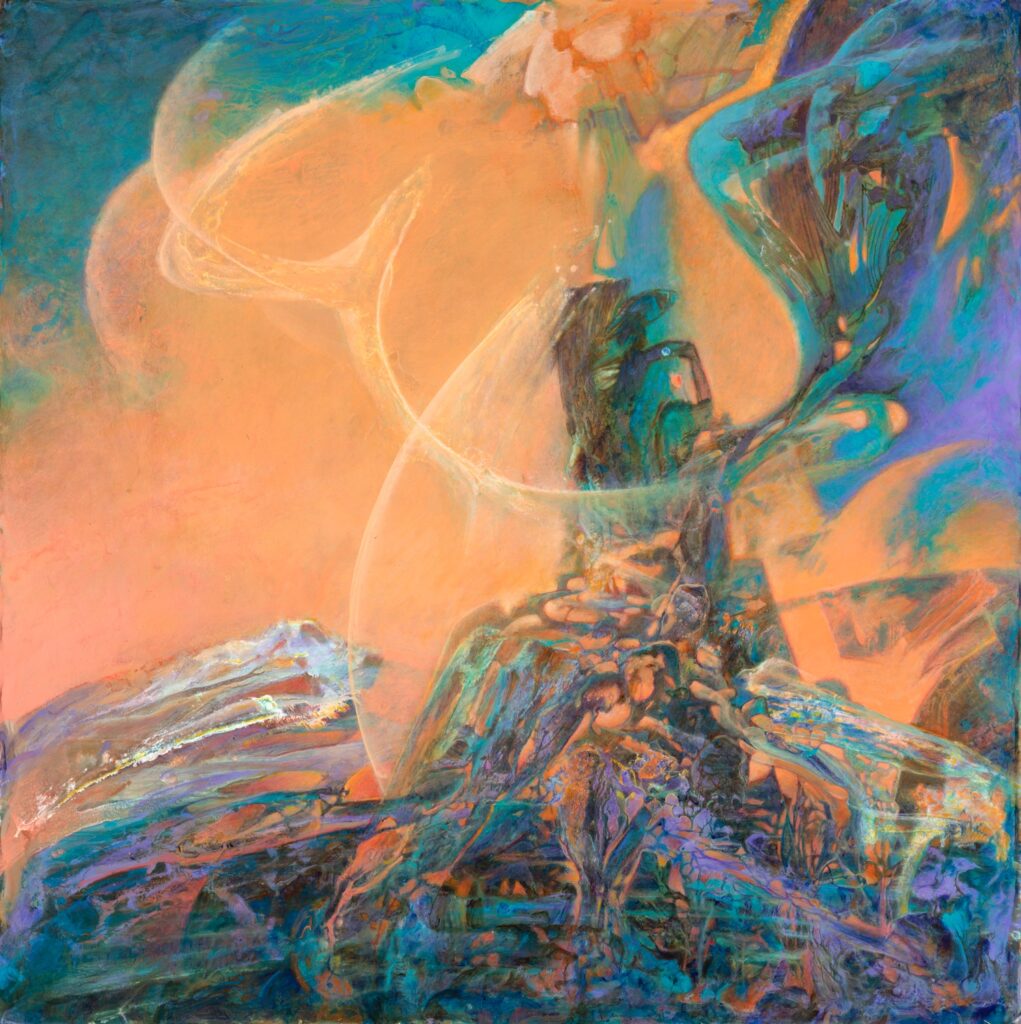
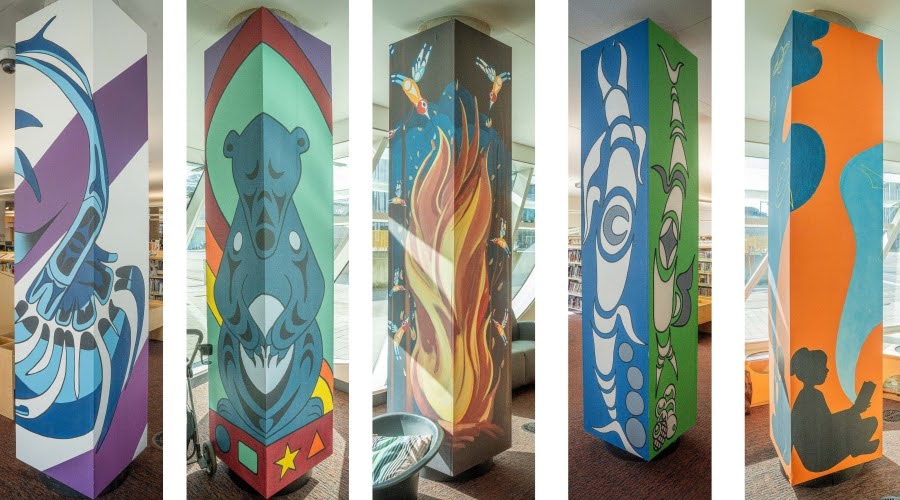
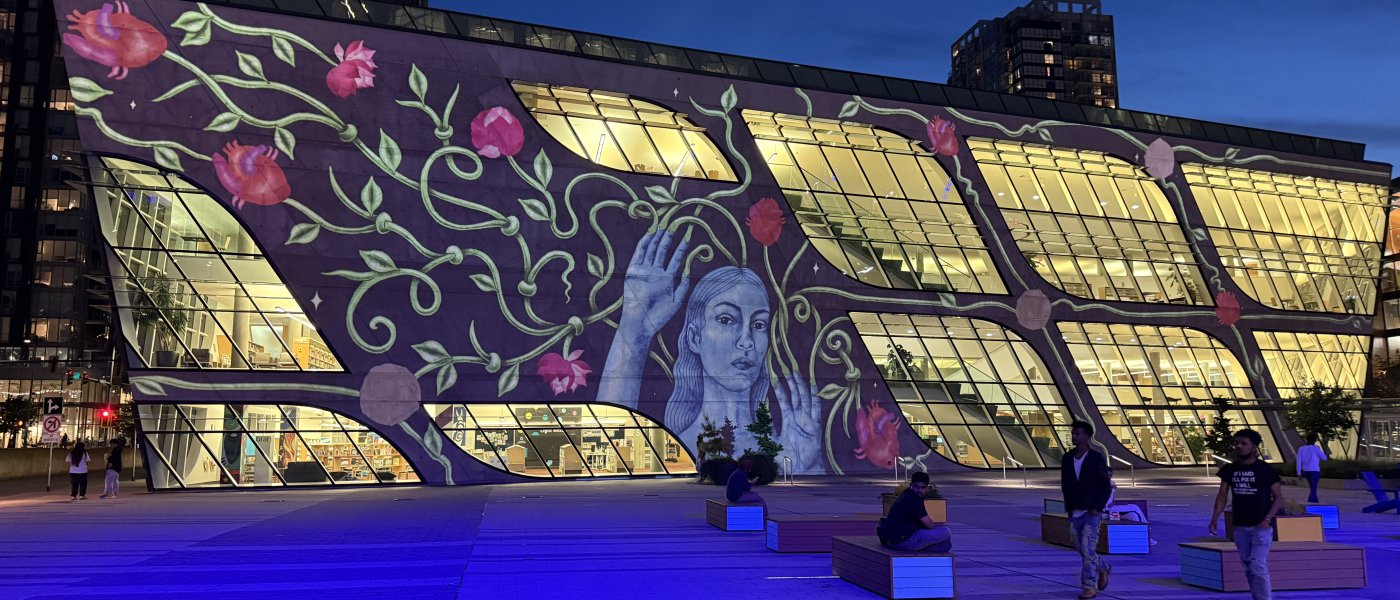
Through his paintings, public murals and sculptures, IceBear aims to bridge the gap between humanity and nature, and communicate the stories and culture of his people. He works to encourage reconciliation, and to foster respect for Mother Nature and “all her children, two legged, four legged, feathered and finned.” He hopes to facilitate greater understanding between communities dealing with challenges that come with living in a technological world. All in the name of healing the natural world for us and for future generations.
Although his pieces carry these profound narratives and other autobiographical elements, he leaves room for the viewer to make their own meaning from his art in the hope that an individual will be able to find some solace and a sense of home in his work.
For more information about IceBear and his upcoming exhibitions, check out his website.