

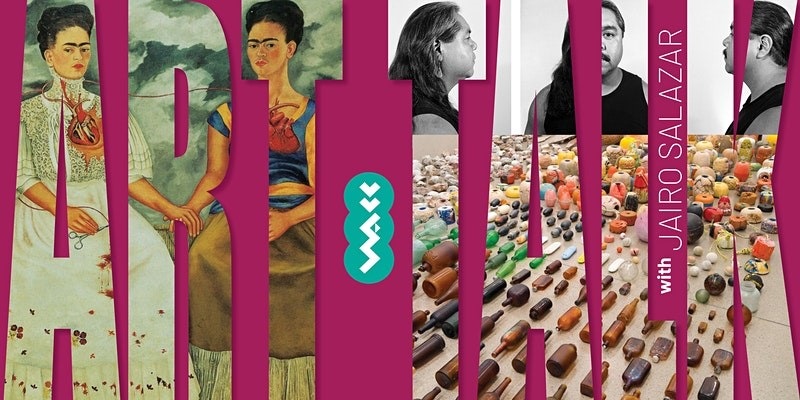
What do we mean by Latin American art? Are we referring to art produced on Latin American soil? Or is it art created by people born in Latin America? To explore these questions further, join Vancouver Latin America Cultural Center (VLACC) – via Zoom – on January 21st from 6:30-8 pm.
In this intriguing Art Talk, presented by Jairo Salazar, Salazar will discuss the challenges that have forged the local and global imaginaries of what the concept of “Latin American art” stands for in our current times. Thinking about Latin American art poses aesthetic and conceptual challenges that are the consequences of colonization, independence, and modernization, not to mention the overwhelming repercussions in the territorial, identitarian, and cultural amalgamation of the Latin American experience in the twentieth and twenty-first century. Come ready to engage with the facilitator and other attendees in this free “living room” style event.
This is a FREE event but registration is required to access the zoom link. Get your free ticket at Eventbrite.
About the Facilitator
Jairo Salazar earned his M.A. in Art History from the University of North Texas (USA) in 2008. His background includes teaching modern, contemporary, and Latin American art history courses in Colombia, the United States, and currently Canada. His academic research is devoted to issues related to the dialogues between war, catastrophe, and trauma in contemporary art. He currently works as an art history instructor at Coquitlam College and collaborates as a guest lecturer for Mobil Art School in Vancouver, Canada.
Click here to learn more about the supporters of VLACC that make this line-up of programs possible.