



By Kevin Leung
For Guud san glans Robert Davidson, a leading figure in the renaissance of Haida art and culture, the word ancestors raises an important discussion.
“In my grandparents’ generation, they were afraid to have the totem pole raised for fear of going to jail,” Davidson expressed at the opening of his new exhibition. “I’m so happy that people are less afraid and that many more people in the next generation have a head start. I am so inspired by the work they are doing”.
Davidson was 22 in the summer of 1969 when he carved and raised a totem pole in his home village of Masset, Haida Gwaii. At the time, it was the first pole to be raised in nearly a century on the island. Now, with a career spanning five decades, Davidson is known internationally as an artist and activist for bringing Haida culture back to its people.
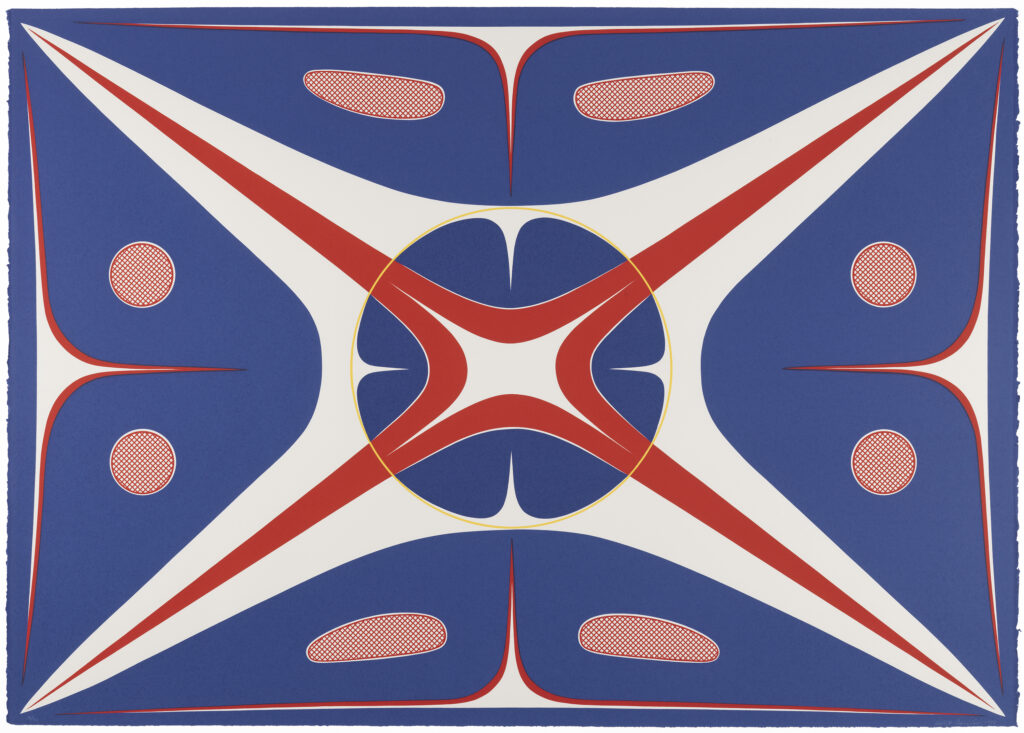
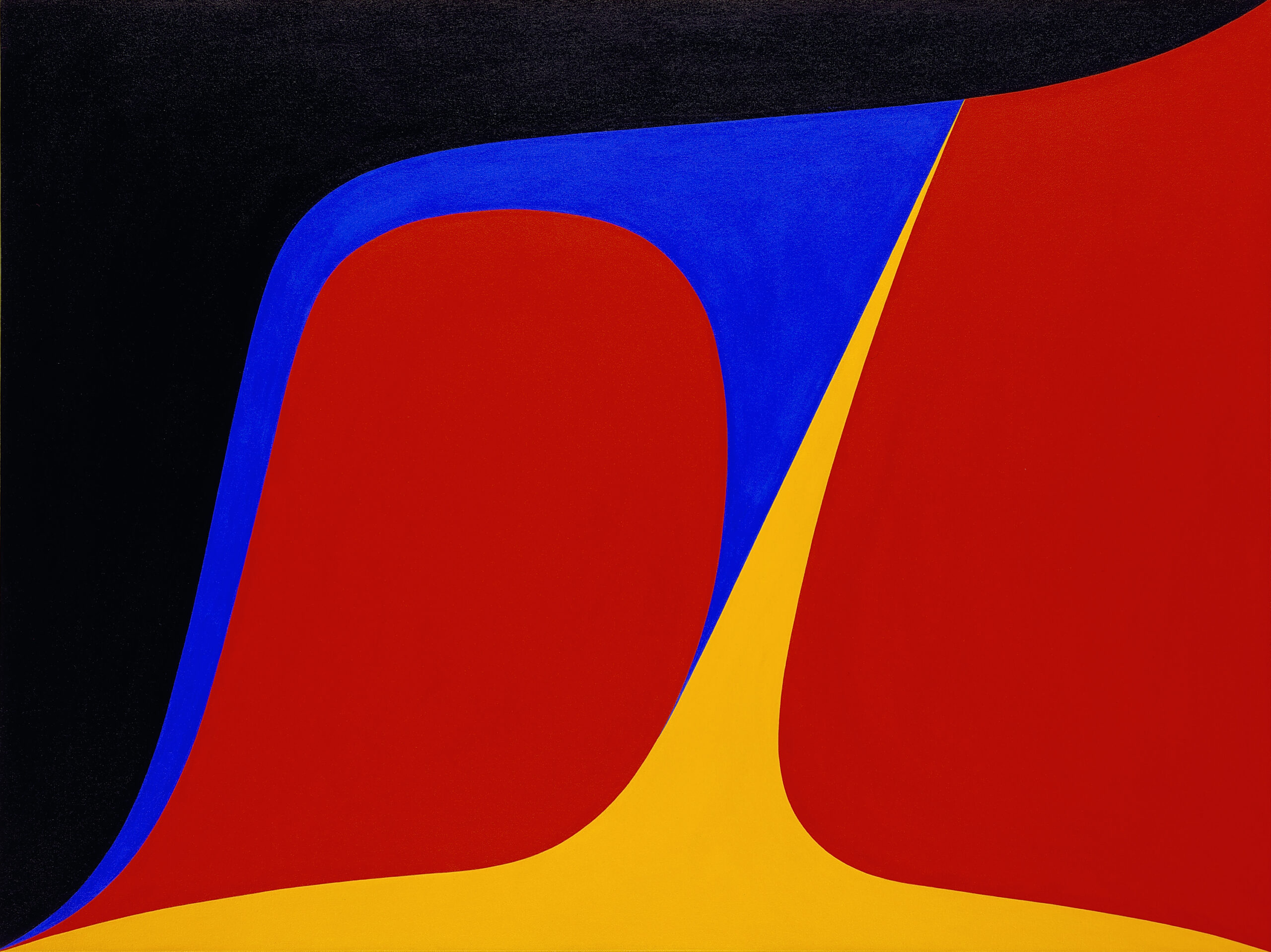
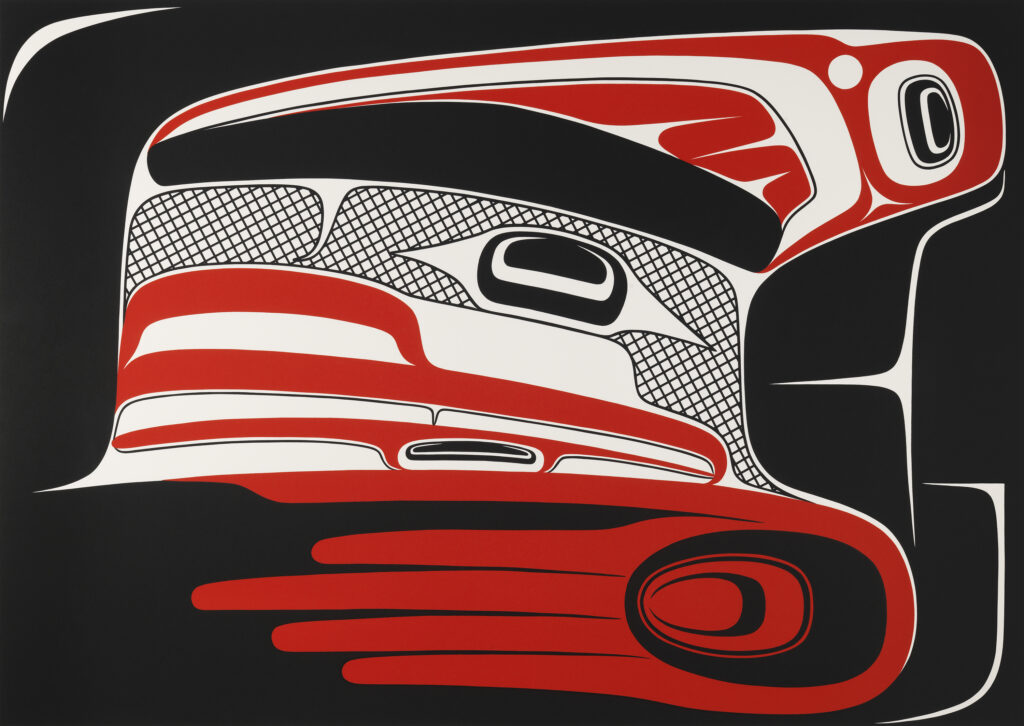
‘Guud sans glans Robert Davidson: A line that bends but does not break’ draws on the Vancouver Art Gallery’s extensive graphic collection, supplemented by paintings from local private collections, to capture the legacy of his bold path.
Viewers are welcomed into the exhibition by a video of Davidson talking candidly. It’s a brief glimpse into his process that helps elevate his work by providing a framework for what will come next. At the heart of the exhibition is Davidson’s ability to spread the knowledge of his cultural history while also bringing it forward into the 21st century with his expert use of colour, shape and lines. It’s a translation of old traditions into new abstractions while still retaining the knowledge of his roots.
Without a doubt, Davidson’s breadth of work is about an artistic movement he helped create. His creations move and “bend” traditional form lines into a new kind of cosmos that may challenge your assumptions about how we think about contemporary Indigenous art. As Davidson put it when describing one of his paintings, “this is where the soul is connected to the body, through a thin line.”
Visit the Vancouver Art Gallery to see “Guud sans glans Robert Davidson: A line that bends but does not break” from Nov 26, 2022 to April 2022
For more information, vanartgallery.bc.ca/exhibitions/robert-davidson

To easily find the VAG, and plan your route through other downtown stops, you can use the TransLink Trip Planner.



This exhibit is a continuation of the journey of reclamation and rebuilding bonds of cultural knowledge. An original reboot of the Tāpis exhibit, it adds three new makers now holding the knowledge of tāpis/tuppies (dog blankets).
When Adele ᒪᐢᑿᓱᐤᐃᐢᑵᐤ asked to be taught this knowledge from her mentor, it was with the intent of restoring important cultural knowledge taken from so many Northern Nations. For this cohort, Adele ᒪᐢᑿᓱᐤᐃᐢᑵᐤ chose makers who exhibited personal and cultural ethics close to her own, along with levels of skill necessary to undertake such a large project. “Each of these blankets takes a minimum of 200 hours (or more) to be brought to completion. It is with great pride to be able to showcase this exhibit. It has been created to show the beauty and celebration of dog regalia as completed by Michif, Dene, and other Nations to celebrate our valued dog kin.”
Originating from the Métis, Northern Cree, and Dene communities, ‘li tāpis’ (small carpet), named by the French Michif and known as ‘tuppies’ by the English and Scottish Michif, are dog blanket regalia created to celebrate dogs. Tāpis are made from wool and embellished with intricate beadwork, silk embroidery, moose or caribou hair tufting, fringed with ribbon or yarn and adorned with bells. Showing respect for sled dogs, tāpis were draped over the backs of dogs.