






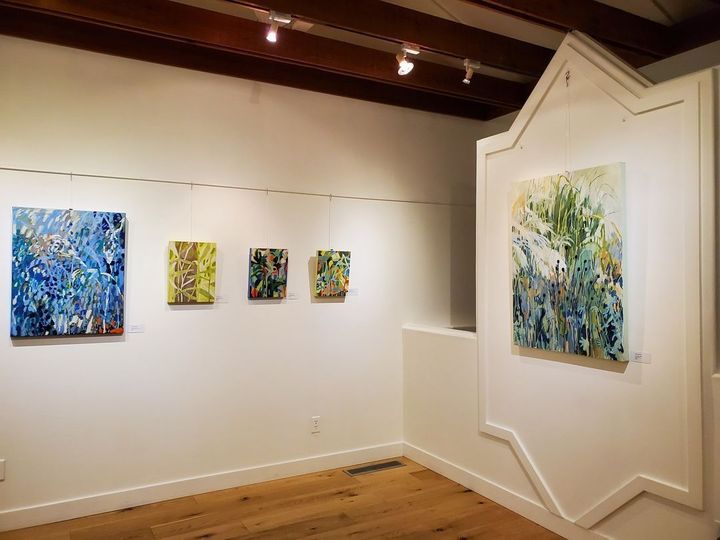
The fragility of earthen memory lies at the heart of this exhibition at New Westminster’s Gallery at Queen’s Park.
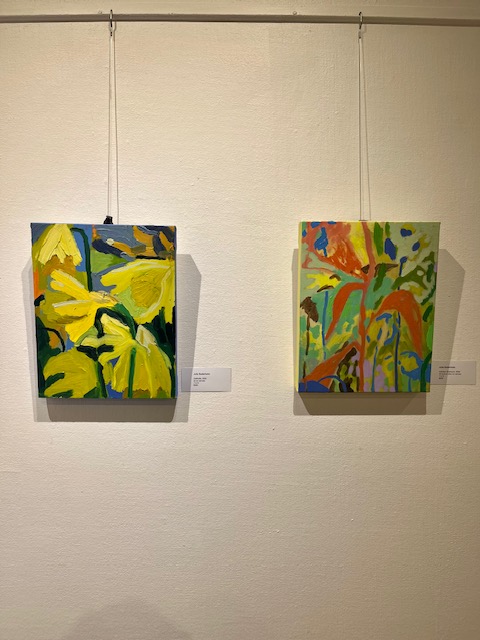
“The Grief of Green” by Julia Soderholm brings a scaled-down view of nature and how we can face its fading colour as the years go by. With oil paint and pastel on canvas, Soderholm creates lush garden-scapes that exude a sense of personal green space. In each vibrant organic scene, I found blurred memories of looking through a rain-fogged window at the flowers outside, and hoping I could go out and play again soon. It’s an appropriate lens to tap into this type of memory, as the haze of time blurs the form of petals and stems.
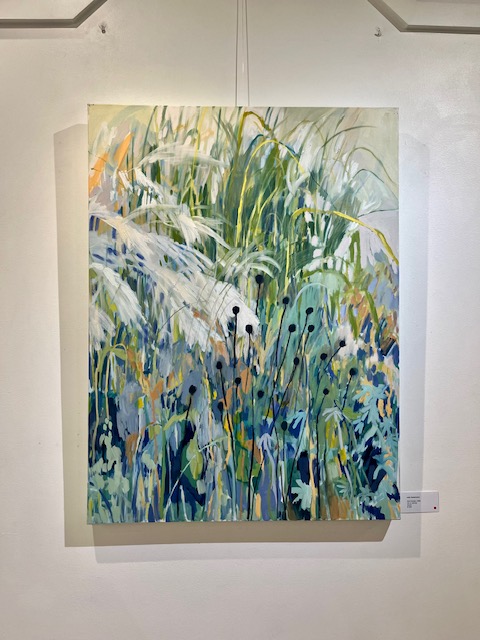
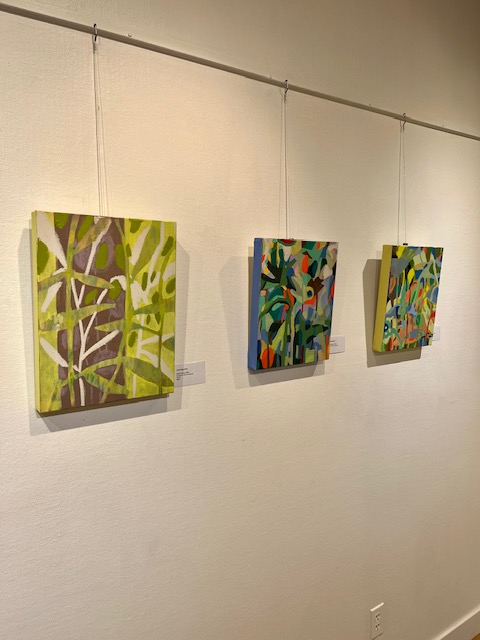
This feeling of longing that the storm will eventually pass permeates through each piece as the artist expresses her looking for hope amid the climate crisis. It’s a relatable feeling to get caught in a cycle of anxiety when looking towards an uncertain future, but through these small moments, it shows how important it is to appreciate the present.
As Soderholm says in her accompanying statement, “These works are grounded in the belief that paying attention is itself, a meaningful act.” It’s a meditative reminder that even while we wait for the clouds to clear, there’s still beauty and stillness to find as the downpour rages on.
The Grief of Green is on now until November 27
Cover photo by The Gallery at Queen’s Park

The Gallery at Queen’s Park: From New West Station, take the #105 Uptown bus to 1st Street









This exhibit is a continuation of the journey of reclamation and rebuilding bonds of cultural knowledge. An original reboot of the Tāpis exhibit, it adds three new makers now holding the knowledge of tāpis/tuppies (dog blankets).
When Adele ᒪᐢᑿᓱᐤᐃᐢᑵᐤ asked to be taught this knowledge from her mentor, it was with the intent of restoring important cultural knowledge taken from so many Northern Nations. For this cohort, Adele ᒪᐢᑿᓱᐤᐃᐢᑵᐤ chose makers who exhibited personal and cultural ethics close to her own, along with levels of skill necessary to undertake such a large project. “Each of these blankets takes a minimum of 200 hours (or more) to be brought to completion. It is with great pride to be able to showcase this exhibit. It has been created to show the beauty and celebration of dog regalia as completed by Michif, Dene, and other Nations to celebrate our valued dog kin.”
Originating from the Métis, Northern Cree, and Dene communities, ‘li tāpis’ (small carpet), named by the French Michif and known as ‘tuppies’ by the English and Scottish Michif, are dog blanket regalia created to celebrate dogs. Tāpis are made from wool and embellished with intricate beadwork, silk embroidery, moose or caribou hair tufting, fringed with ribbon or yarn and adorned with bells. Showing respect for sled dogs, tāpis were draped over the backs of dogs.