





By Tara Lee
Family, whether the one born into or the one chosen, helps to cultivate belonging, location, and a sense of identity. However, maintaining these relationships can be fraught, especially with generational differences and the dispersions that come with travel and migration.
Running until April 24, at Emily Carr’s Libby Leshgold Gallery, Related gathers together five diverse artists from the place called “Canada,” each of whom have a compelling story to tell about the complicated inheritances passed down to them. Their mediums, ranging from beadwork to film, capture their negotiations of cultural histories, the multiple places they’ve called home, and most notably, the people both close and distant to them.
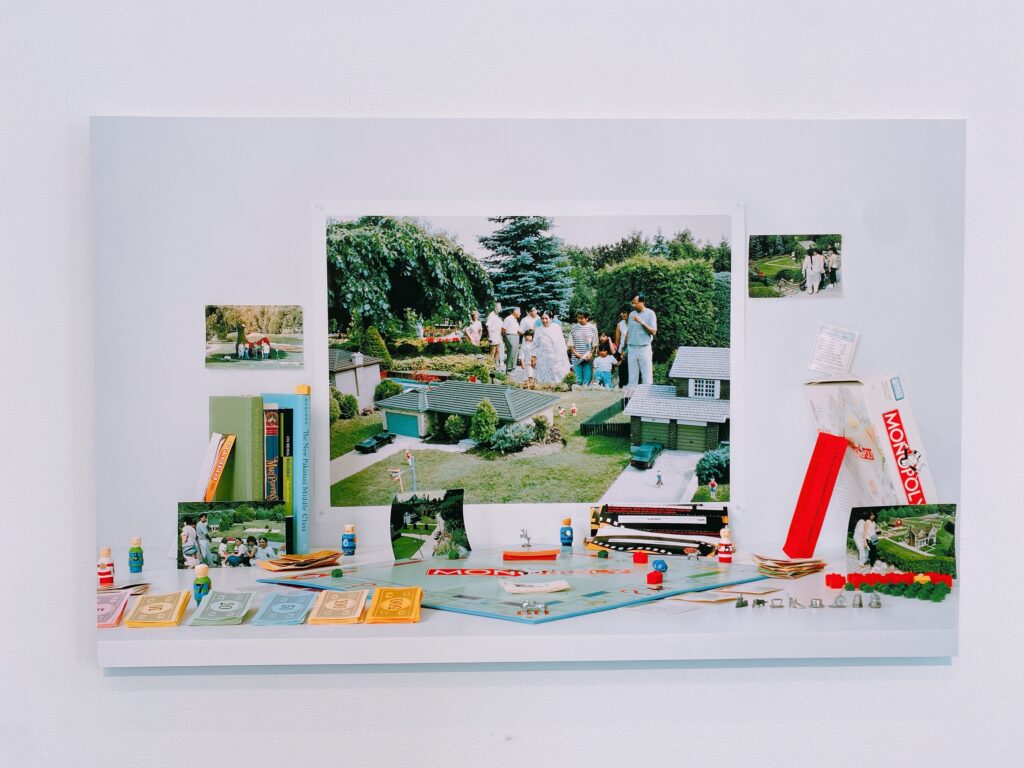
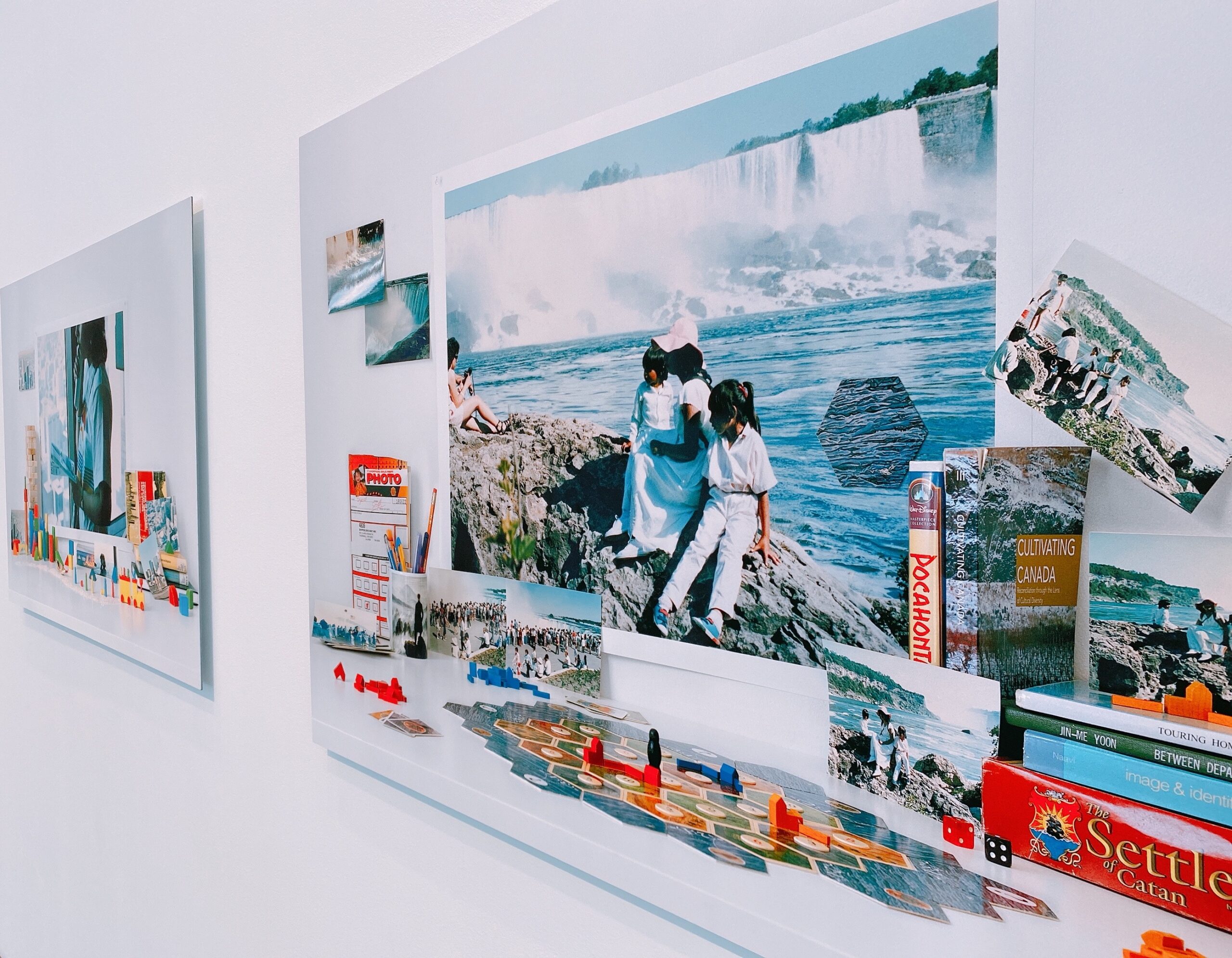
Curator Lyndsay Pomerantz has created a journey through each artist’s work, beginning with inkjet prints and a short video by Zinnia Naqvi, which form part of the series Yours to Discover (2019). In the prints, Naqvi juxtaposes found photographs of her family visiting tourist attractions in Ontario with games, books, and even VHS Disney movies, as she questions her family’s place within Canada. Images of them posing in front of Niagara Falls seem familiar, even reassuring, if not for the board game The Settlers of Catan serving as a reminder of ongoing colonialism that views nature as territory to be claimed.
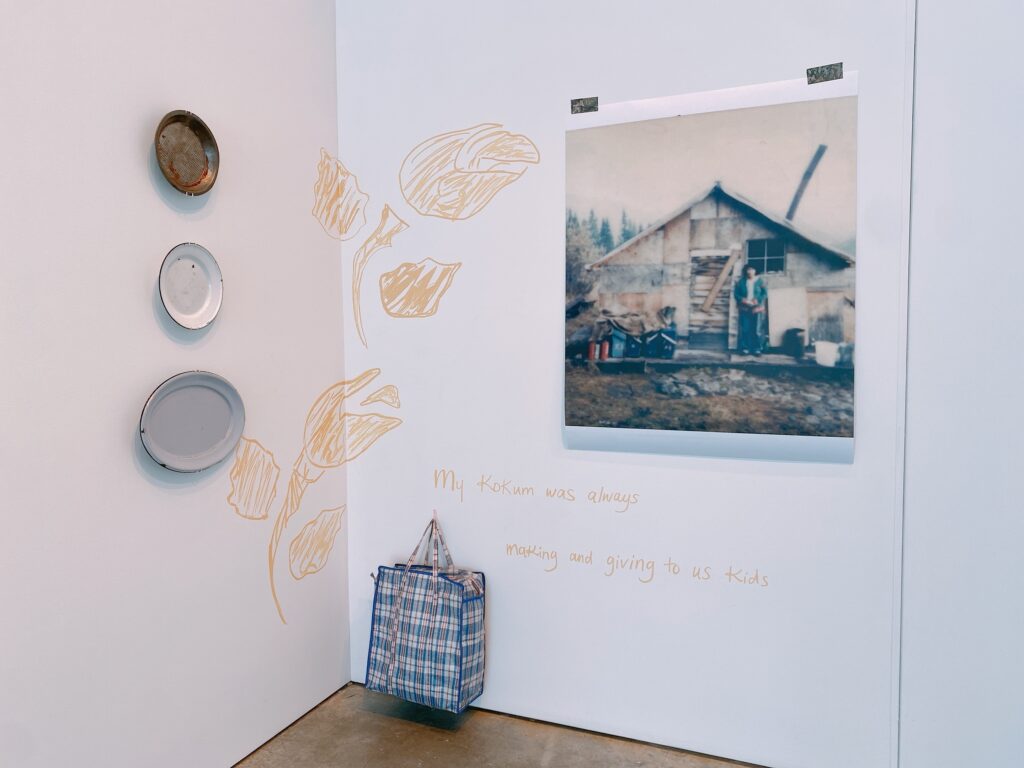
Particularly moving is Kokum (2022), by Brittney Namaakii Bear Hat, who explores her Blackfoot and Cree/Dane-zaa ancestry through objects given to her by her kokum (grandmother in Cree). Everyday household items, such as a cast-iron pan and enamel plates, solidify the legacy of Bear Hat’s kokum. Antlers and branches, as well as a photograph of her family processing wild game, connect Bear Hat to how her cultural traditions are intertwined with nature. Ultimately, Kokum conveys a deep affection for the artists’ family, and stresses the need to actively preserve what could easily be forgotten.
While each artist’s work in Related is unique, they all celebrate the connective power of cultural knowledge and the dialogue between generations. A short film Otaanimm/Onnimm (2020), by Terrance James Houle and Neko Wong-Houle, delights in the interplay between father and daughter. Houle and Wong-Houle share not only Blackfoot ancestry, but also a belief in the empowering effects of artistic creation. The film, shot on 35-mm film, combines hand-drawn animations with scenes of Houle and Wong-Houle interacting. “We roar in the face of hardship,” Wong-Houle narrates, joyfully proclaiming their resilience as artists but equally as family members.
Tucked away from the other three works is a small screening room playing Gabi Dao’s Excerpts from the Domestic Cinema Ch.1 and Ch.2 (2019). Beaded curtains frame the projection screen, and bean bag chairs invite viewers to make themselves comfortable, as if they have been welcomed into a family’s home. In the film, Dao adapts the memoir of her father, Duc Kim Dao, poetically meditating on themes such as displacement, nostalgia, and cultural adaptation. Voiceovers from both Gabi and Duc Kim make their family history interactive and vibrant. Meanwhile, the ticking of a metronome warns of the passage of time and the potential to forget Duc Kim’s precious story.
Together, the works that compose Related form their own family, one engaged in a provocative conversation on the ties that bind across disparate places, times, and spaces.
Related is on now until April 24
libby.ecuad.ca
*All photos by Tara Lee
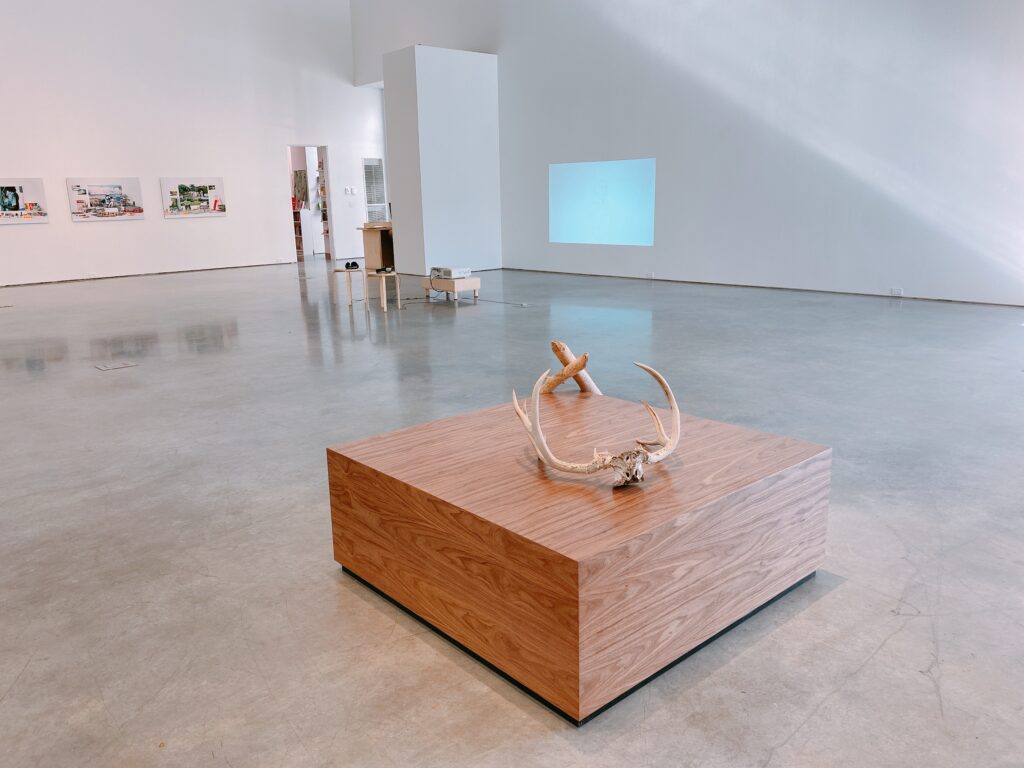
Left: Yours to Discover by Zinnia Naqvi,
Far-right wall: Otaanimm/Onnimm, by Terrance James Houle and Neko Wong-Houle






This exhibit is a continuation of the journey of reclamation and rebuilding bonds of cultural knowledge. An original reboot of the Tāpis exhibit, it adds three new makers now holding the knowledge of tāpis/tuppies (dog blankets).
When Adele ᒪᐢᑿᓱᐤᐃᐢᑵᐤ asked to be taught this knowledge from her mentor, it was with the intent of restoring important cultural knowledge taken from so many Northern Nations. For this cohort, Adele ᒪᐢᑿᓱᐤᐃᐢᑵᐤ chose makers who exhibited personal and cultural ethics close to her own, along with levels of skill necessary to undertake such a large project. “Each of these blankets takes a minimum of 200 hours (or more) to be brought to completion. It is with great pride to be able to showcase this exhibit. It has been created to show the beauty and celebration of dog regalia as completed by Michif, Dene, and other Nations to celebrate our valued dog kin.”
Originating from the Métis, Northern Cree, and Dene communities, ‘li tāpis’ (small carpet), named by the French Michif and known as ‘tuppies’ by the English and Scottish Michif, are dog blanket regalia created to celebrate dogs. Tāpis are made from wool and embellished with intricate beadwork, silk embroidery, moose or caribou hair tufting, fringed with ribbon or yarn and adorned with bells. Showing respect for sled dogs, tāpis were draped over the backs of dogs.