When you desire to improve the world, knowing where to start isn’t always a clear path. But on March 24th, those who strive for change will get a dedicated opportunity to contribute a meaningful social shift.
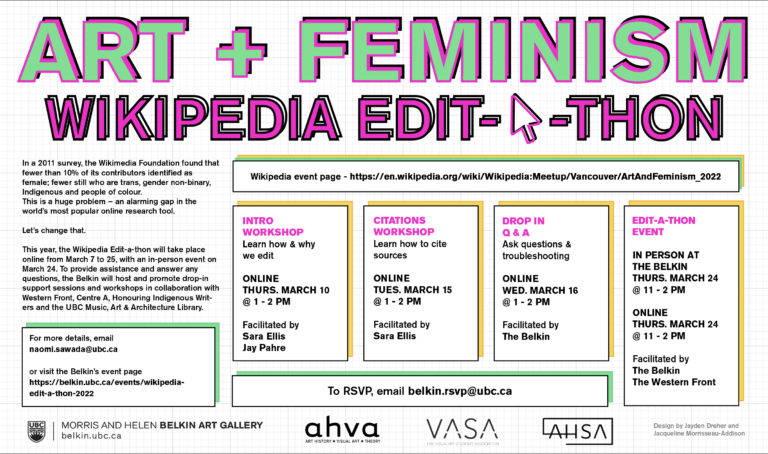
A phenomenal cross-campus team-up at UBC has designed an event where you can give a more permanent space to alternative voices online. This year’s Art+Feminism Wikipedia Edit-a-thon is just one gathering of the worldwide art community that every March converge to correct Wikipedia’s gendered biases and improve the content of under-represented persons on the tenth most visited site in the world.
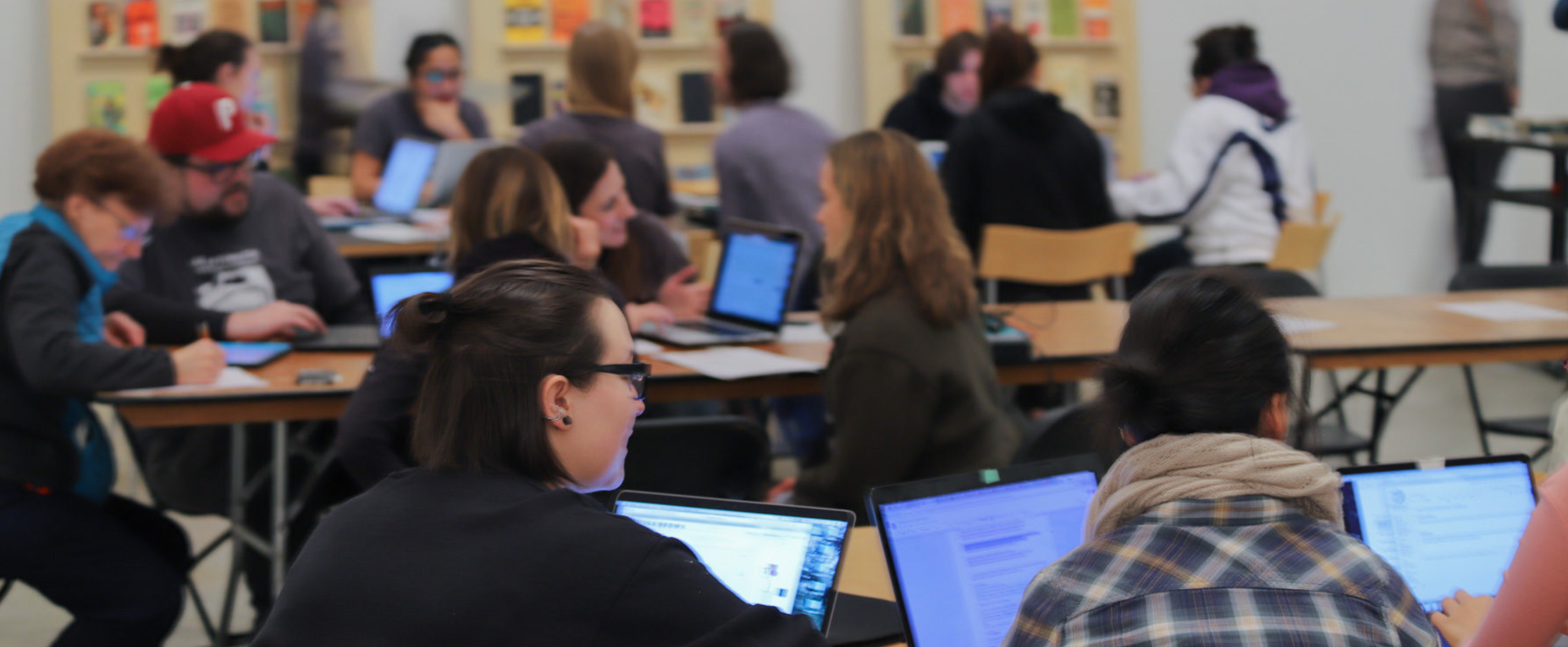
You can participate as a catalyst for social change remotely or at the Belkin Art Gallery from 11 am to 2 pm. Attendees will join in writing or editing Wikipedia pages to improve how we communicate and understand articles about women, non-binary, people of colour, and Indigenous artists, in addition to feminist and activist art movements.
Have you recently learned of an exceptional figure but are disappointed that there is little collected information about them online? Or is there a yet-to-be-discovered musician or artist you’d like to help share their message or music? Many voices are in need of elevating right now, and this is an excellent opportunity to be the one to do just that for a person, group, or mission you feel strongly about.
If the event sounds like it’s outside of your technical wheelhouse, not to worry, you’ll be provided everything you need to help out. You can also learn more about the process via a handful of lead up events.
Before the Edit-a-thon, you can join online how-to sessions, or drop-in for a virtual Q & A:
- Tuesday, 15 March 2022 from 1 to 2 pm: (Virtual) Citations How-to Workshop with Sara Ellis
- Wednesday, 16 March 2022 from 1 to 2 pm: (Virtual) Drop-In Q&A Session with the Belkin
Can’t make it? See the online guides and videos. You can find more information on Art+Feminism’s website.
To RSVP for the how-to, drop-in or on-site Edit-a-thon, email the gallery at belkin.rsvp@ubc.ca.
This event has been made possible by a collaboration between the Belkin Art Gallery, the UBC Art History Students Association, Visual Arts Students Association, the Department of Art History, Visual Art and Theory, the UBC Music, Art & Architecture Library.
*Photos courtesy of Belkin Art Gallery