




By Paula Burrows
*Cover image by Blaine Campbell
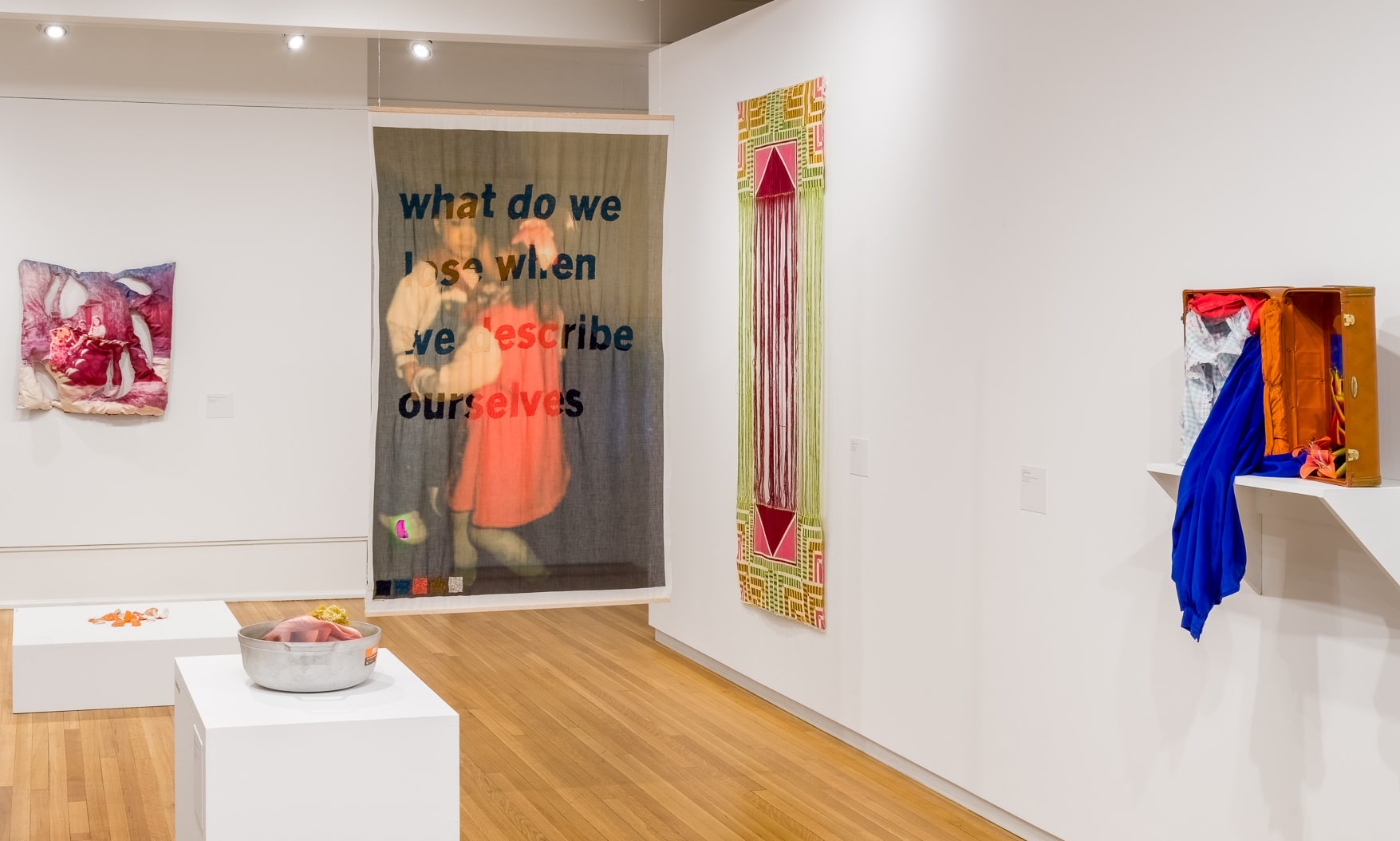
The exhibition Ghostly Makers, on now at Burnaby Art Gallery, spotlights artists redefining the concept of cultural belonging. Each featured piece explores how supernatural phenomena (or hauntings) can offer a healing path for uprooted communities.
Curated by Carmen Levy-Milne, this thoughtful collection features the work of five artists: Samar Hejazi, Jacqueline Morrisseau-Addison, Keysha Rivera, Arezu Salamzadeh, and Lan “Florence” Lee. It’s an eclectic array of female, non-binary, and gender-fluid voices from differing backgrounds, with the throughline of their use of ghostly imagery. Each artist creatively reimagines cultural practices that have been brushed aside or outright lost through their transfer through colonization and settlement.
Curator Levy-Milne, who is of Ashkenazi Jewish and Irish heritage, had the idea for the show as part of her master’s thesis at UBC, in which she delves into the therapeutic potential of art for community restoration and healing of collective trauma. The show’s title, borrowed from Avery Gordon’s work Ghostly Matters: Haunting and the Sociological Imagination, introduces haunting as a state of refamiliarization. It’s a compelling notion that serves as the backbone of Levy-Milne’s vision.
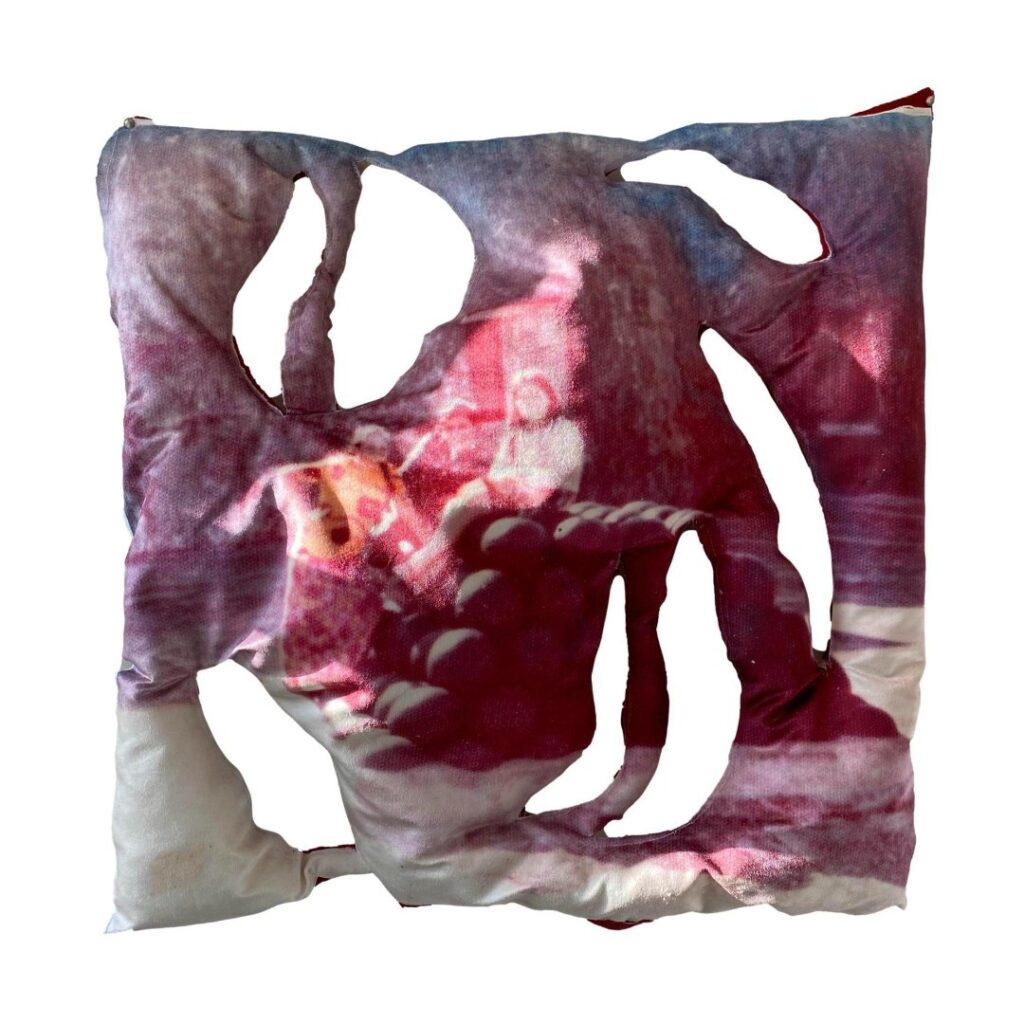
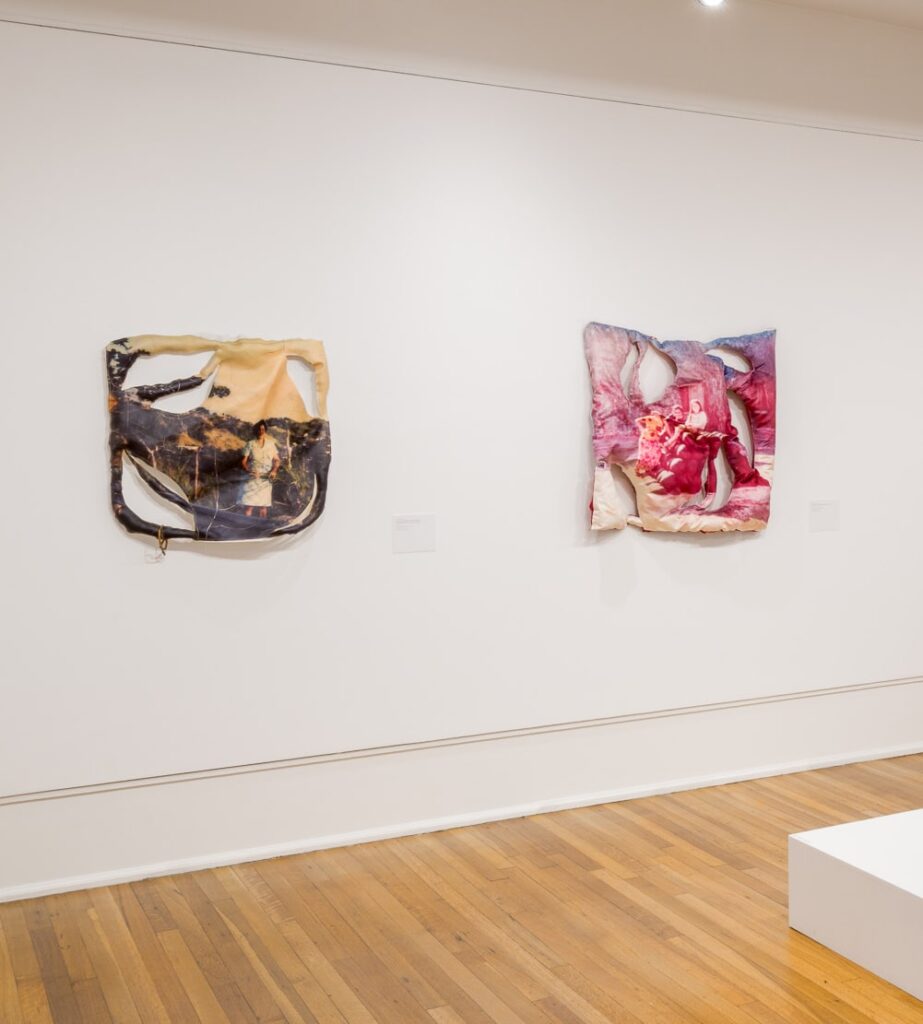
Right – Rivera’s work in installation, photo by Blaine Campbell
The artists use a diverse range of mediums to communicate the intricacies of cultural identity and belonging, particularly in the context of diasporic populations. The shared use of haunting imagery underscores the mission to reclaim and reinterpret cultural heritage that has suffered intergenerational loss.
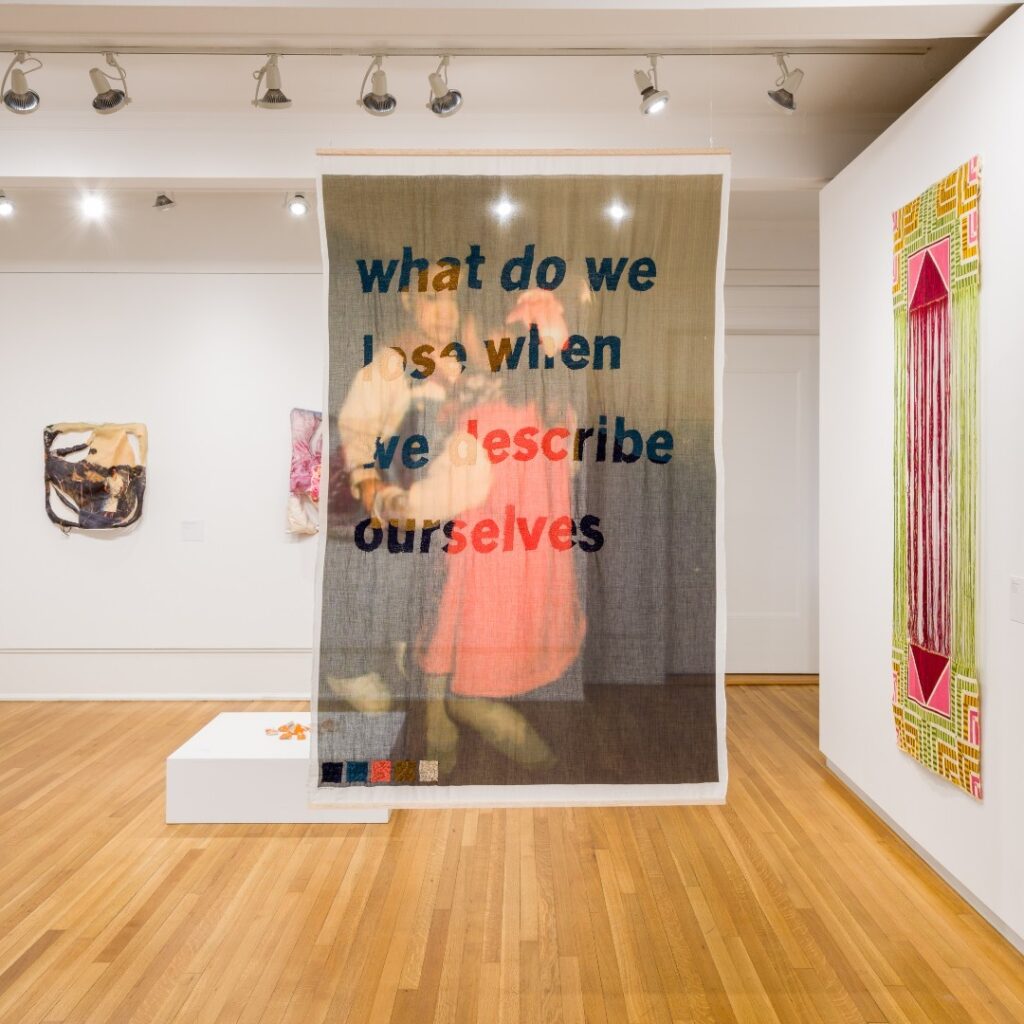
Exploring the space, Keysha Rivera, an artist of Afro-Indigenous descent, beckons visitors with her soft sculptures crafted from 2D photographs taken by her mother during the 1980s. These works delve into home vulnerability, Caribbean identity, and the tenderness of memory and recollection.
Samar Hejazi’s exceptional work, Intricacies of Wholeness, draws inspiration from traditional Palestinian Tatreez designs. Palestinian women originally embroidered these intricate designs to identify their ancestral villages. Hejazi deviates from the conventional constraints of embroidery, experimenting with novel thread techniques to create abstract forms. It’s an approach that challenges the established norms while paying homage to a historical medium of expression that empowered women when spoken words were inadequate. Palestinian women could, through their embroidery, record their observations and stories, avoiding the societal oppression they lived through. After al-Nakba, the mass exodus of Arabs from Palestine, Tatreez designs became symbols for the preservation of Palestinian culture. A Canadian of Palestinian descent, Hejazi challenges notions of cultural identity and belonging with these abstract Tatreez embroideries.
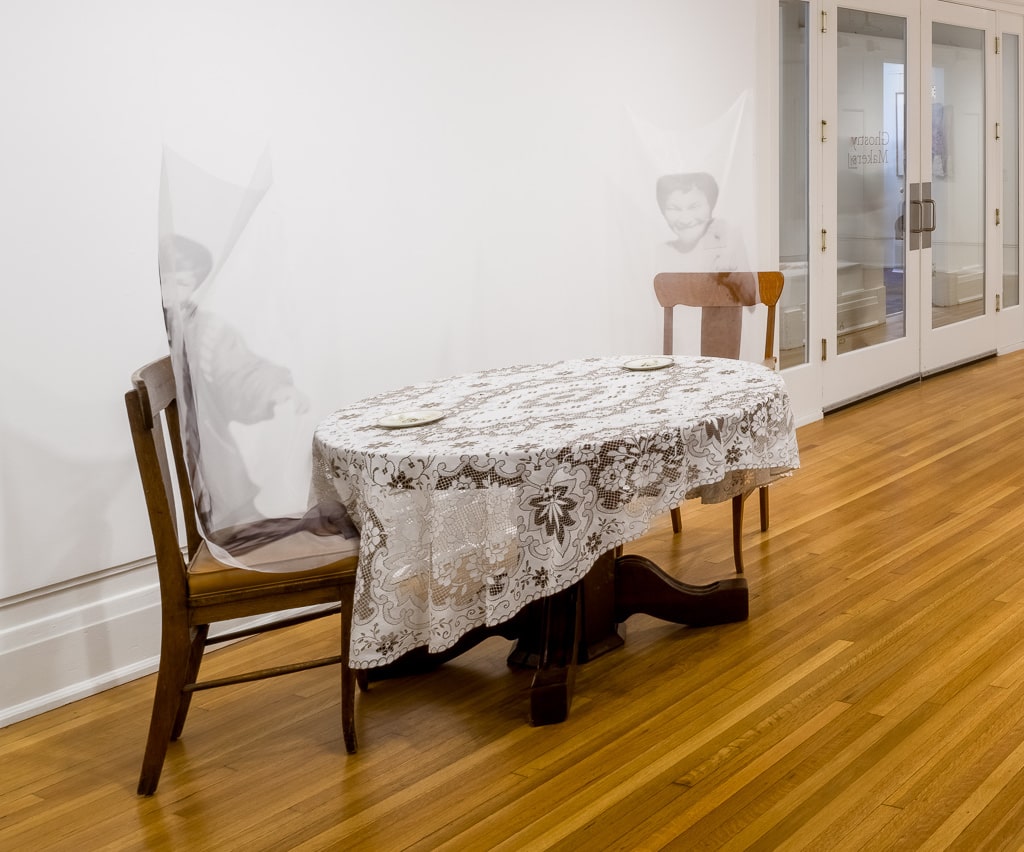
Left – wiikondiwin, by Jacqueline Morrisseau-Addison, 2023, Family photographs on organza, chairs, table, lace tablecloth, ceramic plates, seed beads, and tobacco, dimensions variable
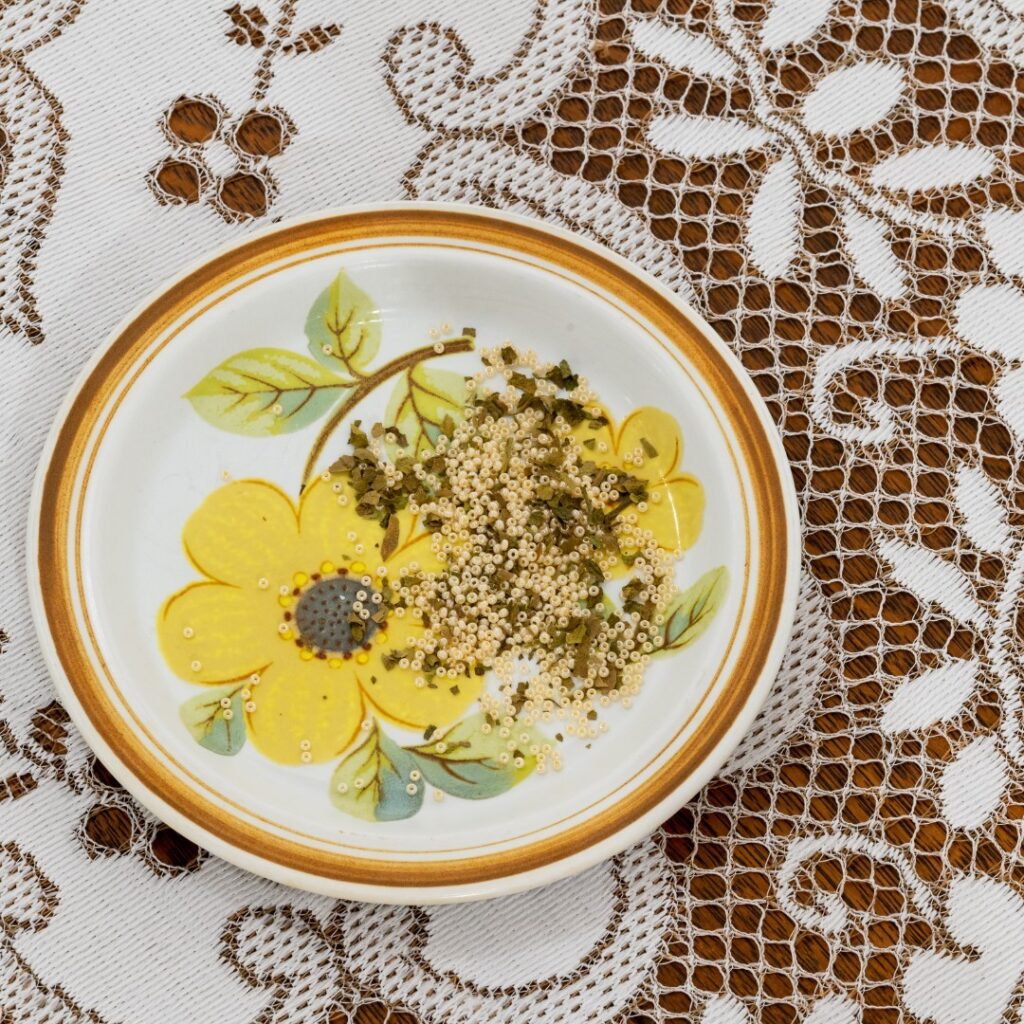
Right – wiikondiwin (detail), photos by Blaine Campbell
Beautiful in its simplicity is a collection of ceramic orange peels by Lan Florence Yee in collaboration with their friend Arezu Salamzadeh entitled Please Help Yourself. The peels symbolize the Cantonese practice of sharing among guests and strangers as a gesture of hospitality. During the isolation of the pandemic, Yee and Salamzadeh shipped unmoulded clay to friends and family and asked them to “share a tangerine.” The resulting fired and glazed peels are now a testament to collective creativity and shared human experiences.
Another poignant piece comes from mixed-media artist Jacqueline Morrisseau-Addison, who contributes Wiikondowin. The piece encapsulates the Anishinaabe practice of honouring spirits in the otherworld. Morrisseau-Addison invites viewers into her family kitchen, a space that embodies the nurturing of familial bonds through the retelling of ancestral stories. She bridges temporal and spatial distances, fostering connections with loved ones she’s never met in person.
In its entirety, Ghostly Makers thoughtfully unites five exceptional artists, each on a personal journey to preserve and reconnect with their ancestral cultures. Their expressions serve as a testament to the persistence of cultural identity even when one is raised far from its roots or when historical injustices have suppressed those roots. The show invites us to ponder what cultural belonging truly means, especially for those whose traditions have been overshadowed by colonialism.
You can visit Ghostly Makers as well as the gallery’s other current exhibit, Tending Otherworlds, until September 24, 2023
For more details, visit https://www.burnaby.ca/recreation-and-arts/arts-and-culture-facilities/burnaby-art-gallery/exhibitions/ghostly-makers-and-tending-otherworlds

Burnaby Art Gallery: From Metrotown Station, take the #144 Bus to Deer Lake Ave and Rowan Drive
Photography: Blaine Campbell




This exhibit is a continuation of the journey of reclamation and rebuilding bonds of cultural knowledge. An original reboot of the Tāpis exhibit, it adds three new makers now holding the knowledge of tāpis/tuppies (dog blankets).
When Adele ᒪᐢᑿᓱᐤᐃᐢᑵᐤ asked to be taught this knowledge from her mentor, it was with the intent of restoring important cultural knowledge taken from so many Northern Nations. For this cohort, Adele ᒪᐢᑿᓱᐤᐃᐢᑵᐤ chose makers who exhibited personal and cultural ethics close to her own, along with levels of skill necessary to undertake such a large project. “Each of these blankets takes a minimum of 200 hours (or more) to be brought to completion. It is with great pride to be able to showcase this exhibit. It has been created to show the beauty and celebration of dog regalia as completed by Michif, Dene, and other Nations to celebrate our valued dog kin.”
Originating from the Métis, Northern Cree, and Dene communities, ‘li tāpis’ (small carpet), named by the French Michif and known as ‘tuppies’ by the English and Scottish Michif, are dog blanket regalia created to celebrate dogs. Tāpis are made from wool and embellished with intricate beadwork, silk embroidery, moose or caribou hair tufting, fringed with ribbon or yarn and adorned with bells. Showing respect for sled dogs, tāpis were draped over the backs of dogs.