





A photography exhibition of two remote Japanese villages, Where Songs Surface, shows how dreams and legends can parallel each other in the waking world. The show features the work of two artists, Masako Miyazaki and Yoshimi Lee, and is on now at The Nikkei National Museum and Cultural Centre in Burnaby.
With the imagery of the two displays focused on these isolated towns, there’s a natural sense of escapism to the lenses of the artists. Miyazaki focuses on her time spent in Toono, a rural town in northern japan, while Lee shows images and video from her frequent visits to Irokawa, a mountain village of only 400 residents.
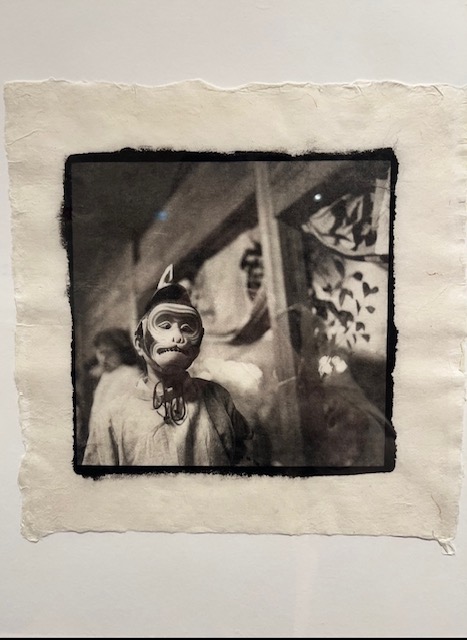
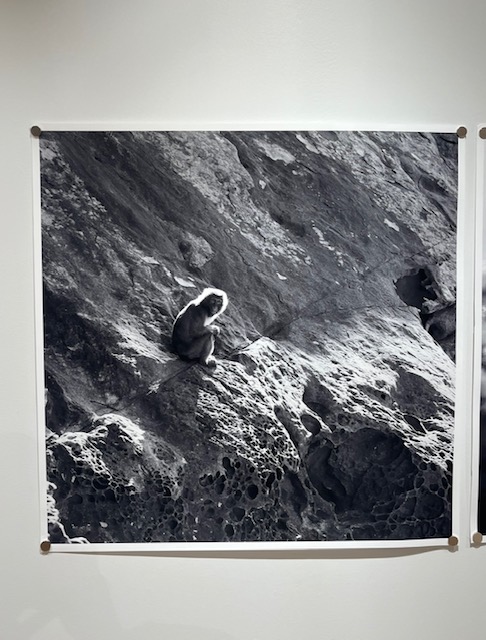
In Miyazaki’s work, we’re told the parable of the monkey monster, Futtachi, a figure of Japanese folklore. Through a series of large prints of Toono’s landscape and forests, we see numerous monkeys living seemingly at the edge of the human and animal world. Miyazaki shows these scenes from the perspective of Futtachi and the animal world and presents them with pieces of poetry to question our place within nature. Is the human experience more rooted in how we choose to be, or how we first began in our more primal state? Miyazaki encourages her audience to consider both perspectives and how the tension between them manifests itself in the world and our behaviour.
Each photo in this series was created using a platinum print technique onto Washi paper. This process creates incredibly durable prints that will last thousands of years, mimicking the tales that inspired the artist. Additionally, platinum printing doesn’t yield the same exact results every time, similar to how legends like Futtachi can evolve and change while being told and retold.
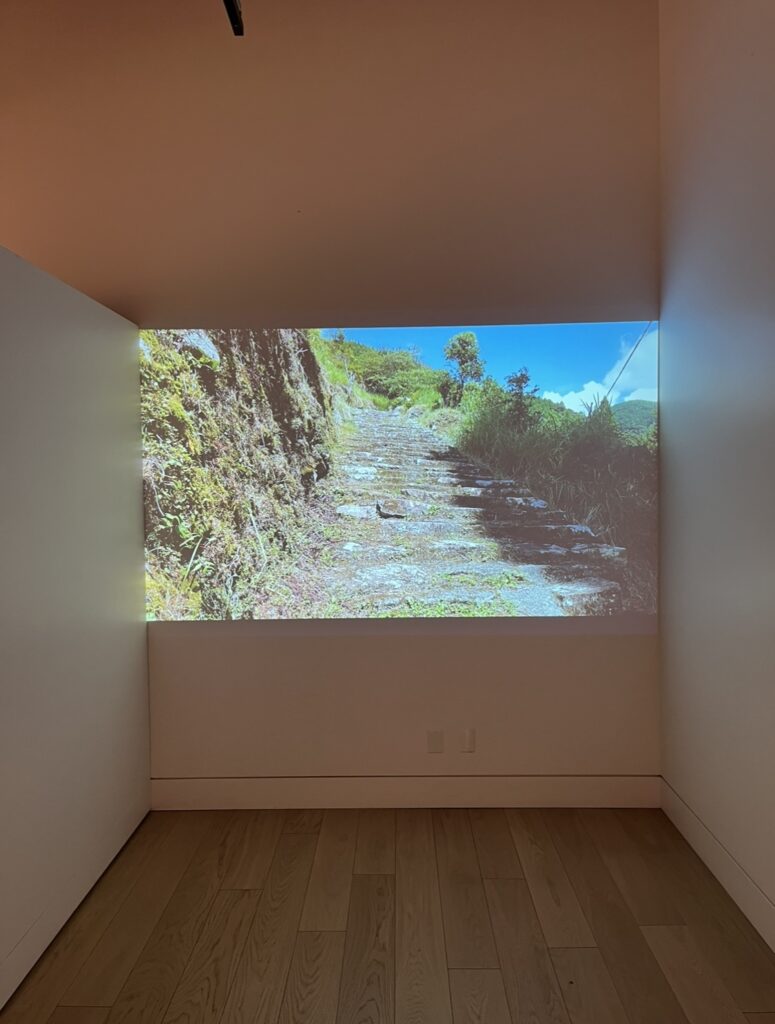
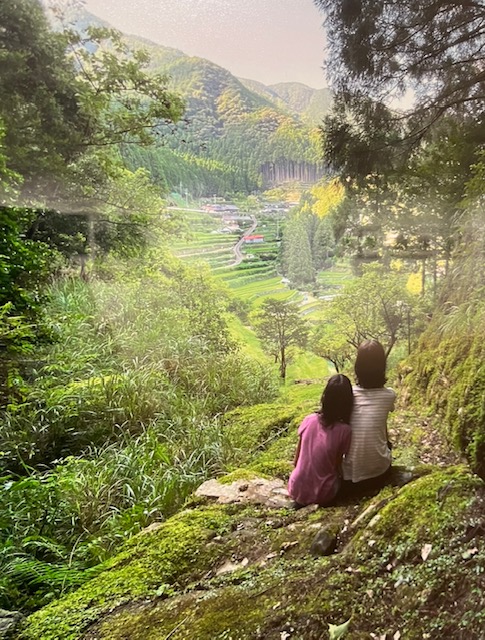
In Lee’s section of the exhibit, she tells how the town of Irokawa has carved a place into her subconscious and touched on memories, she’s not sure are her own. Upon entering the display, we’re greeted with a photograph of two figures sharing the view of a tranquil green space. This theme of pause and contemplation runs throughout Lee’s work here.
Titled Resonance, Lee shares thoughts on her visits to the mountain settlement, and how the small population has cultivated a life from the unforgiving terrain. A projected video shows small moments from around the town- a curtain fluttering softly in the breeze, the treelined horizon of sprawling mountain peaks, and a weathered pathway. Each scene is like a remembered detail in its specificity. The pieces we hang on to in order to tell a story. Lee does just that in her nostalgic feelings towards the town and how it reminds her of her childhood with her grandmother. She tells of how she eventually would bring her daughters to Irokawa, and wonders if the same familiar seeds of nostalgia are being planted in their hearts. That deep sense of deja vu lends itself to a dream-like quality, where you’re not sure if something truly happened or not. The title of Resonance is fitting as these almost indescribable feelings echo within us when thinking back to the lives we’ve lived.
Both parts of this exhibit draw upon those moments of familiarity within the exotic. Whether we’re looking for connection to the ones that came before us within a retold story, or we’re looking inward for clues to who we are. It’s all a matter of perspective.
Where Songs Surface is on until September 16, 2023
For more details about the exhibit, you can visit centre.nikkeiplace.org

Nikkei National Museum and Cultural Centre: From Metrotown Skytrain Station, take. the#119 Edmonds bus to Sperling Ave. and Kingsway
Plan your route to see this show or other community events at the museum with TransLink Trip Planner.






This exhibit is a continuation of the journey of reclamation and rebuilding bonds of cultural knowledge. An original reboot of the Tāpis exhibit, it adds three new makers now holding the knowledge of tāpis/tuppies (dog blankets).
When Adele ᒪᐢᑿᓱᐤᐃᐢᑵᐤ asked to be taught this knowledge from her mentor, it was with the intent of restoring important cultural knowledge taken from so many Northern Nations. For this cohort, Adele ᒪᐢᑿᓱᐤᐃᐢᑵᐤ chose makers who exhibited personal and cultural ethics close to her own, along with levels of skill necessary to undertake such a large project. “Each of these blankets takes a minimum of 200 hours (or more) to be brought to completion. It is with great pride to be able to showcase this exhibit. It has been created to show the beauty and celebration of dog regalia as completed by Michif, Dene, and other Nations to celebrate our valued dog kin.”
Originating from the Métis, Northern Cree, and Dene communities, ‘li tāpis’ (small carpet), named by the French Michif and known as ‘tuppies’ by the English and Scottish Michif, are dog blanket regalia created to celebrate dogs. Tāpis are made from wool and embellished with intricate beadwork, silk embroidery, moose or caribou hair tufting, fringed with ribbon or yarn and adorned with bells. Showing respect for sled dogs, tāpis were draped over the backs of dogs.