






By Mark Shelling
We don’t typically dabble in the world of self-help on this site, but when a new guru of the genre emerges, you don’t want to rest on your laurels when he imparts his wisdom.
That’s what happened while I was chatting to independent cartoonist Brandon Jackson about the Vancouver comic scene. What began as a profile of the city’s creative climate, soon became a story about escaping the doldrums of routine and righting your career path. Luckily, Jackson’s self-deprecating tone is far more approachable than most self-help tomes about living the dream.
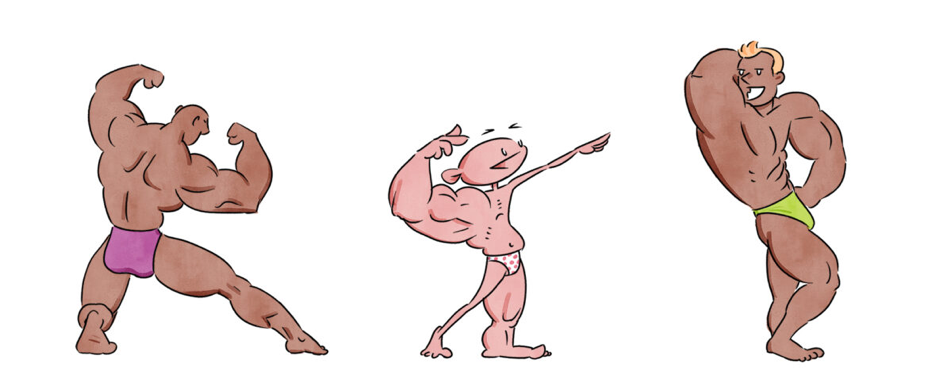
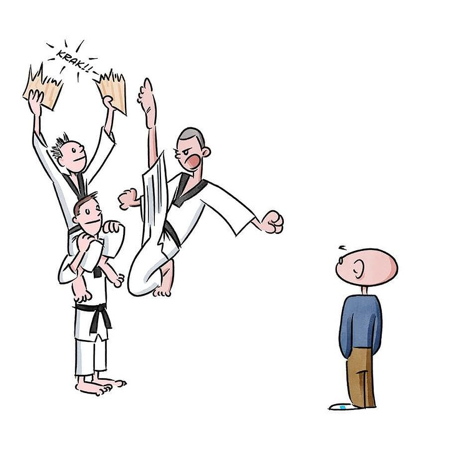
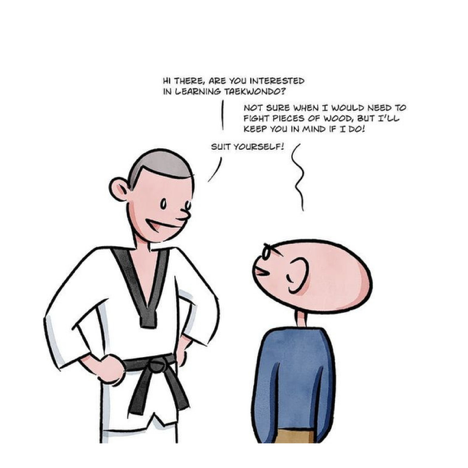
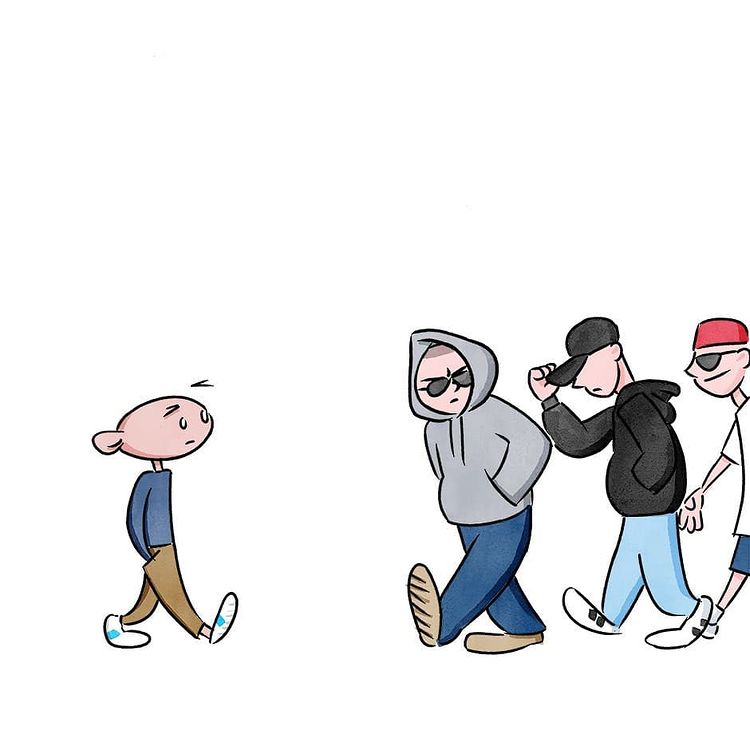
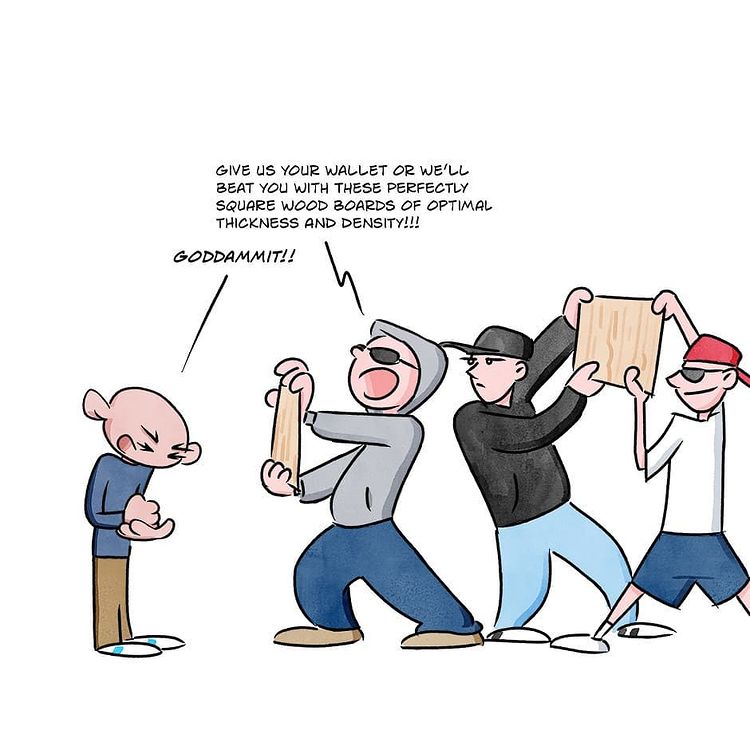
Humans have a natural penchant for being lazy in the face of ambition, so really, getting crafty with shortcuts seems to be the most efficient way to scale that cliff face. Jackson’s sardonic lessons on life are mirrored throughout his work via the adventures of his lozenge-headed comic avatar, Charles Chan. Each strip explores the absurdities of the day-to-day, with Charles left pensively standing in the wake of it all. Visiting cat cafes, waiting in line at a bar, and of course, performing exorcisms. It all just proves that there are scraps of wisdom lying in every seemingly soul-sucking moment of life; it’s just a matter of dousing life with holy water and speaking biblical Latin until the wisdom is projectile-vomited out.
Pick a medium that works with your bad habits:
“My art background is eclectic and wide-ranging, but historically, I’ve always found myself engaged in genres that required mind-numbing dedication to detail and technical execution. When I decided to put something entirely my own out into the world, it was important for me to choose a medium that not only represented me well (read: “sloppy”) but fit how I like to work (read: “as little as possible”). I have always loved comic strips, so it seemed like the ideal artistic medium for a guy who loves to make people laugh, can draw a bit, but is also incredibly lazy.”
Quick steps over long strides:
“I started plotting out the project in early 2018. I was going through a tough time in my life, and one of the few things that brought me joy was constructing funny Facebook posts for the amusement of friends and family. I loved the quick turnaround of these visual quips and the direct and immediate feedback they garnered. For my headspace at the time, the positive attention became quite addictive, and it all required relatively low effort on my part to boot.”
Call in sick (for at least one day):
“The day I finally got serious about it, I literally skipped out of work one afternoon and went to the park with a sketchbook. I started sketching out character designs on a picnic table in the middle of February. The designs and general premise came together pretty quickly, so it probably was all living in some corner of my mind for a while; that, or I was just freezing out there and needed to hurry before my hands fell off. “
Mine your woes:
“As for the general concept, originally I had intended the project to feature a linear narrative that was partially semi-autobiographical. I wanted to use the project as a vehicle to explore and process some of the difficulties I was experiencing at the time. But instead, the series evolved into more of an episodic format with only a loose narrative premise so that each strip could stand alone. This format works so much better with how fragmented and short my attention span is.
True to my original intent, however, I have used my series to cover a lot of things that I’ve been wrestling with the past three years; from my personal struggles with depression and the pandemic to Trumpism and the resurgence of overt racism. There’s nothing like living in the darkest period of the last 50 years of human history to inspire a comic strip! “
Prove that you did work:
“The business of monetizing my work is something that I’m still trying to figure out (I am very much the stereotypical broke and starving artist at the moment). However, I did set up a small line of merchandise as I was feeling a creeping sense of illegitimacy as a professional creative. This includes my first book, which I’m incredibly proud of.
Selling material goods really helped psychologically, not only for myself but also for the people around me to see that I’m committed to this.”




Plan your ideal day:
“Right before I started this whole thing, my wife asked me, “What life do you want?” Rather immediately, I answered that I wanted to sit at home, compose weird little thoughts, put them to paper, send them out to the world and get paid for it. So, with those goals in mind, I’m now 4 for 5. Did I mention I’m broke and starving?”
Bite the bullet:
“While developing this project, some people strongly urged me to see it purely as a side hustle, and honestly, that would have been the smart and measured approach. Unfortunately, I’m neither of those things. It really came down to whether I wanted to get paid or be happy. I think the choice I made is pretty clear. Once the initial panic of potentially steering my family into financial ruin subsided, I immediately felt a deep sense of relief for pursuing something that meant something to me.”
My correspondence with Jackson is marked with the returning theme of relief, that when you’re finally doing what you want, a weight is removed from your shoulders. “I love my life now. I love publishing my own perceptions and observations in a consumable form that people can enjoy. I am literally in the business of representing my authentic self, completely unabridged and unfiltered and unfettered by anyone else’s influence.”
You can view more of Brandon Jackson’s work on Instagram, or Facebook
Or support him directly on his Patreon or Ko-fi pages, and get unlimited and early access to all of the latest Charles Chan strips.