Cover image: Photo credit David N
By: Harriet Goodwin
Since 1975, Surrey Art Gallery has been presenting contemporary art that provides opportunities to interact with the artistic process; their new exhibit of Montreal-based artist Swapnaa Tamhane’s work, ‘No Surface is Neutral’, is no exception. Similar to galleries in Delhi, Jaipur, Montreal, and Dundee that have previously displayed Tamhane’s work, Surrey Art Gallery has been transformed into an immersive exhibition of cotton, colour, and light.
Tamhane’s work challenges the viewer to look beyond the surface of the textiles and explore the treatment of cotton from a historical, physical, and symbolic perspective. Hand-loomed cotton dominated India’s trade in ancient times, which led the way to mass industrial textile production. The resource became a catalyst for the country’s colonization, and later became a political symbol to lead the liberation from colonial rule. Cotton fibres therefore “carry the weight of imperial, colonial, and nationalist histories.”
It is only fitting that the exhibit is curated by Dr. Deepali Dewan, who has conducted twenty years of research exploring issues around visual culture in South Asia and the South Asian diaspora through colonial and decolonial times. In describing the exhibit, Dewan explained: “Tamhane’s artwork pushes against a complicated colonial history of cotton, exposes colonial ideas around art and art making that linger with us today, and imagines a different way forward. It must be experienced to be felt and understood.”
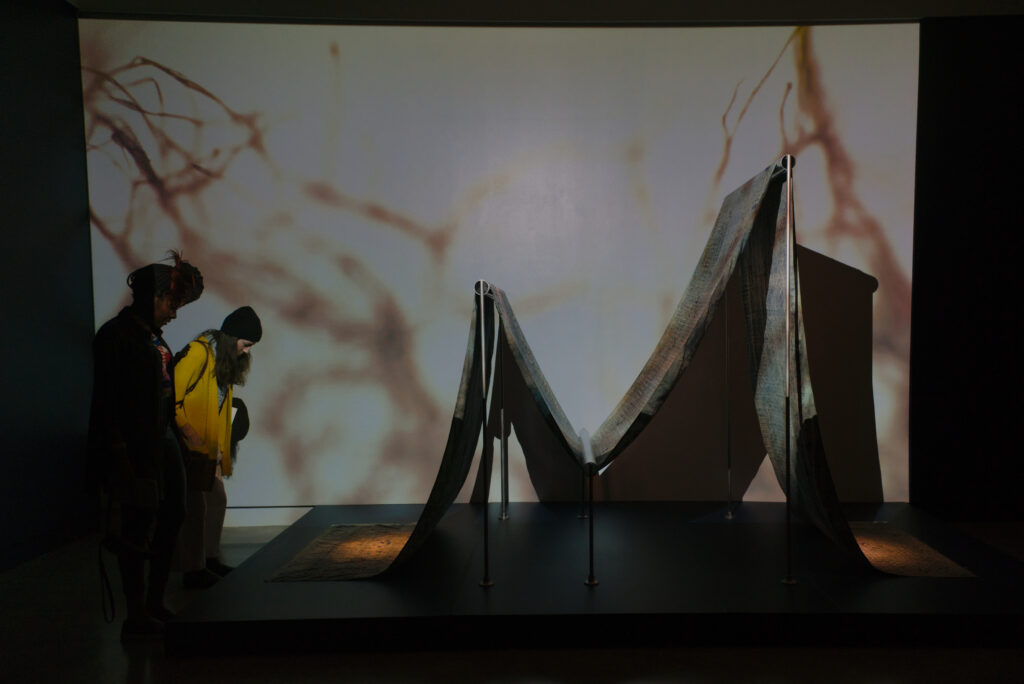
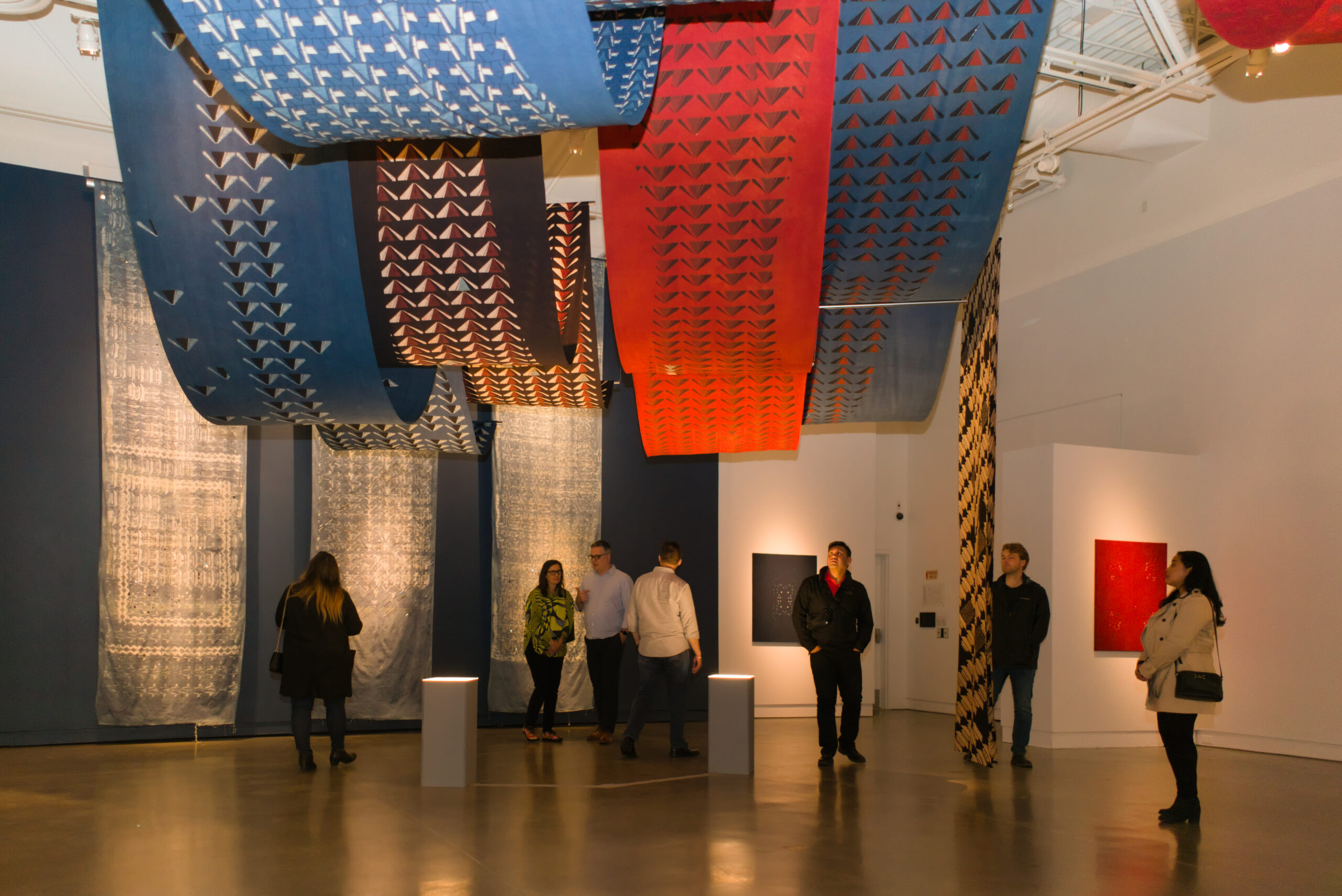
This exhibition is divided into two bodies of work which are part sculpture, part textile, and part drawing. In one section, textile hangings adorn the walls and tent-like structures sweep across the space. These hangings were created collaboratively with artists from the Kutch region (Western India) and mimic the shapes of imperial tents (Mughal and Ottoman shamiana). The geometric, block-printed patterns are embellished with motifs from mid-century modern architecture (referencing buildings by Le Corbusier in Ahmedabad, India), and elsewhere, the walls of mud homes. The second section of the exhibition displays a series of pencil and ink drawings on paper. Tamhane made the paper herself out of deconstructed fibres found in khadi (a type of handspun cotton cloth). This surface, along with the artist’s mark-making, and the folding and crumpling of the paper, makes the pieces heavily textured, echoing the many layers of meaning and history relating to the material.
By including this variety of artistic mediums, Tamhane’s work addresses the wrongful separation between what is considered ‘high art’ and what is considered design, craft, ornamentation, and decoration – a distinction that only appeared in India post-colonization. She frees the mediums from this enforced hierarchy and brings them together again through a contemporary artwork. Through doing so, she offers a ‘decolonial gesture’ in celebration of India’s artisanal history.
The exhibit is on until November 26, 2023 and is free to attend.

Good news! Surrey Art Gallery (13750 88 Ave) is just a 10 minute bus ride from Surrey Central Skytrain Station. Use Translink’s handy Trip Planner to work out your journey and make sure you check out Surrey Art Gallery’s website for opening hours.