




By Madison Smart
*Cover image courtesy of New Media Gallery
DUST, on view now at New Westminster’s New Media Gallery takes its viewers through a vast exploration of an admittedly small subject.
Highlighting the role of dust in our world and its effect on the human experience, DUST shows that there are plenty of ways to get lost in the minutiae. You might not think that the extremely fine particles of solid matter that occupy every moment of our lives could hold much meaning or tell an engaging narrative, but DUST will surprise you with three enlightening perspectives on the subject.
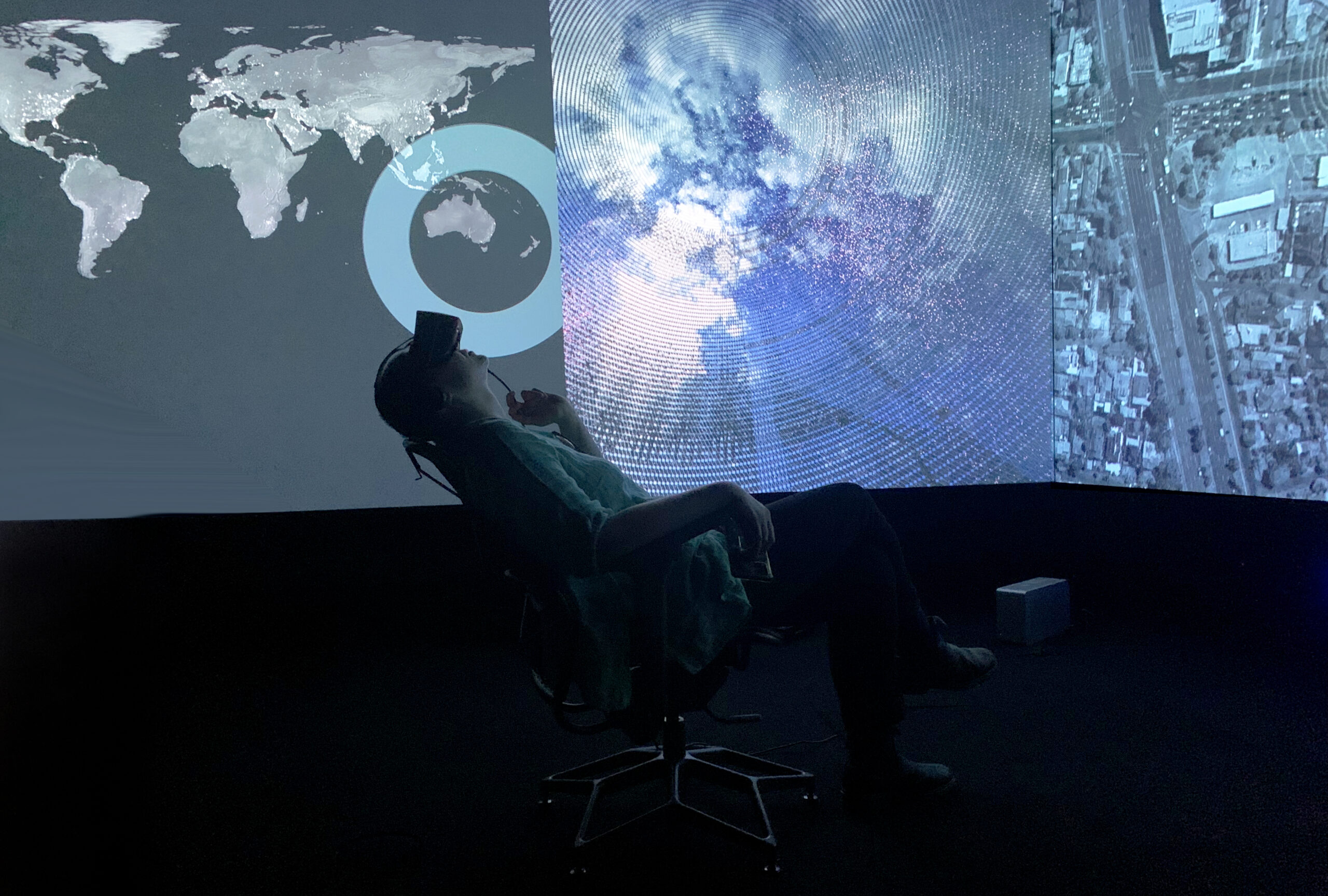
The exhibition features the work of artists, Denis Beaubois, Herman Kolgen, and Michael Saup. Via intricate technologies, data collection, augmented videography, composed music, and sound, the pieces on view create what Director and Curator of the New Media Gallery, Sarah Joyce, refers to as, “a very human story of how all things emerge from, and become dust.” “These works allow us to witness the environmental impacts of dust, or imagine world migration and the plight of scattered, displaced populations,” Joyce says.
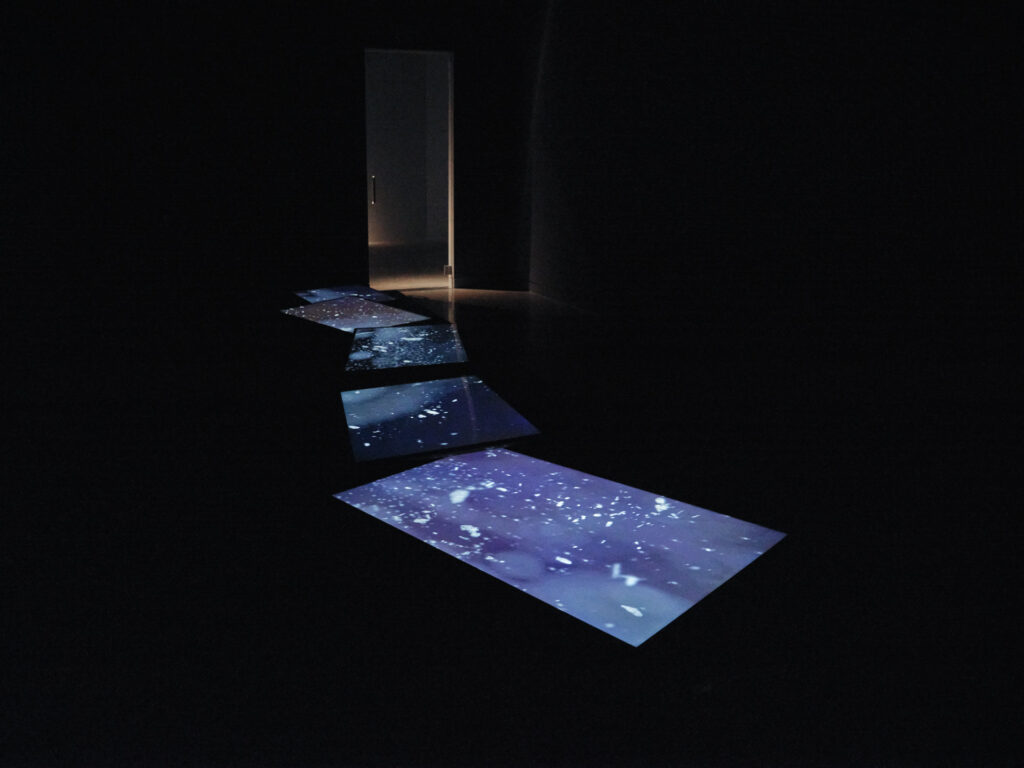
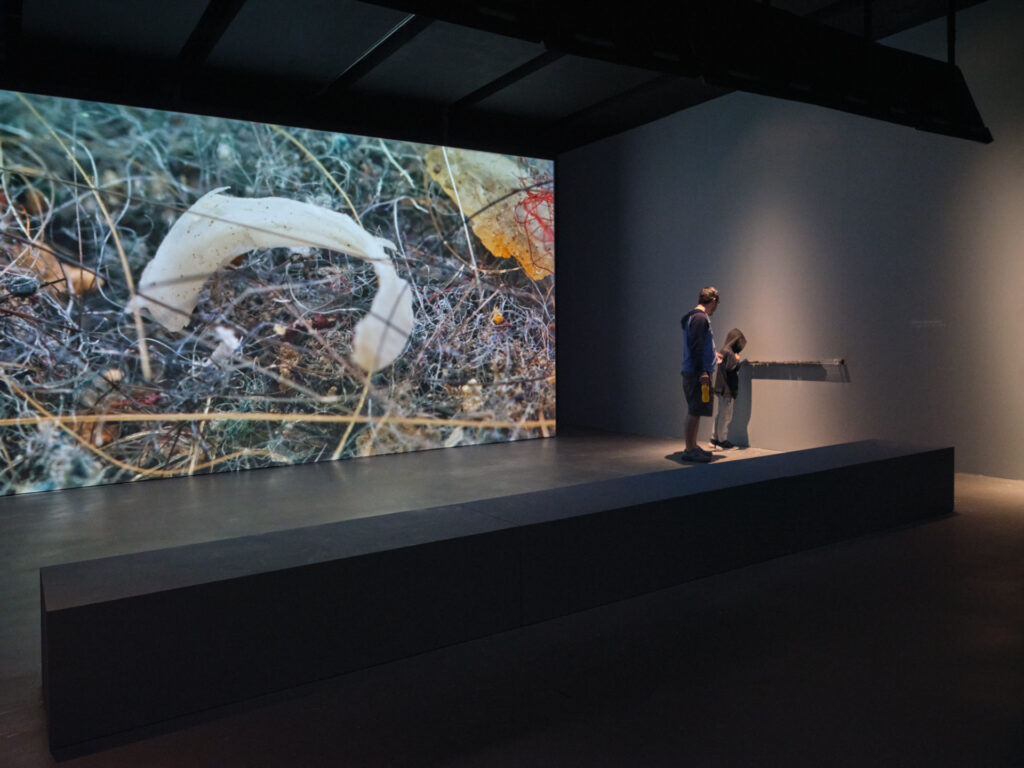
“No longer Adrift” (2013, updated 2023) by Denis Beaubois (right)
Image credit: Rachel Topham Photography
While the concept of dust may not immediately conjure thoughts of any natural noise, the works each create a soundscape with their experience. Kolgen and Saup’s works contain composed musical scores that accentuate the movement and natural behaviour of dust, while Beaubois’ work incorporates airport sounds in between gaps of silence- an ambient and sometimes eerie combination. “It’s probably safe to say, there is a bit of an uncanny, dystopian, sci-fi edge to this exhibition,” Joyce adds.
What was once a seemingly mundane subject is now at the middle of a web of innovative concepts, but not because it’s been left dormant. There’s a natural energy to this show that is palpable when listening to Joyce talk about its recent opening. “People will definitely look at dust differently after seeing this exhibition. You have likely never used VR to witness spirals of dust and data moving like birds in flight over real, urban territories (Saup’s ‘DustVR’)… or considered the origins of airport dust as individual, microscopic offerings collected from distant lands (‘No longer Adrift’ by Beaubois)… or had the opportunity to watch an atmospheric descent through dust and time (Kolgen’s ‘Dust Surface’).”
DUST is one of many wonderful exhibitions in New Media Gallery’s programming that shows how advancement in technology and contemporary art is critical in creating revolutionary meaning in the tiny details of our lives.
“DUST” runs until August 13
For more details, visit https://newmediagallery.ca/

New Media Gallery: Take the Expo Line Skytrain to New Westminster Station, it’s only about a 2-minute walk from there to the Anvil Centre!
To easily plan the route for your next artistic outing, you can use the TransLink Trip Planner.
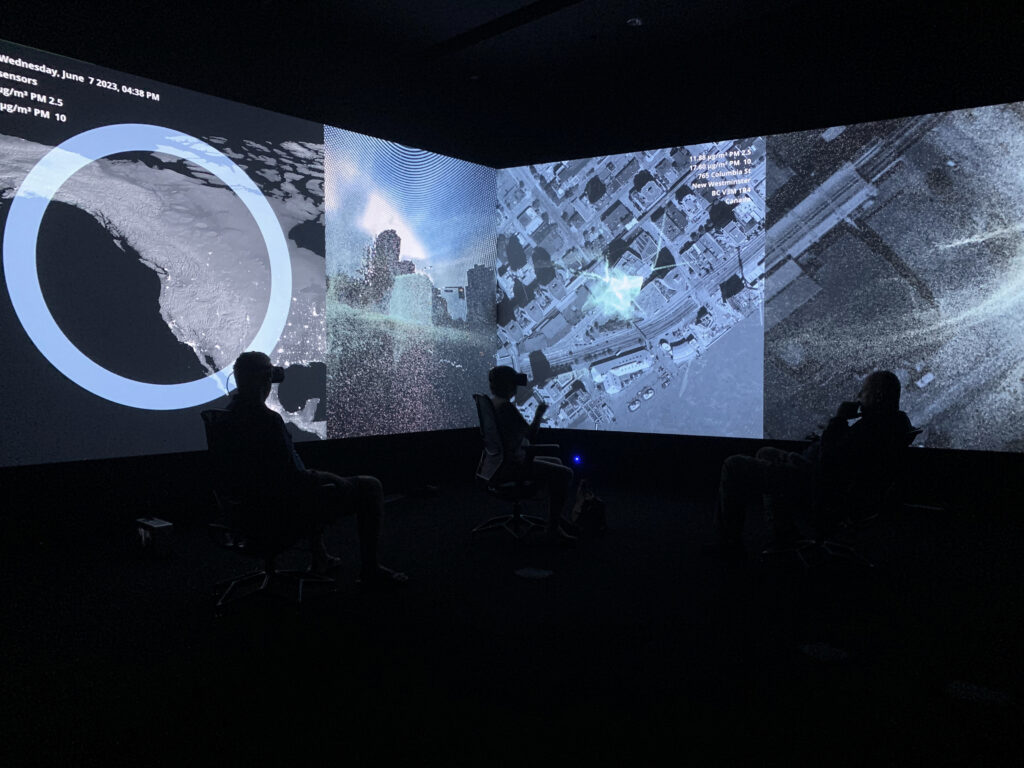
Image credit: New Media Gallery




This exhibit is a continuation of the journey of reclamation and rebuilding bonds of cultural knowledge. An original reboot of the Tāpis exhibit, it adds three new makers now holding the knowledge of tāpis/tuppies (dog blankets).
When Adele ᒪᐢᑿᓱᐤᐃᐢᑵᐤ asked to be taught this knowledge from her mentor, it was with the intent of restoring important cultural knowledge taken from so many Northern Nations. For this cohort, Adele ᒪᐢᑿᓱᐤᐃᐢᑵᐤ chose makers who exhibited personal and cultural ethics close to her own, along with levels of skill necessary to undertake such a large project. “Each of these blankets takes a minimum of 200 hours (or more) to be brought to completion. It is with great pride to be able to showcase this exhibit. It has been created to show the beauty and celebration of dog regalia as completed by Michif, Dene, and other Nations to celebrate our valued dog kin.”
Originating from the Métis, Northern Cree, and Dene communities, ‘li tāpis’ (small carpet), named by the French Michif and known as ‘tuppies’ by the English and Scottish Michif, are dog blanket regalia created to celebrate dogs. Tāpis are made from wool and embellished with intricate beadwork, silk embroidery, moose or caribou hair tufting, fringed with ribbon or yarn and adorned with bells. Showing respect for sled dogs, tāpis were draped over the backs of dogs.