Written by Natasha Ponda
In the realm of contemporary painting, there exists an artist whose strokes weave narratives of personal and political resonance in work that transcends the limits of abstraction on the canvas. Trinidadian-Canadian artist Denyse Thomasos is one of the finest, yet often overlooked, female painters to emerge in the 1990s.
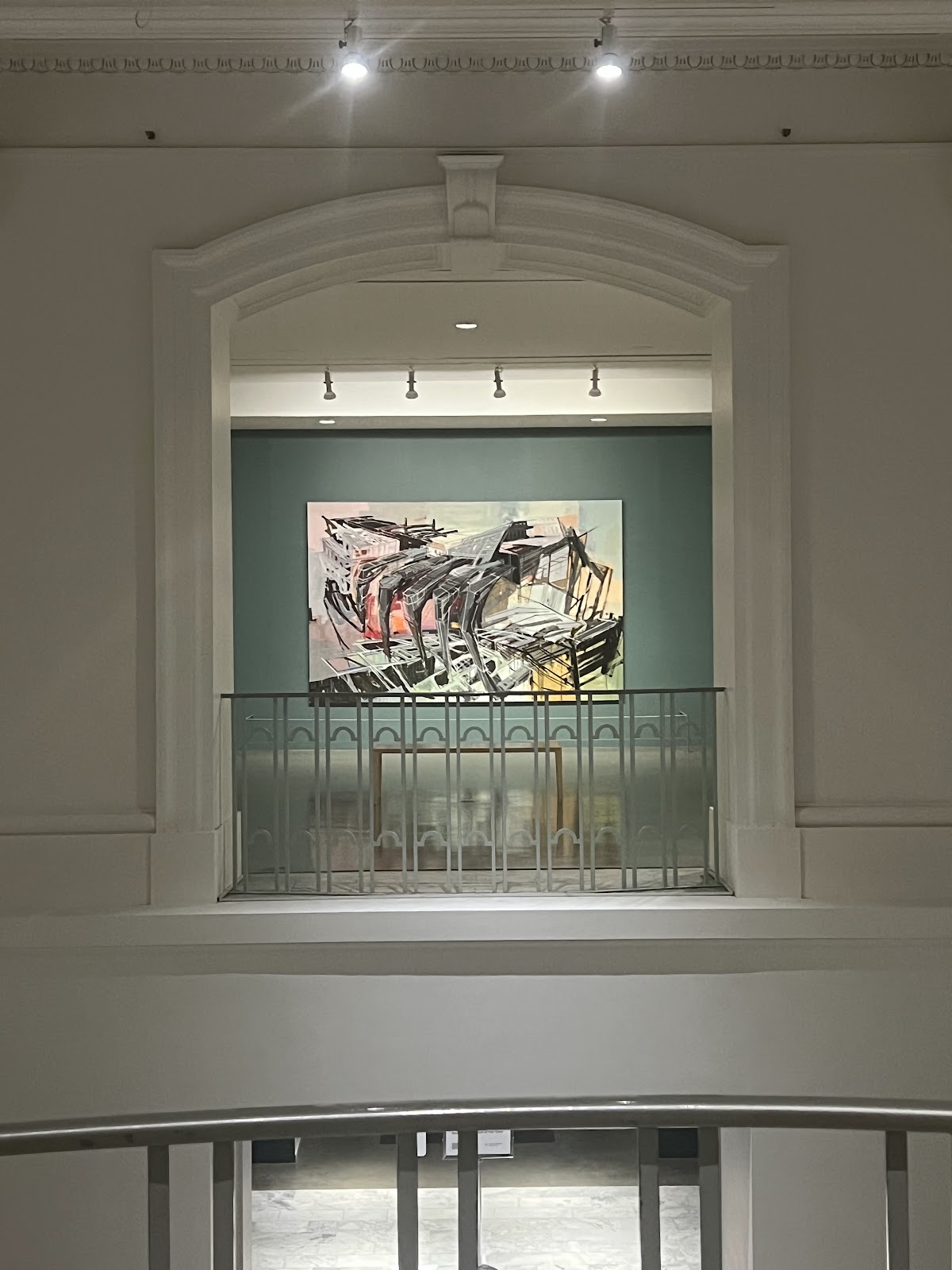
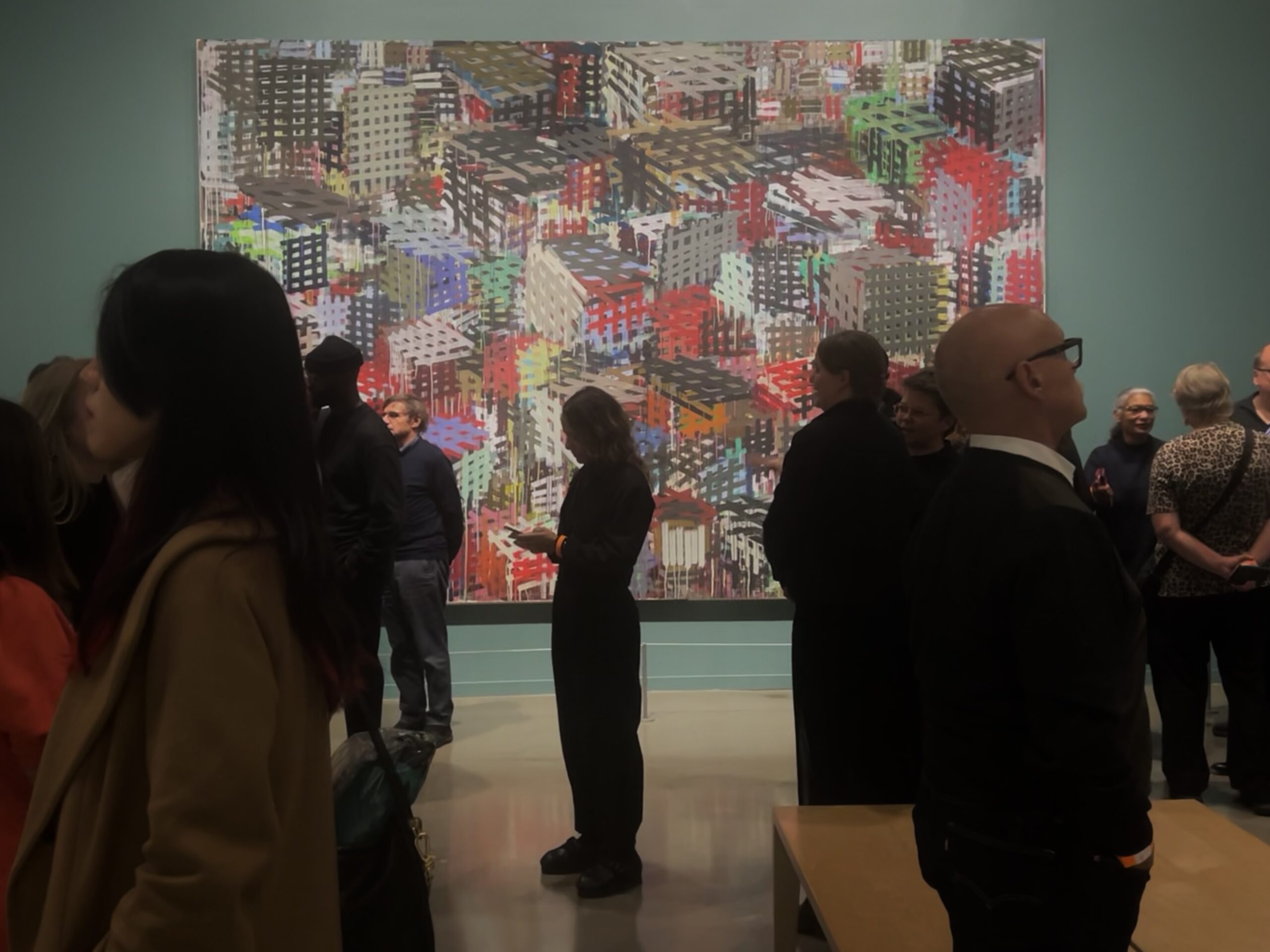
Vancouver Art Gallery presents Denyse Thomasos: just beyond, a career retrospective of the late artist (1964–2012) casting a vibrant glow on more than 70 (many rare) paintings and paper works, alongside sketches, photographs and newly uncovered documentary footage of Thomasos working in her studio. The footage shows how Thomasos challenged the limits of abstraction through the innovative use of formalist techniques. Through pattern, scale and repetition, Thomasos conveys the vastness of events such as the transatlantic slave trade without exploiting the images of those who were most affected.
Thomasos’ paintings tell tales buried deep in history’s embrace. Her thematic exploration is evident in the tackling of slavery, aspects of the Black experience and architectural imagery of mass oppression, particularly supermax prisons of North America. What sets Thomasos apart is her ability to convey the magnitude of mass historical events and its impact on the individual without exploiting the imagery of those who endured them.
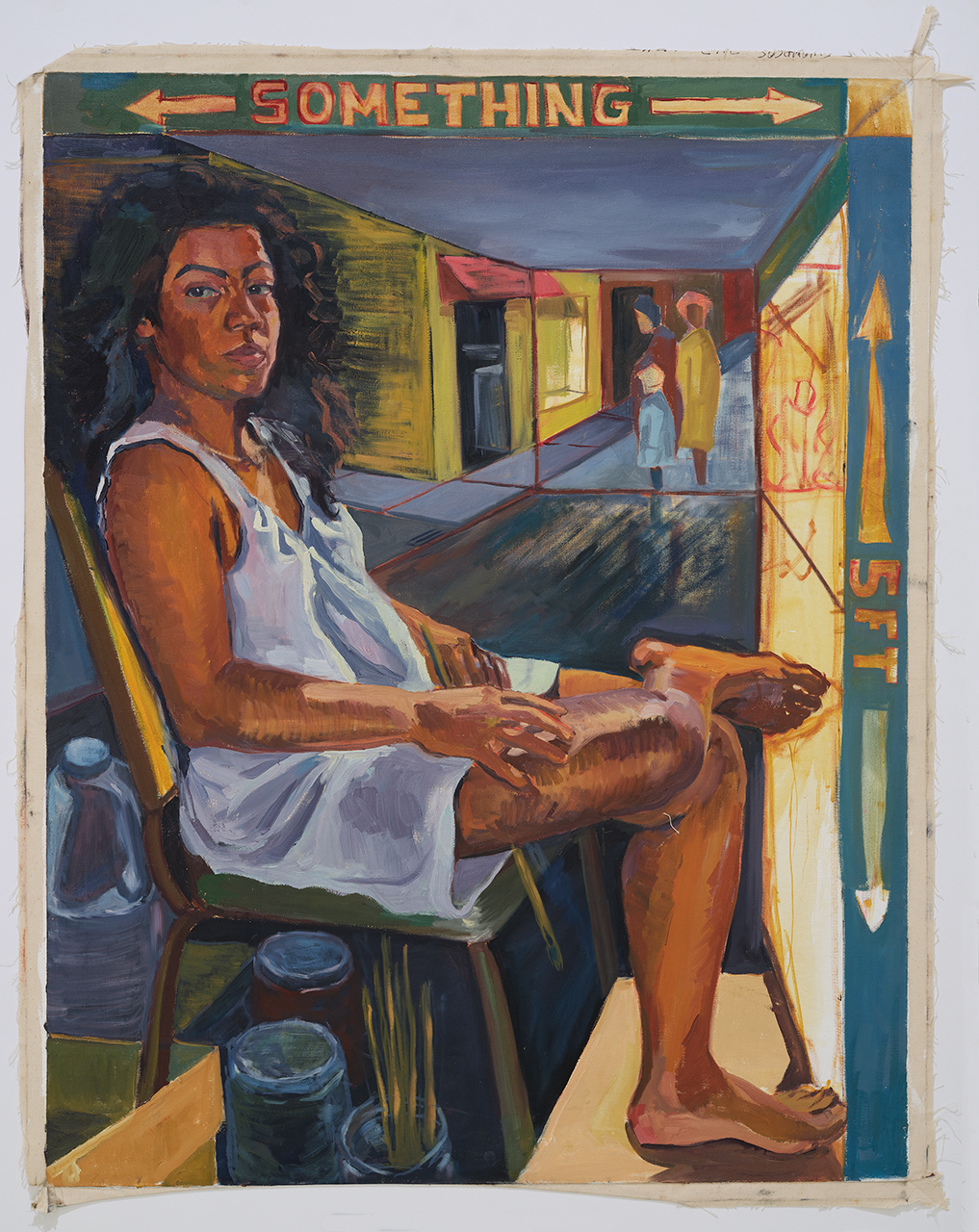
As you enter the exhibition, the works are arranged in a chronological order that serve as a physical experience of Thomasos’ artistic development. You are initially greeted with paintings of figurative dominance. They explicitly show the contemplative study that Thomasos is exploring through her visual subjects.
As you walk deeper into the exhibition, the size and scale take you into their expansive, larger-than-life frames. The works begin to take an abstract turn and the audience’s journey into Thomasos’ language of the grid begins. She embodies the energy of an architectural sculptor. She uses the repetition of the square shape and repetitive application of paint to layer the canvas. This action helps to build up color and design, in turn giving the viewer the feeling of either being barred in or closed out of what may be going on within, or behind, the space of the canvas. This sense of tiresome stacking speaks to the isolating dread and mind-numbing void and vacuum related to prison cells.
The canvas is so large that they impose into the space like large doors, but instead of offering an opening they appear ironclad, sealed in a state of unchanging permanence.
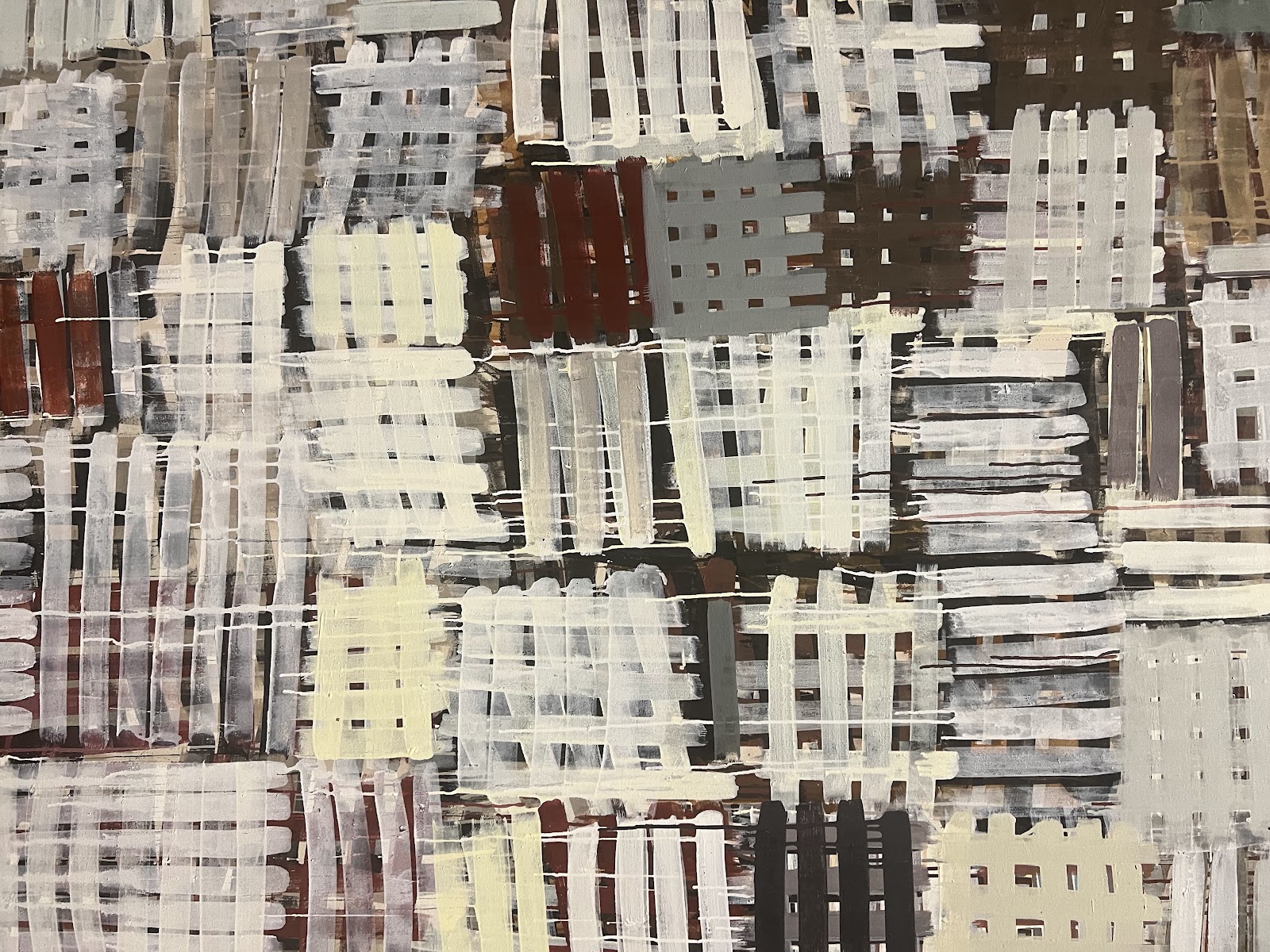
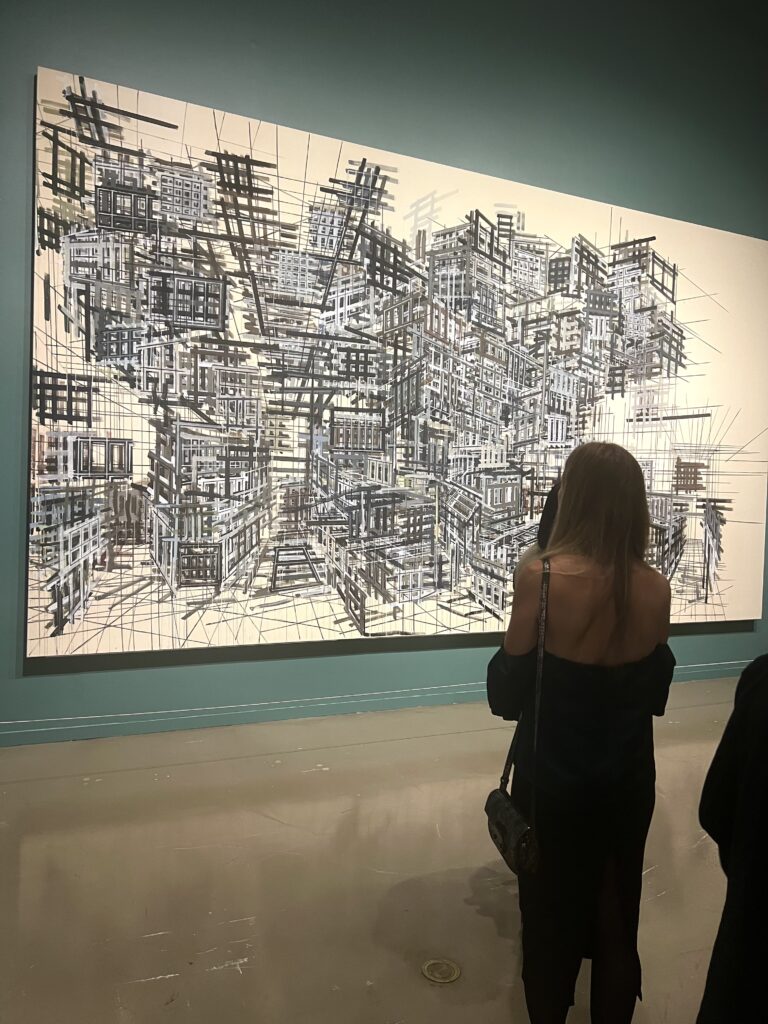
The canvas reveals the many things Thomasos is thinking about as she paints these seemingly flat abstractions that slowly turn into 3D-like references. While some works look like blueprint drawings which form a multitude of cages and prison bars, another specific architectural reference she considers is slave ships.
There is much to explore in the rest of the exhibition, where Thomasos delves deeper into abstraction, developing into more complex imagery with grander manipulation of shape and involving a vast selection of colour.
Denyse Thomasos: just beyond is on display through March 24, 2024 at the Vancouver Art Gallery

SkyTrain: 7-minute walk from Granville SkyTrain Station. For more information, please see TransLink’s Trip Planner.