


By Jaclyn Hayward
Whether you’re committed to learning the truth or you’ve known, and lived the truths your whole life, Sho Sho Esquiro: Doctrine of Discovery provides a powerful and emotional experience at the Bill Reid Gallery.
The Doctrine of Discovery facade, sheer and weak like a nylon stocking, was placed over the proverbial Canadian’s head for years, acting like a mask to shield from the real truth of what “we” are; Sho Sho Esquiro opens it to expose and free a truth. Through various forms of art and artifacts, an exciting tale of strength and beauty is told alongside another tale of trauma, injustice and resilience. Esquiro’s pieces come together like a puzzle and highlight the real story of the land; the real story of a people using assorted mediums.
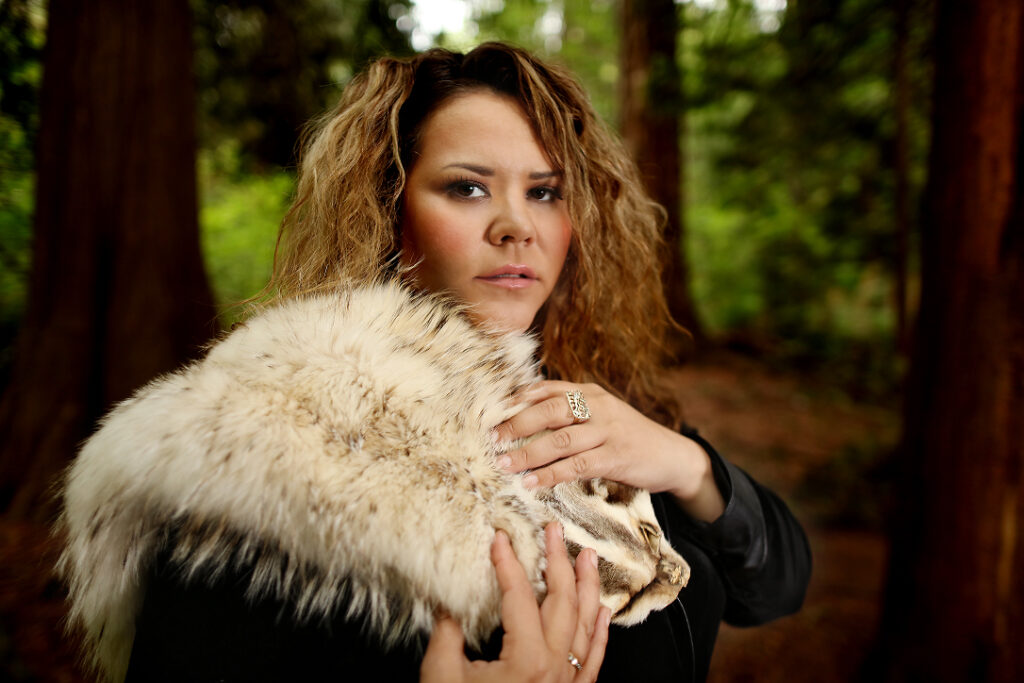
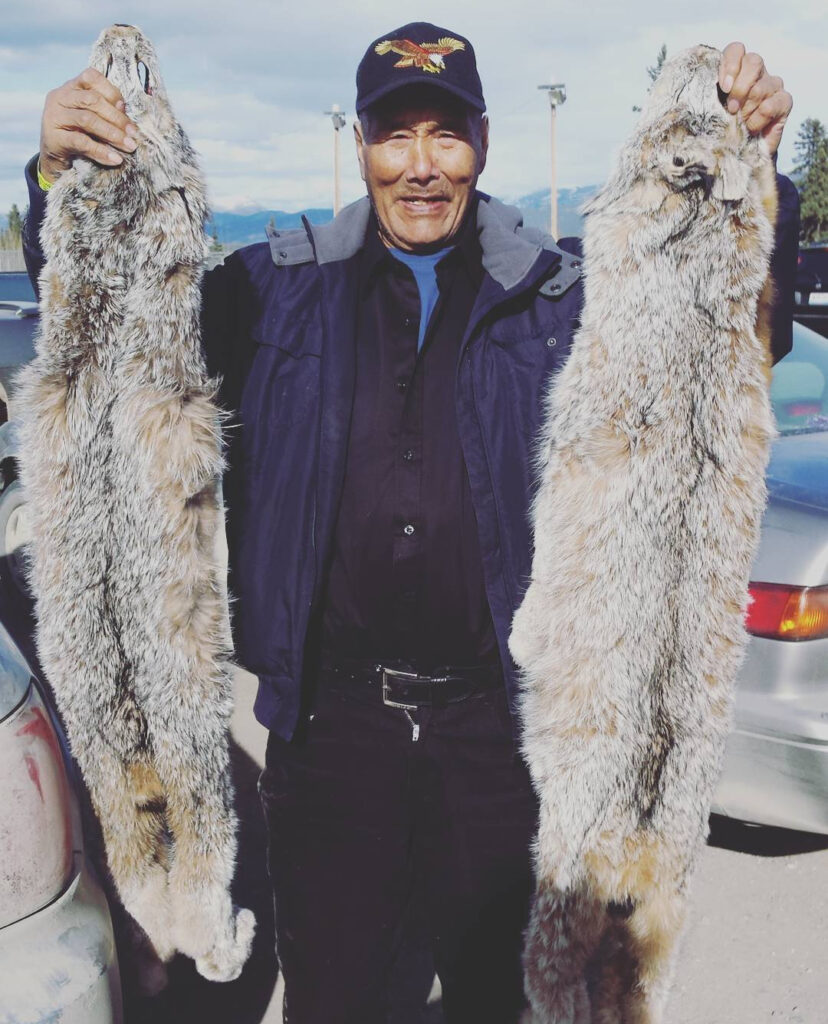
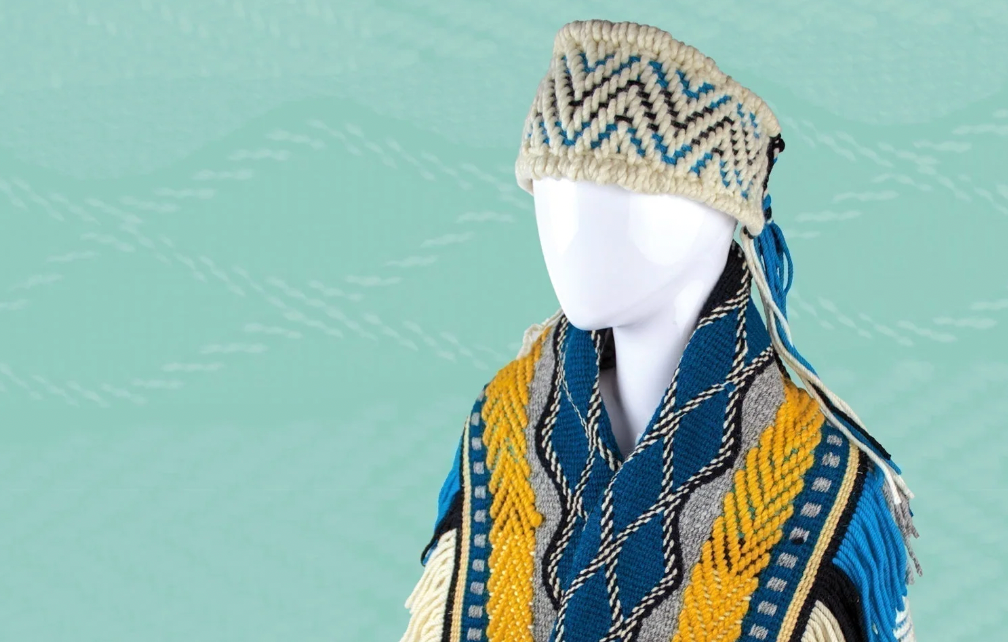
The exhibit is carefully configured with items from her life and hometown, like a photo of an uncle holding pelts. The tale told feels deeply personal; rooted geographically in a place, but felt like ripples as present day stories are weaved in. You see smiles and frowns of activists, smiles and frowns of family. Relatable images; or as a settler: earnest and vulnerable ones. Esquiro masterfully stitches and sews together new fabrics of reference – fashion – some in the form of couture gowns that are captivating and made ethereal but tough, representative of the strength and beauty in the matriarchs that might wear them; some in the form of statement pieces marked with powerful paradoxical images and messages.
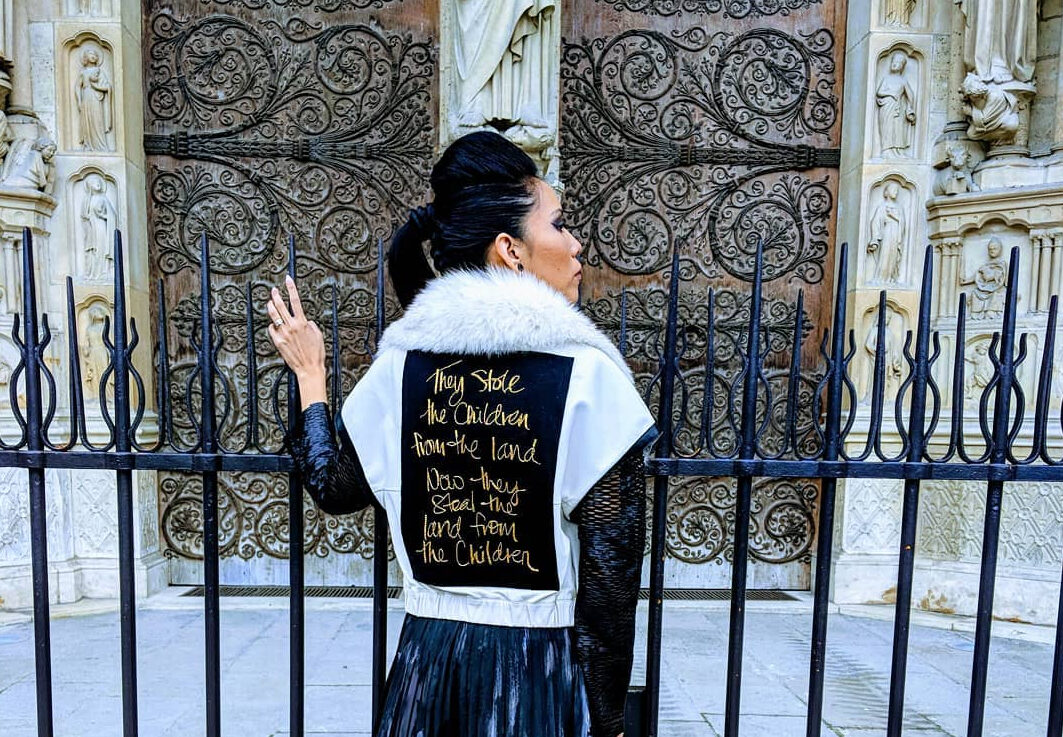
Memorably, a vest is seen etched with a message that reverberates loudly in our brains: “they took the children from the land, they took the land from the children” – particularly because the words are true, painful, reprehensible, deplorable, enraging; but also timely because we recently passed September 30th and this marked day for listening and learning.
As usual, this exhibit like others held at the Bill Reid Gallery is a must-see as you #SupportIndigenousArtists and experience a tale told in high fashion about collectivity, resilience, and home. Catch the exhibit now before June 2022 and follow the Bill Reid Gallery for information about this exhibit and more.
*Photos shared with permission from gallery