





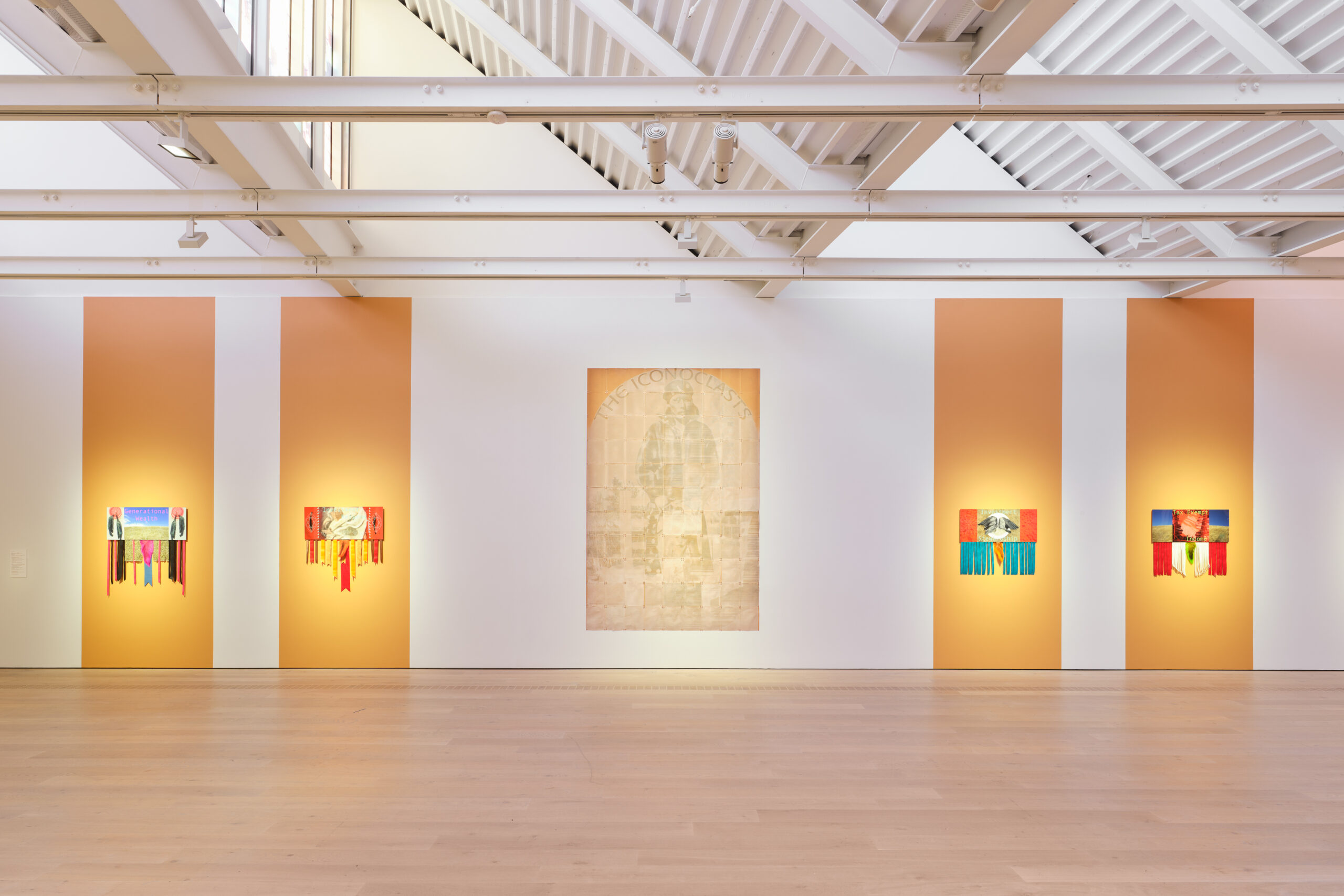
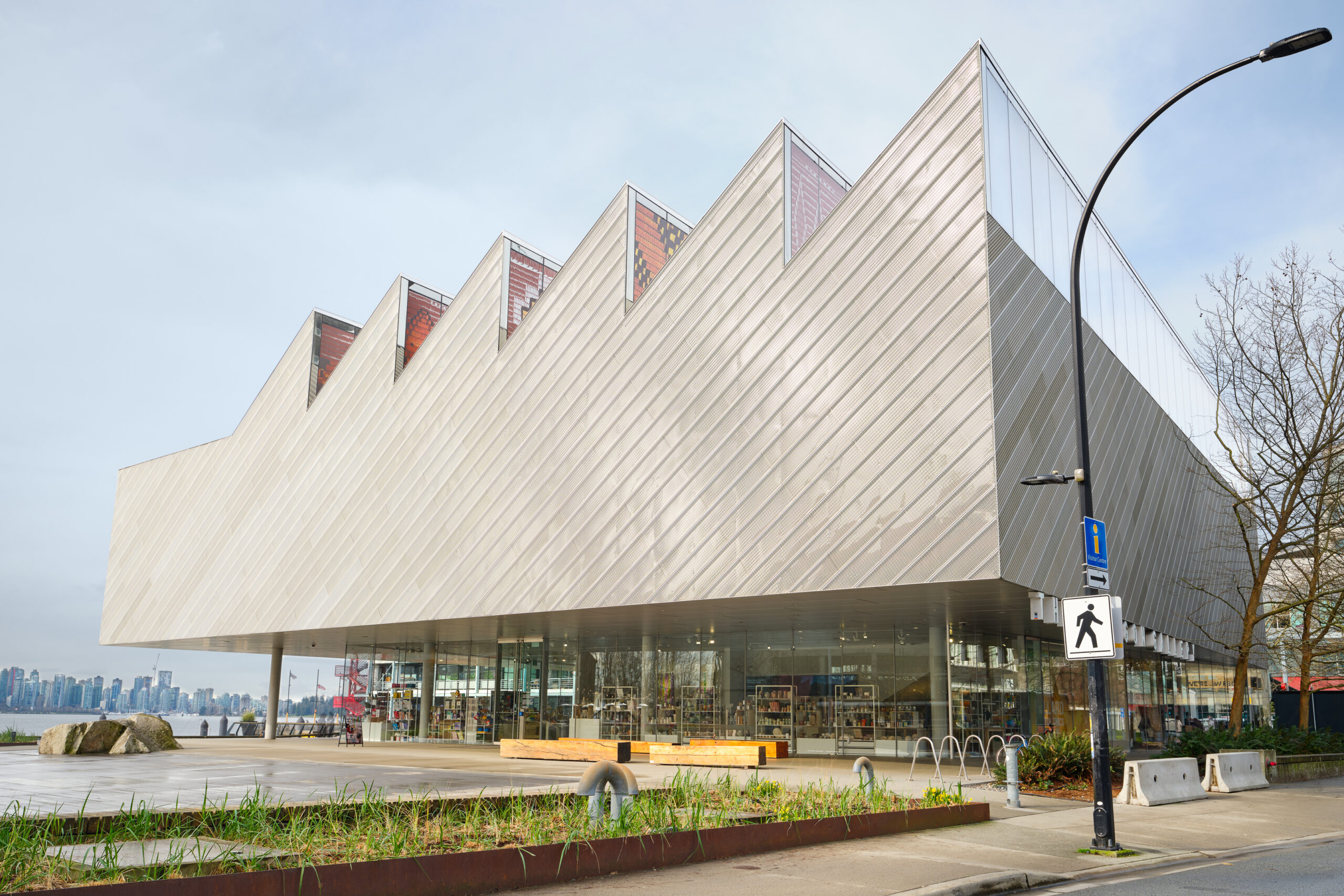
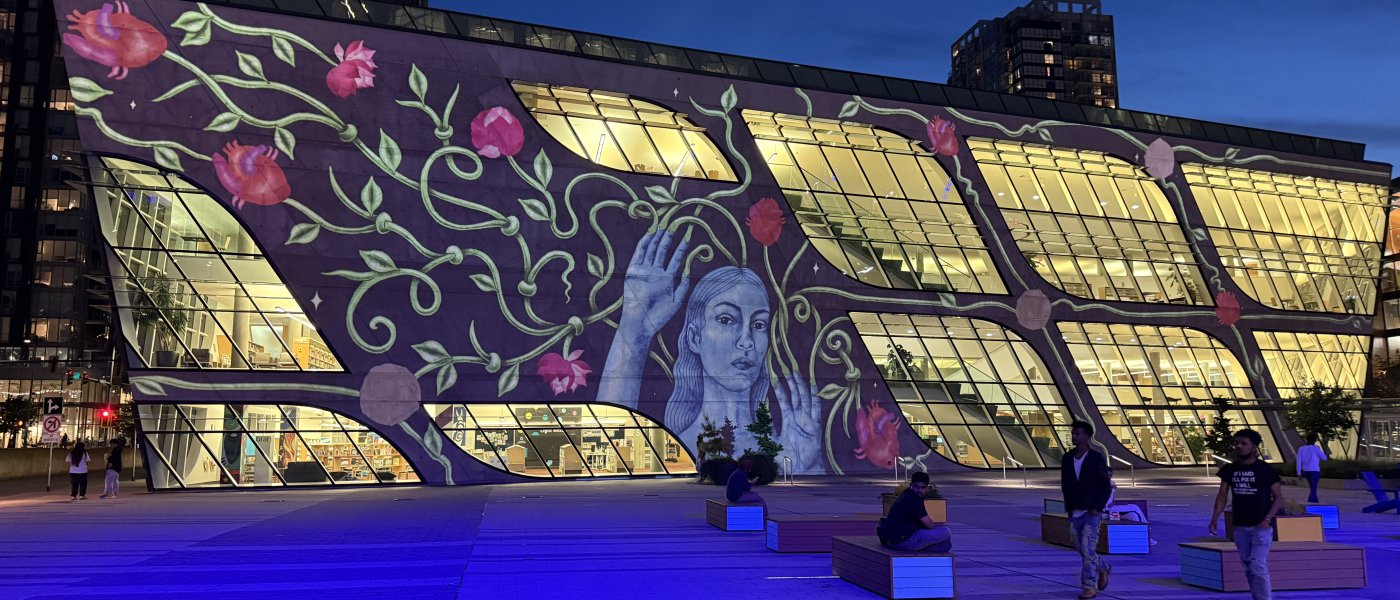
Spanning ten years of Tania Willard’s ongoing photography experiments, Photolithics shows the expansive breadth of the medium, its history, and how it can touch on far more than what’s inside the frame. The largest solo exhibition of the Sobey Award-winning artist, curator, and scholar’s work to date, The Polygon Gallery show spotlights how Willard draws on her mixed Secwépemc and settler-Scottish ancestry to create pieces that explore photography as a technology of both colonization and decolonization.
Walking through the gallery, you’ll immediately notice how Willard finds inventive ways to use her unique perspective to communicate land-based practices that attend to the history, present, and future of the land and community. By employing unique printing methods, material choices, and presentation techniques, she invites her audience into an experience more immersive than you might expect from a traditional photography exhibit. She even uses the gallery itself to express her vision!
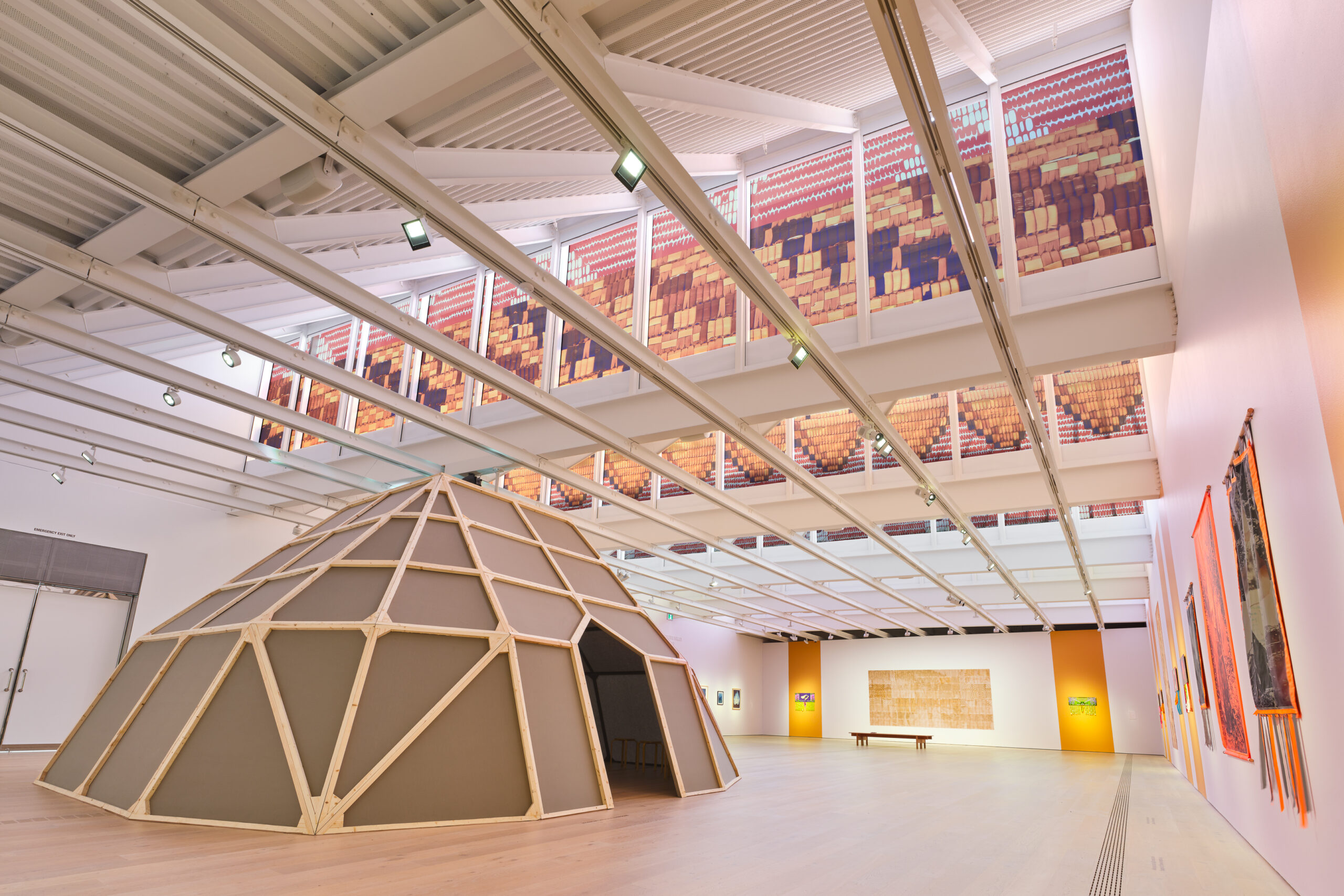
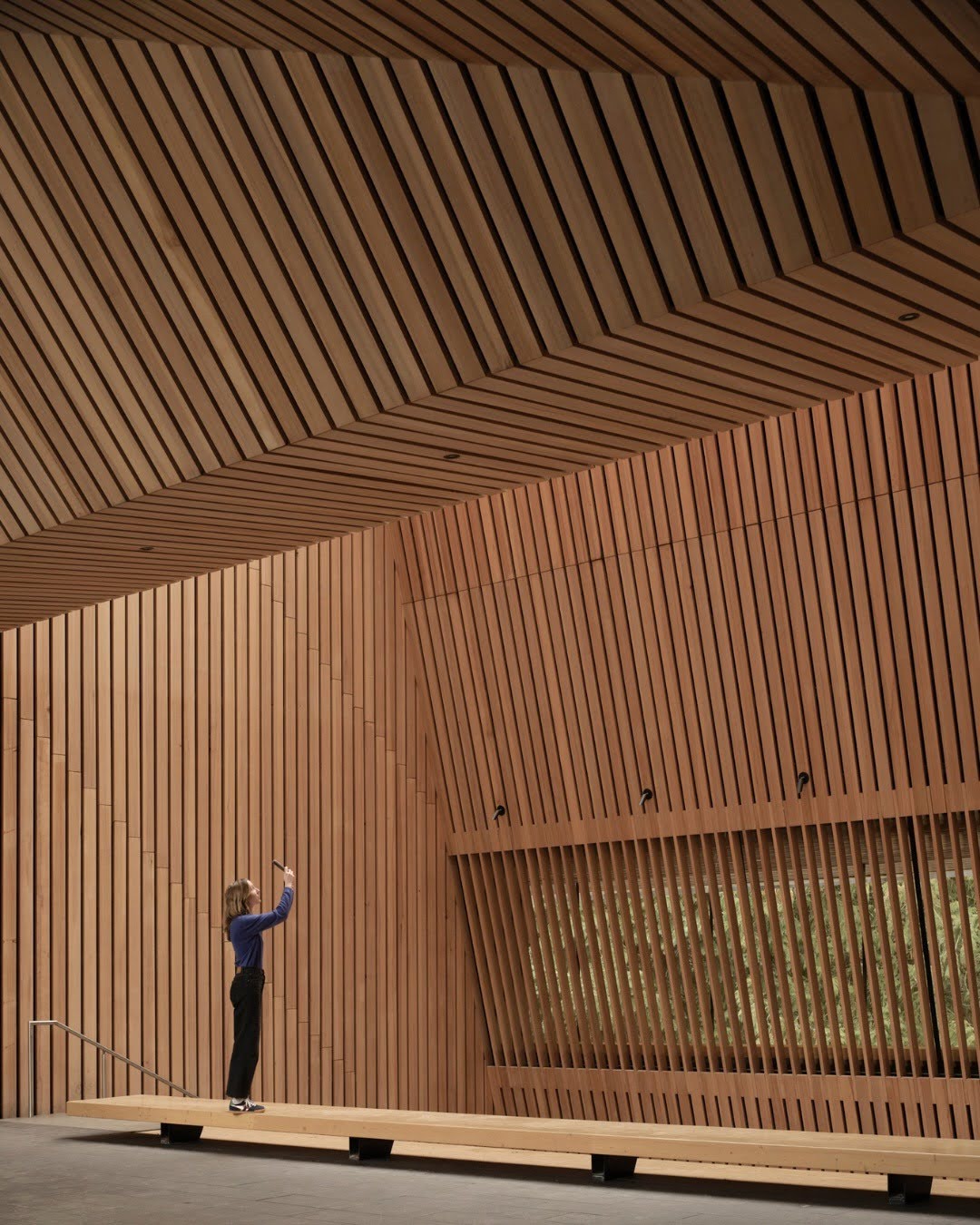
For the show, Willard created distinctive lenses for each of the building’s windows, and when the sun shines through each of them, it casts a safelight (the piece’s title), which also references the exhibit’s title. Photolithics combines the ancient words for light and stone, and speaks to Willard’s notion of working directly with the sun’s rays, and how the long lineage of its casting both light and shadows reflects billions of years of moments, identity and stories.
With a tactile warmth of each piece of light, there’s a personal, handmade quality to the show. Continuing this journey through the echoes of the past, Willard combines the natural light of the gallery with the aesthetics of traditional Salish basketry and kekuli (winter home) architecture. The end effect is a feeling of being present and at the same time as if you’re standing in a long-occurring story being shared from one generation to the next.
Photolothics will be at the Polygon Gallery until May 24, 2026.
For more information about this and other shows, visit thepolygon.ca







This exhibit is a continuation of the journey of reclamation and rebuilding bonds of cultural knowledge. An original reboot of the Tāpis exhibit, it adds three new makers now holding the knowledge of tāpis/tuppies (dog blankets).
When Adele ᒪᐢᑿᓱᐤᐃᐢᑵᐤ asked to be taught this knowledge from her mentor, it was with the intent of restoring important cultural knowledge taken from so many Northern Nations. For this cohort, Adele ᒪᐢᑿᓱᐤᐃᐢᑵᐤ chose makers who exhibited personal and cultural ethics close to her own, along with levels of skill necessary to undertake such a large project. “Each of these blankets takes a minimum of 200 hours (or more) to be brought to completion. It is with great pride to be able to showcase this exhibit. It has been created to show the beauty and celebration of dog regalia as completed by Michif, Dene, and other Nations to celebrate our valued dog kin.”
Originating from the Métis, Northern Cree, and Dene communities, ‘li tāpis’ (small carpet), named by the French Michif and known as ‘tuppies’ by the English and Scottish Michif, are dog blanket regalia created to celebrate dogs. Tāpis are made from wool and embellished with intricate beadwork, silk embroidery, moose or caribou hair tufting, fringed with ribbon or yarn and adorned with bells. Showing respect for sled dogs, tāpis were draped over the backs of dogs.